Water Damage
Water Mitigation vs. Restoration: Key Differences
Mitigation and restoration are two phases of one water loss. Learn what each covers, who handles it, and why timing matters for your insurance claim.
Mitigation is the emergency phase of water damage — stopping the loss from getting worse. We arrive fast, control the source, and stabilize the structure before secondary damage sets in.
Water mitigation focuses on the first 72 hours: source control, water extraction, controlled demolition of unsalvageable materials, and aggressive drying to prevent mold growth and additional structural loss. Most active emergencies see a truck inside 60 minutes across the OKC metro. Call (405) 669-4484 day or night, or get help in your city: Water Mitigation in Oklahoma City, Water Mitigation in Edmond, Water Mitigation in Norman, Water Mitigation in Moore, Water Mitigation in Yukon, Water Mitigation in Tulsa, Water Mitigation in Broken Arrow, Water Mitigation in Owasso.
Related reading: Water Mitigation vs. Restoration: Key Differences · Water Mitigation Near Me in Oklahoma City.
This service often runs alongside full water damage restoration once mitigation is complete, mold remediation if the 72-hour window was missed, and sewage cleanup for Category 3 losses. On a single loss event we typically coordinate two or more of these so you have one project manager and one set of insurance documentation.
See the full Oklahoma service area for every city we dispatch to, or browse the full restoration services list.

Every water mitigation job follows a documented sequence designed around two priorities: stopping further damage as fast as possible and producing the documentation your carrier needs to approve your claim. Anchored to IICRC consensus standards on every site — see IICRC Standards Overview for the standards we operate to.
Shut off water, cap supply lines, and contain the active leak.
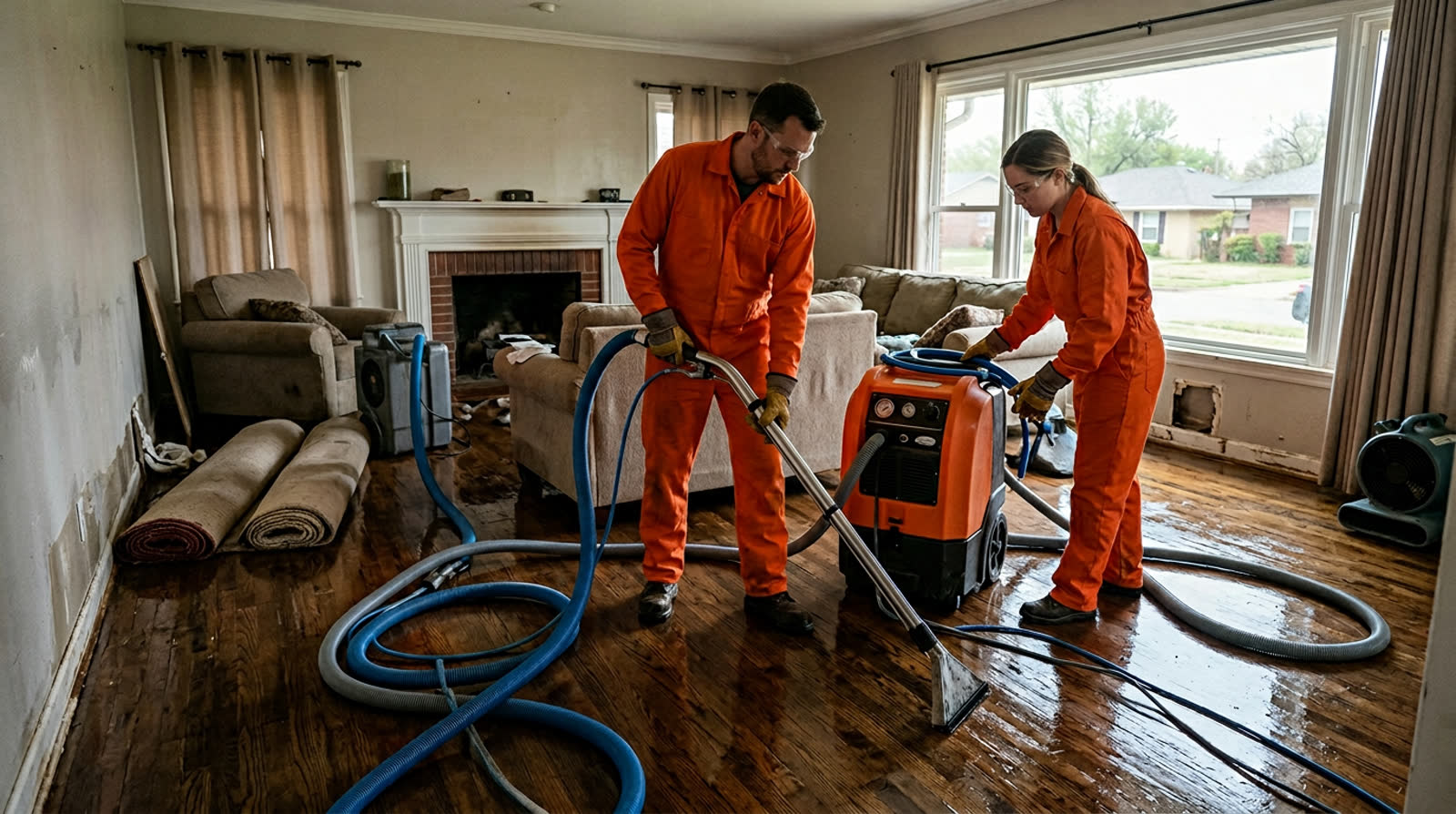
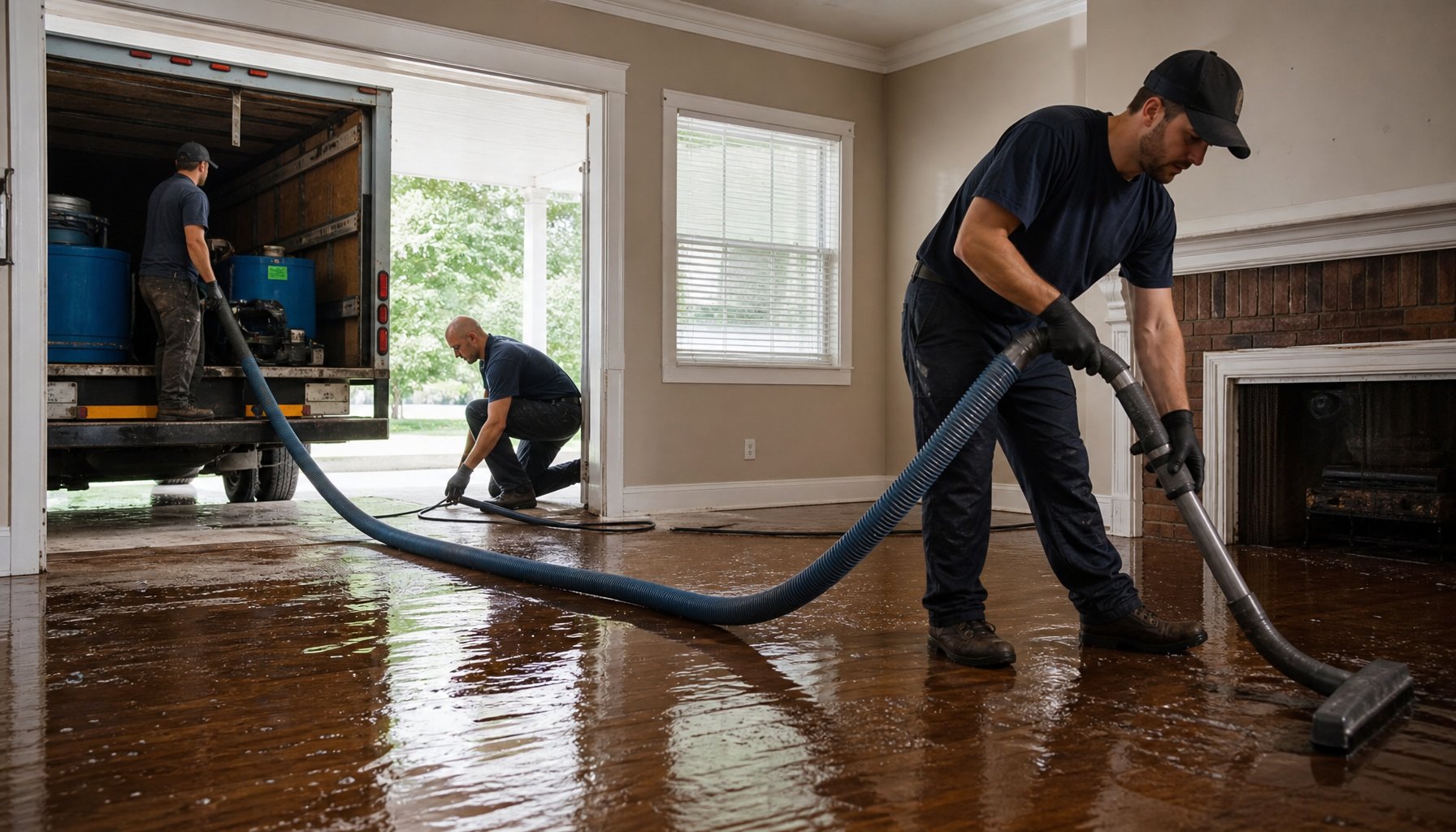
Truck-mounted units pull water from carpet, pad, and subfloor.
We remove only what cannot be saved — wet drywall, soaked carpet pad, swollen baseboards.
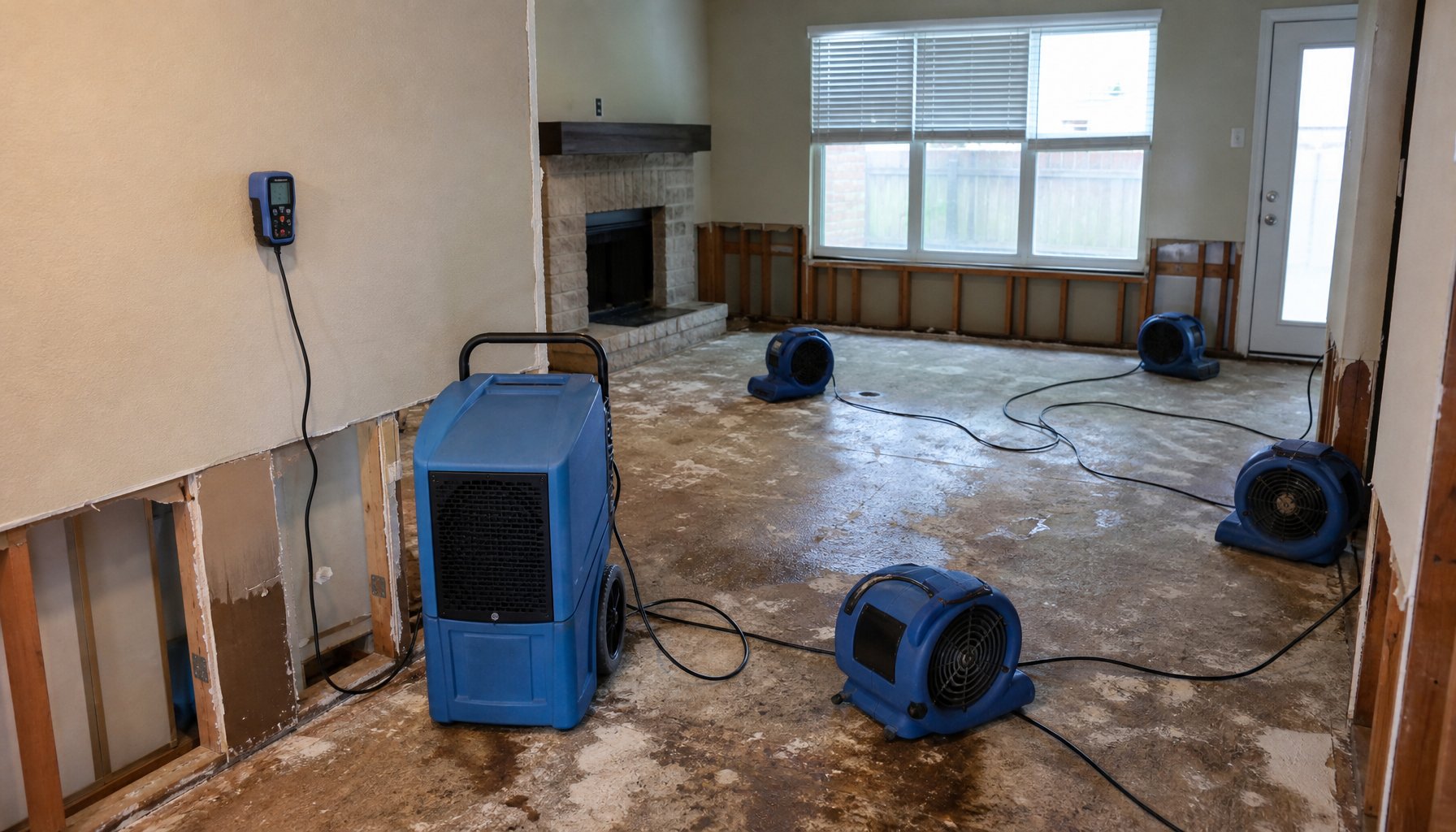
Air movers and dehumidifiers placed per IICRC S500 standards.
Moisture readings logged daily until industry-standard dryness is reached.
Once dry, we move into reconstruction or hand back to your contractor.
Source control verified; first extraction pass begins.
Wet pad and unsalvageable porous materials removed under documented scope.
Drying equipment fully placed; dehumidifiers running 24/7; HVAC contained or shut down as needed.
First moisture re-read; equipment repositioned to chase deep pockets.
Dryness target reached; equipment pulled; mitigation closed; reconstruction scope handed off.
Most residential losses come from a single isolated supply line, valve, or appliance. Shut it off.
Each hour standing water sits, more material absorbs and the drying job grows.
Once the source is dead, removing baseboard or drilling weep holes lets air reach trapped moisture.
Adjusters write claims around documented wet square footage.
The 72-hour mold window is the difference between drying and remediation.
We route the closest available Oklahoma crew and keep the response moving — day or night.
Phone line staffed every hour across Oklahoma. Holidays, weekends, 2am — same number.
S500 (water) and S520 (mold) consensus standards on every job.
Most covered losses cost only your insurance deductible. We bill carriers direct.
If you see any of these in your home or business, an inspection is the cheapest insurance you can buy. Our on-site assessments are free across our Oklahoma service area.
Restoration outcomes are tied directly to the equipment on the truck. Here's what shows up when our crews dispatch.
Pull standing water from carpet, slab, basement, and crawlspace.
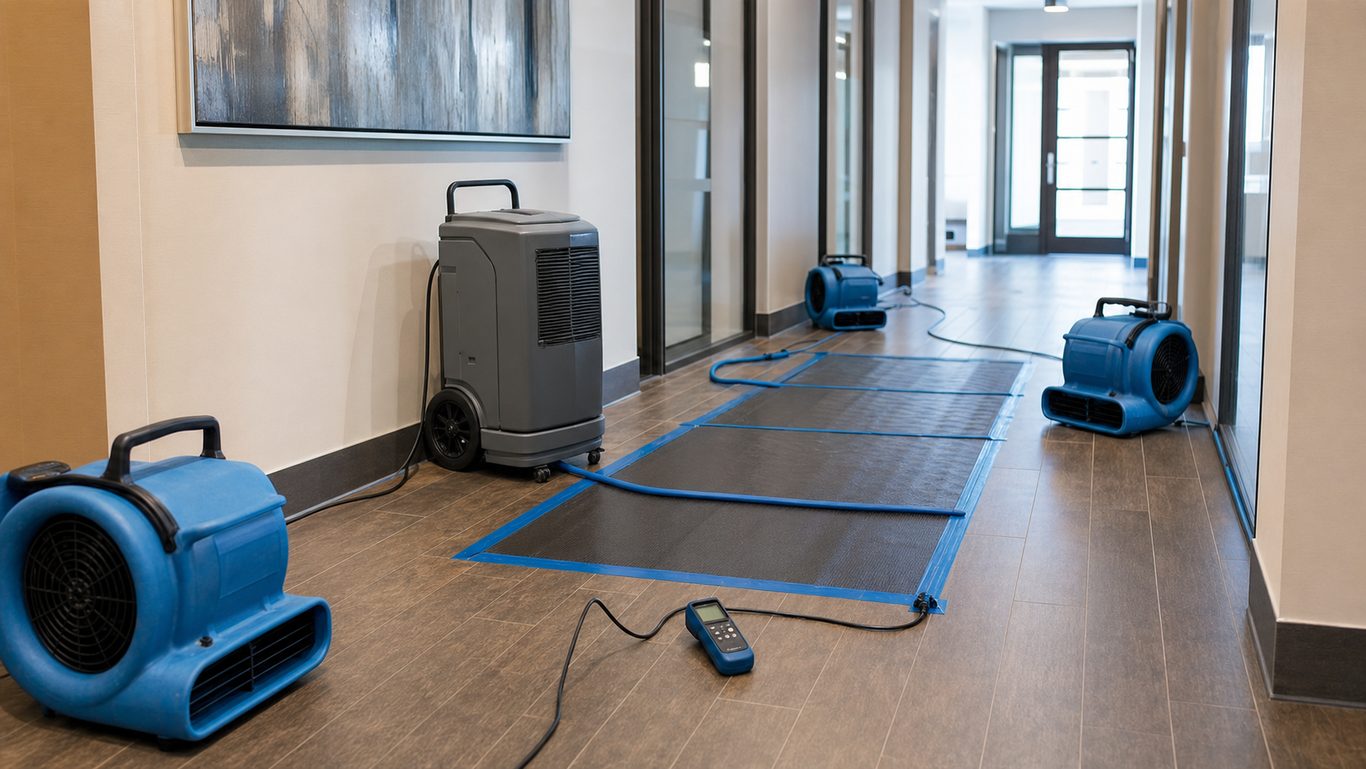
Move air across wet flooring and into wall cavities through drilled weep holes or removed baseboard.
Pull humidity below the dew point so evaporation continues.
Daily readings logged in writing for the carrier.
Tent-and-mat assemblies pull moisture out of cupped or buckled hardwood without removing it.
Isolate the work area when category of loss requires it.
“Most homeowners don't need a pitch — they need a truck. Call us and we'll be on the way in minutes, not hours.”
— Trustworthy Restoration dispatch
Most Oklahoma homeowners' insurance policies require you to take reasonable steps to mitigate further damage. That's why we start mitigation immediately while you're still on the phone with your carrier — extracting standing water, tarping a roof, boarding up a window, getting drying equipment running. Carriers typically reimburse the cost of immediate mitigation, and most policies pre-approve a reasonable amount before an adjuster ever sees the loss.
Documentation matters more than the size of the loss. We capture moisture readings, thermal images, and photographic evidence of every affected area, log them daily, and provide them with the Xactimate estimate that your adjuster expects. When the contractor's documentation aligns with the adjuster's scope, supplements get approved faster and final payment lands sooner.
We bill insurance directly to all major carriers — Allstate, State Farm, USAA, Liberty Mutual, Farmers, Travelers, Progressive, Nationwide, American Family. Out-of-pocket on a covered loss is typically just your deductible. If your event isn't covered, we'll tell you up front and discuss self-pay options before any work begins.
External resources: IICRC S500 (Water Damage Restoration) · IICRC Standards Overview · EPA — Flood Cleanup & Indoor Air Quality.
We dispatch water mitigation crews from our Oklahoma City home base to every neighborhood across the metro. Same-day response is standard for emergencies inside the OKC metro:
Oklahoma City, Edmond, Yukon, Mustang, El Reno, Moore, Norman, Nichols Hills, Guthrie, Piedmont, Midwest City, Del City, Luther, Jones, Arcadia, Choctaw.
For Tulsa-area emergencies we keep crews positioned to respond fast across the eastern Oklahoma metro:
Tulsa, Broken Arrow, Owasso, Jenks, Bixby, Sapulpa, Sand Springs, Claremore, Glenpool.
For loss events outside the major metros, we still dispatch — typically same-day or next-day:
Call 24/7. We route the closest available Oklahoma crew and keep the response moving.
Same water mitigation crew, dispatched to the cities that call most. Click through for response times, local loss patterns, and city-specific FAQs.
Detailed guides written by our crew leads — what to do, what to avoid, and how insurance actually works on this kind of loss.
No. Mitigation is the emergency phase — extraction, drying, and demo of unsalvageable materials. Restoration is the rebuild that follows. Both are usually covered under the same insurance claim but priced separately.
Most residential mitigation jobs run $1,500–$5,500 depending on square footage, materials affected, and equipment-days. Large losses commonly run higher. Most homeowner's policies cover mitigation in full minus your deductible.
Within 24 hours, ideally within 6. The 72-hour mold window is the difference between a dry-out and a remediation. Carriers expect mitigation to start the same day.
Yes — controlled demo of unsalvageable materials (carpet pad, soaked drywall, swollen baseboards) is part of mitigation. We document everything photographically and with moisture readings before anything is removed.
Box fans and rental dehumidifiers don't move enough air or pull enough moisture for anything beyond the smallest losses. Most DIY dry-outs miss the 72-hour mold window.
Yes. We bill all major homeowner's insurance carriers directly and provide the documentation your adjuster expects.
Our trucks are dispatched within 60 minutes of your call, 24 hours a day, 7 days a week. For emergencies inside the OKC metro we typically arrive in 30–45 minutes.
Most homeowner's policies cover sudden, accidental water damage — burst pipes, supply line failures, appliance leaks. They generally do not cover gradual leaks or flood-zone flooding (which requires separate flood insurance). We bill insurance directly for covered losses and document everything for your claim.
Yes. We operate to IICRC standards — including S500 for water damage and S520 for mold remediation — which are the industry consensus references your insurance adjuster expects. See the IICRC Standards Overview at iicrc.org for details on each standard.
Most residential water losses dry to industry-standard moisture levels within 3 to 5 days when caught early. Larger losses or saturated structural materials can take 7+ days. We monitor moisture daily and adjust equipment until dryness targets are met.
Burst pipe, mold, fire, sewage, or storm damage? We dispatch water mitigation day or night and bill homeowner's insurance directly.