What should Norman homeowners do first after burst pipe damage?
Norman homeowners should first stop the water source, stay away from wet electrical areas, and document the damage before cleanup changes the scene. If the broken line is under a sink, behind a toilet, at a water heater, or near an appliance, close the closest supply valve. If that does not stop the water, shut off the main water supply to the house. Many Norman homes have a shutoff in the garage, utility room, near the water heater, or near the meter. Every adult in the home should know that location before the next freeze or plumbing emergency.
After the source is controlled, think safety before contents. Do not walk through standing water if outlets, cords, ceiling lights, or the breaker panel may be involved. If you can reach the electrical panel from a dry location, turn off affected circuits. If the panel or the path to it is wet, stay out and wait for a qualified electrician or emergency responder. Water damage after a burst pipe is stressful, but moving too fast around electricity is the wrong risk.
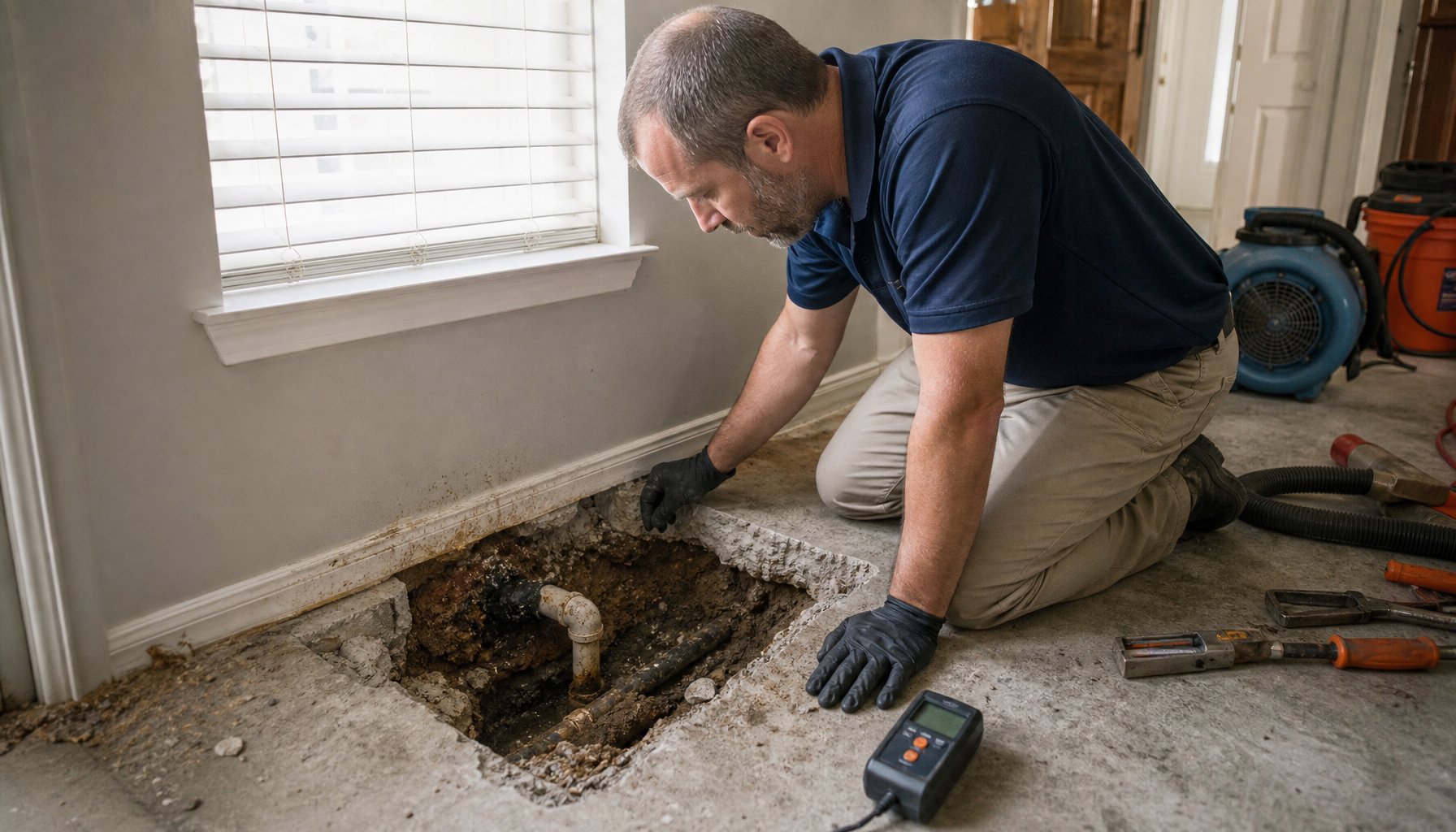
Then take photos and video. Start with wide shots from each corner of the affected rooms, then close-ups of the pipe area, wet drywall, flooring seams, trim, cabinets, ceilings, and contents. Once the scene is documented, call a plumber and a restoration company at the same time. The plumber repairs the pipe. The restoration crew handles extraction, moisture mapping, structural drying, selective removal, sanitation when needed, and claim documentation. Those jobs overlap in time, but they are not the same job.
How does burst pipe water travel through a Norman home?
Burst pipe water travels through a Norman home by following gravity, seams, framing cavities, flooring transitions, and hidden low points. A leak that starts in one wall can move under baseboards into an adjacent room. A second-floor pipe break can send water through insulation, ceiling drywall, light fixtures, and wall cavities before it appears on the first floor. A kitchen or bathroom supply line can soak cabinet toe kicks and subflooring even when the visible floor looks only damp.
That hidden travel pattern is why visual inspection is not enough. Drywall can wick water upward several inches above the floor line. Insulation can hold moisture against studs. Floating floors can trap water under the wear layer. Carpet pad can stay saturated long after the carpet face feels better. Cabinets can hide water underneath the base box. A restoration crew uses moisture meters, thermal imaging, and inspection openings to map what is actually wet instead of guessing from surface appearance.
Norman homes vary widely by age and construction style. Older homes near central Norman may have plaster, older framing, aging shutoffs, or prior plumbing repairs. Newer homes may have supply lines in exterior walls, garage walls, attic spaces, or second-floor bathrooms. Homes near the University of Oklahoma area can also include older finishes and remodel layers that hide water paths. The right recovery plan starts with the source room, then follows the water until readings show where the affected area ends.
What should you photograph for a burst pipe insurance claim?
You should photograph the original spread of water before moving furniture, pulling flooring, cutting drywall, or throwing away contents. Insurance documentation should show the failed pipe or suspected source, every affected room, wet trim, ceiling stains, wall staining, flooring seams, cabinet bases, contents, rugs, electronics, boxes, and any water line on baseboards. Use wide photos for context and close-up photos for proof. Video is also useful because it shows the path from the source through the affected areas.
Keep original image files and save them in a single folder. Texted photos can compress and scatter across conversations. If you call your carrier, write down the claim number, adjuster name, date, and any instructions you receive. Save plumber invoices, restoration agreements, equipment logs, moisture readings, material removal photos, hotel receipts, and repair receipts. Good records make it easier to explain why drying equipment, drywall removal, baseboard removal, or flooring work was needed.
For a deeper claim checklist, read the guide on Oklahoma water damage insurance claims. The main point is simple: document before, during, and after mitigation. Do not wait until reconstruction to start organizing evidence. A burst pipe claim often has three phases, including plumbing repair, mitigation, and rebuild. Photos and readings help connect those phases into one clear story for the adjuster.
When does burst pipe recovery need professional water restoration?
Burst pipe recovery needs professional water damage restoration whenever water reaches walls, ceilings, floors, cabinets, insulation, carpet, baseboards, or rooms below the source. A plumber can fix the broken pipe, but the pipe repair does not dry building materials. If the leak ran for hours, happened overnight, or affected more than one room, assume hidden moisture is present until meters prove otherwise.
Professional restoration starts with extraction and moisture mapping. Technicians identify the water category, mark affected areas, remove standing water, and decide what can dry in place. They may remove baseboards, detach toe kicks, lift carpet, remove saturated pad, drill small drying holes, or cut drywall at a clean horizontal line when insulation is wet. The goal is not unnecessary demolition. The goal is to open the materials that would otherwise trap moisture and create mold risk.
This is also where mitigation and reconstruction separate. Mitigation stops the damage and dries the structure. Reconstruction replaces drywall, paint, trim, cabinets, and flooring after drying is complete. The article on water mitigation versus restoration explains that difference in plain language. Keeping these phases clear helps homeowners understand invoices and helps insurance adjusters review the scope without confusing pipe repair, dry-out, and rebuild into one vague project.
How do restoration crews dry a Norman home after a burst pipe?
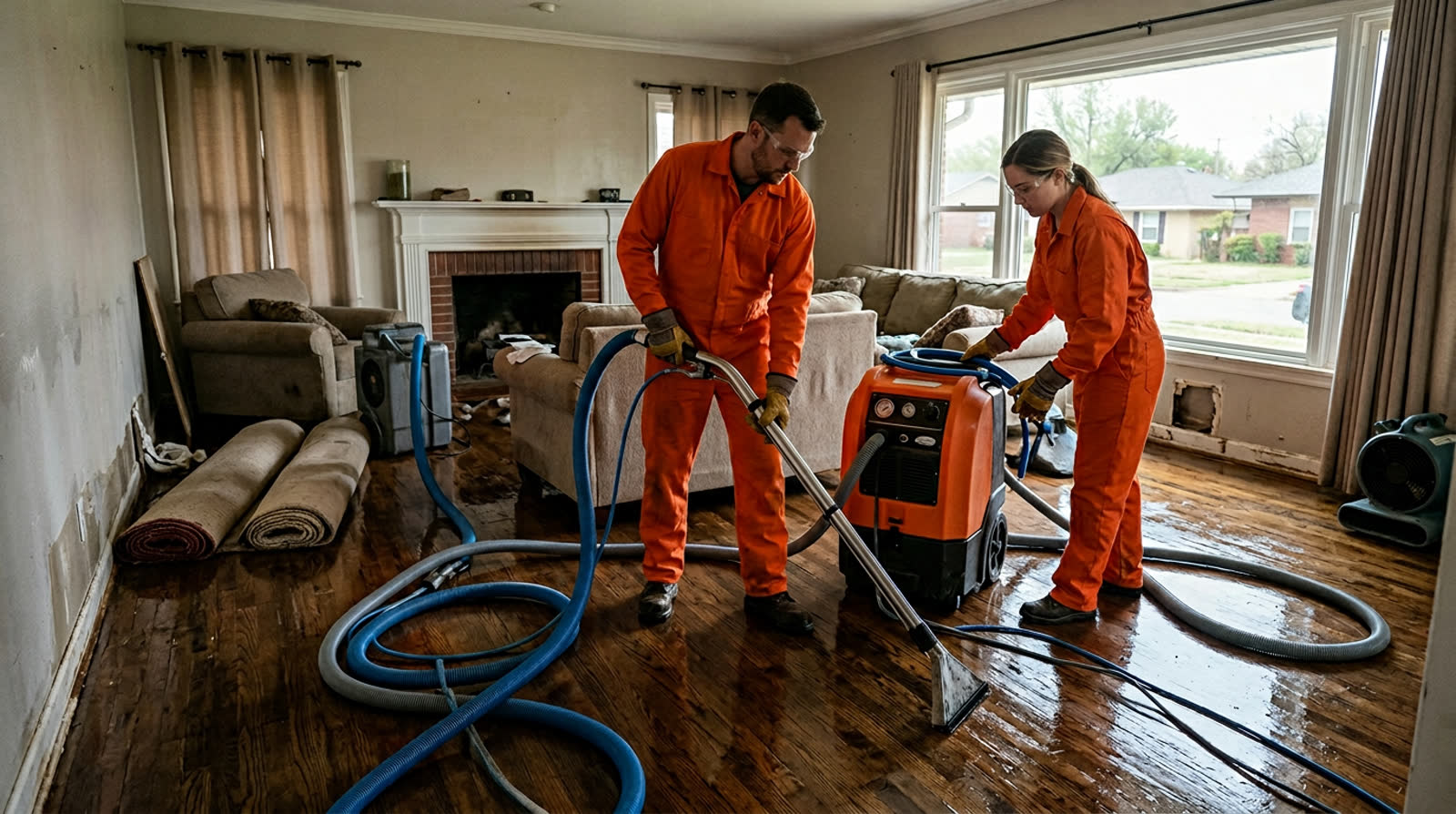
Restoration crews dry a Norman home after a burst pipe by removing water, opening trapped cavities when needed, controlling airflow, lowering humidity, and tracking moisture until dry goals are reached. Extraction comes first because standing water and saturated carpet slow every other step. After extraction, air movers push controlled airflow across wet surfaces, while dehumidifiers remove moisture from the air so evaporation continues instead of stalling.
Drying should be measured, not guessed. A crew should record starting moisture readings, place equipment based on the affected materials, and return for monitoring. The IICRC S500 water damage restoration standard is the industry reference for water damage inspection and drying. Homeowners do not need to know every technical term, but they should expect clear answers about what is wet, what is being dried, what must be removed, and how the crew will know the structure is ready for repairs.
Equipment may run for several days. It can be loud and warm, but turning it off overnight can add time and raise the chance of secondary damage. If readings stall, the crew may move equipment, open additional cavities, remove wet insulation, or adjust containment. The finish line is not when the surface looks dry. The finish line is when moisture readings show affected materials are dry enough to rebuild without trapping water behind new finishes.
Why do Norman homes get burst pipe damage during cold snaps?
Norman homes get burst pipe damage during cold snaps because Oklahoma weather can move from mild to hard-freeze conditions quickly. Pipes in exterior walls, garages, crawl spaces, attics, bonus rooms, and poorly insulated cabinet areas are vulnerable when cold air moves through framing gaps or utility penetrations. Water expands as it freezes, pressure builds, and the pipe can split at a fitting, elbow, valve, or weakened section. The leak may not appear until the pipe thaws and water starts moving again.
Different homes have different weak points. Older homes may have aging copper, galvanized lines, older valves, or remodel layers that hide vulnerable plumbing. Newer homes can still have lines routed through exterior garage walls, attic chases, or second-floor bathrooms near outside walls. A pipe does not have to be outdoors to freeze. It only needs enough exposure, enough wind-driven cold air, and enough time below freezing.
After the emergency cleanup is stable, prevention should become part of the recovery plan. Ask the plumber why the line failed and ask the restoration crew where water traveled. The American Red Cross frozen pipe guidance recommends practical prevention steps like protecting vulnerable pipes and warming areas carefully. For Norman homes, prevention may also include air sealing, pipe insulation, cabinet access during freezes, crawl-space work, leak sensors, and clear labeling of the main shutoff.
How much damage can a burst pipe cause before it is found?
A burst pipe can cause major damage before it is found because supply lines can release a large volume of water in a short time. If a homeowner is asleep, at work, traveling, or waiting for a thaw after a freeze, water can run into multiple rooms, wall cavities, ceilings, closets, and flooring systems. The visible water is only part of the loss. The hidden water behind trim, drywall, cabinets, and flooring often determines the final scope.
Cost depends on how long the pipe ran, how many rooms were affected, what materials got wet, and whether demolition or reconstruction is needed. A small clean-water line caught quickly may involve limited extraction, a few drying machines, and minor access cuts. A larger break can involve wet insulation, ceiling damage, cabinet removal, flooring replacement, contents handling, and several days of drying equipment. Insurance coverage depends on the policy and facts, but sudden and accidental water discharge from plumbing is commonly reviewed differently than long-term seepage or neglected leaks.
Homeowners should ask for the project to be separated into plumbing repair, mitigation, and reconstruction. That structure makes estimates easier to understand. Plumbing repairs the failed line. Mitigation dries the building. Reconstruction restores finishes after dry standards are reached. If you need service beyond Norman, the service area page lists Oklahoma communities where Trustworthy Restoration dispatches, including the Oklahoma City metro and surrounding cities.
When should you call Trustworthy Restoration for a Norman burst pipe?
You should call Trustworthy Restoration for a Norman burst pipe as soon as water reaches building materials or spreads beyond a small, easily isolated area. Call immediately if water touches drywall, flooring, cabinets, insulation, carpet, ceilings, baseboards, or contents. Call even faster if the pipe broke overnight, during a freeze, on a second floor, in an attic, or while the house was empty. Hidden moisture is common in those situations.
It is fine to call the plumber first if water is actively running, but do not wait for every plumbing detail before starting restoration. Pipe repair and dry-out can move in parallel. A restoration crew can inspect, extract, protect unaffected rooms, document the damage, and set drying equipment while the plumber fixes the line. That early action may reduce demolition and improve the insurance documentation trail.
Trustworthy Restoration helps Norman homeowners with water extraction, moisture mapping, structural drying, selective material removal, claim documentation, and the transition into repair planning. If the loss is active now, the safest path is to stop the source, document the scene, and get trained eyes on the moisture pattern. The sooner the affected area is mapped, the easier it is to decide what can be saved and what needs removal.
Need help now? See our full Water Damage Restoration service page or browse all restoration services. Don't see your city above? The full Oklahoma service area covers 27 cities.
Local context for this article: see our Norman, OK restoration page and the Water Damage Restoration in Norman service page.
This guide also pairs with emergency water mitigation and mold remediation when drying is missed.
Can I start drying a burst pipe loss before the adjuster sees it?
Yes. You should take reasonable steps to prevent additional damage, but document the loss first. Take photos and video, save receipts, keep damaged materials available for documentation when safe, and ask the restoration company for moisture readings and drying logs. Waiting days for an adjuster while water sits in walls or flooring can make the claim more expensive and the home harder to dry.
Authoritative resources referenced
Need restoration help in Oklahoma?
24/7 dispatch, IICRC standards, direct insurance billing.