The two phases of every water loss
Adjusters and restoration companies talk about water losses in two phases: mitigation and restoration. Mitigation is the emergency, time-sensitive phase. Restoration is the rebuild that follows. Both are usually covered under the same insurance claim, but they're priced and scoped separately — and that separation has practical consequences for homeowners that aren't always explained.
The IICRC S500 standard describes the full sequence as Inspection → Mitigation → Restoration, with mitigation being where the time pressure is and restoration being where most of the dollar value sits. A typical OKC residential water loss bills out as roughly 25–35% mitigation and 65–75% restoration on the rebuild side. The mitigation invoice is processed quickly; the rebuild estimate is the longer negotiation.
Inspection: the phase nobody invoices but everyone needs
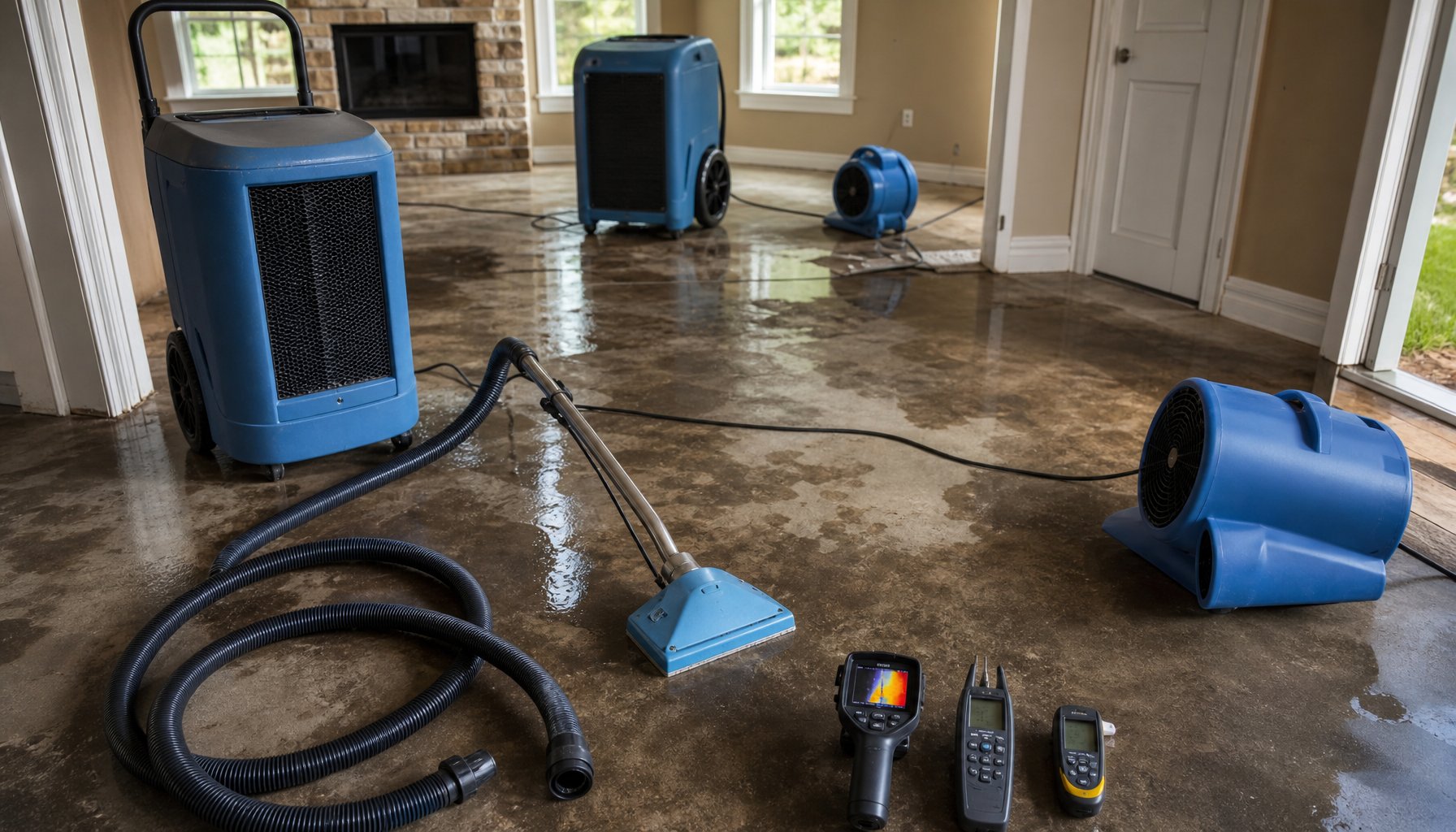
Before either mitigation or restoration starts, an inspection establishes the scope. On the contractor side, that's IICRC-trained moisture mapping with a thermal camera, pin and pin-less moisture meters, and a hygrometer. On the carrier side, that's an adjuster's site visit and a Xactimate scope.
What gets documented
- Cause of loss (sudden vs. gradual — the determination that drives coverage).
- Category of water (1 clean, 2 gray, 3 black per S500).
- Class of loss (1 minimal, 2 significant, 3 maximum, 4 specialty drying — drives equipment count).
- Affected materials by room.
- Pre-existing conditions visible at first inspection.
Why the inspection matters for the claim
The inspection produces the photos, moisture readings, and category determination that drive every later argument. A contractor who skips a moisture map is setting up the homeowner to lose supplements later.
Mitigation: the first 3–5 days
Mitigation is what happens in the first hours and days after a water loss. The goal: stop additional damage, get materials to dryness targets before the 72-hour mold window closes, and document everything for the claim.
What's in a mitigation scope
- Source isolation — shut off water, cap the line, coordinate with a plumber if the source needs repair.
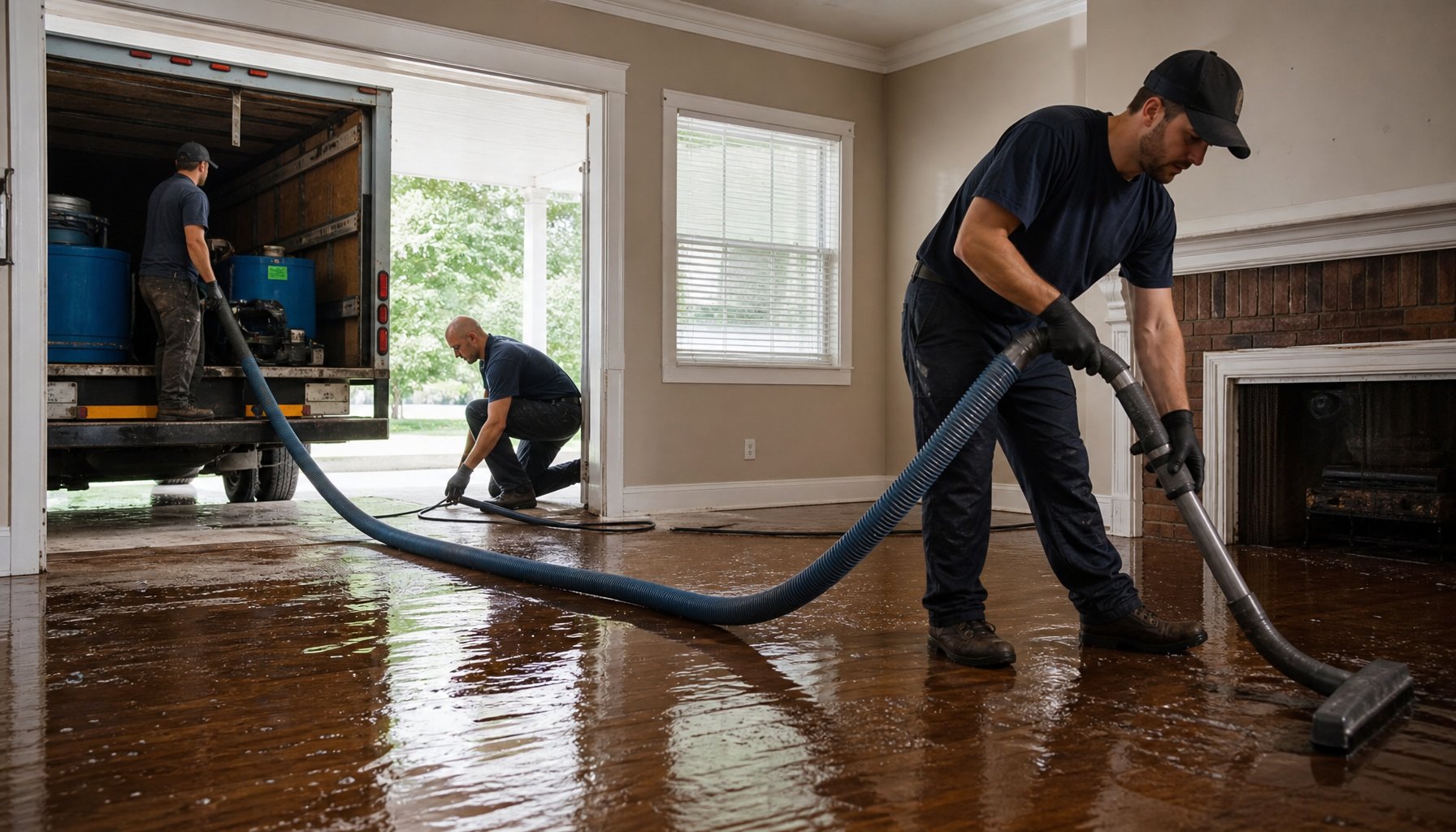
- Water extraction — truck-mount extraction (200+ gpm) or portable on smaller losses.
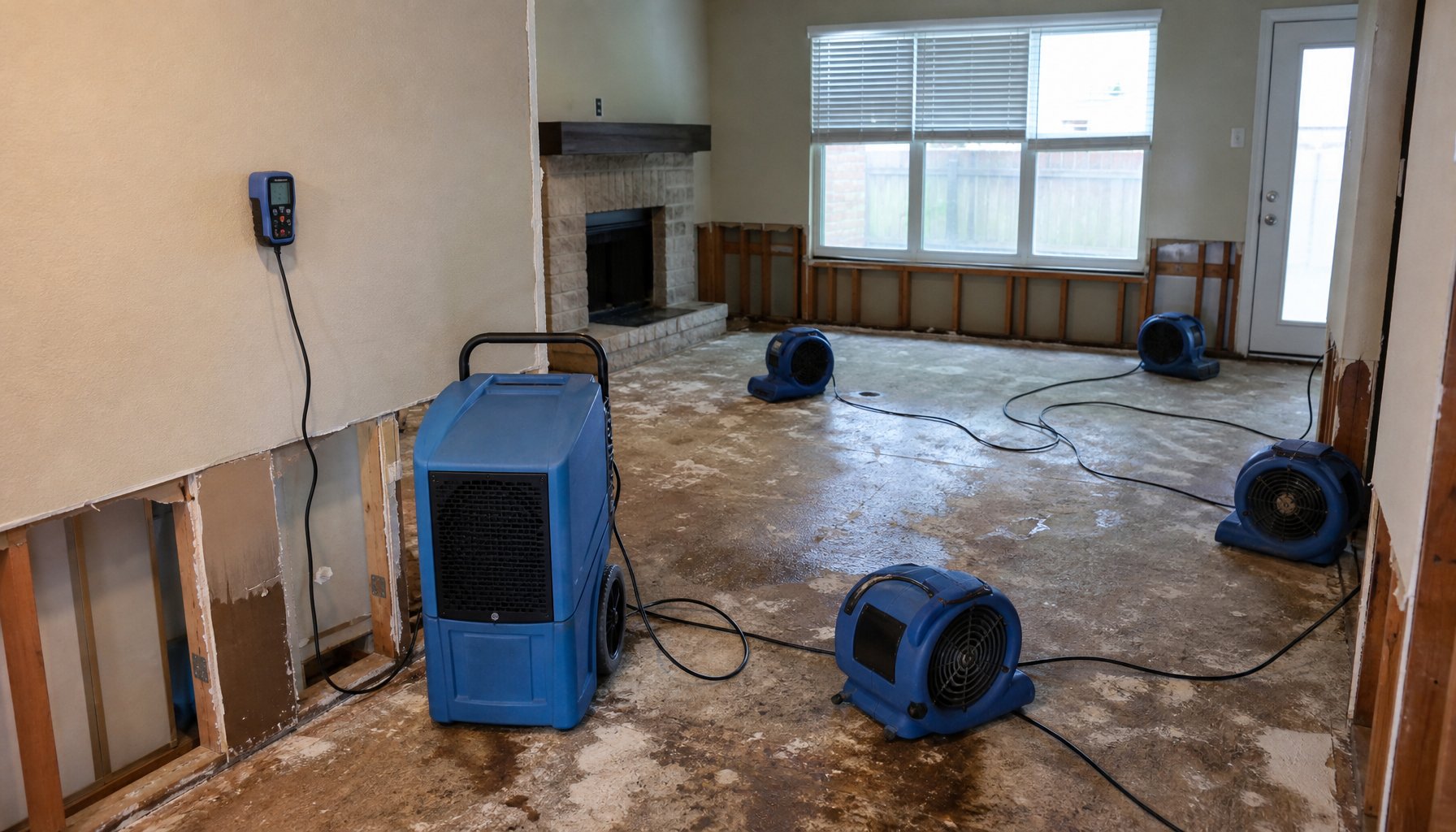
- Demo of unsalvageable materials — carpet pad, swollen baseboards, soaked drywall to 12–24 inches above water line, saturated insulation.
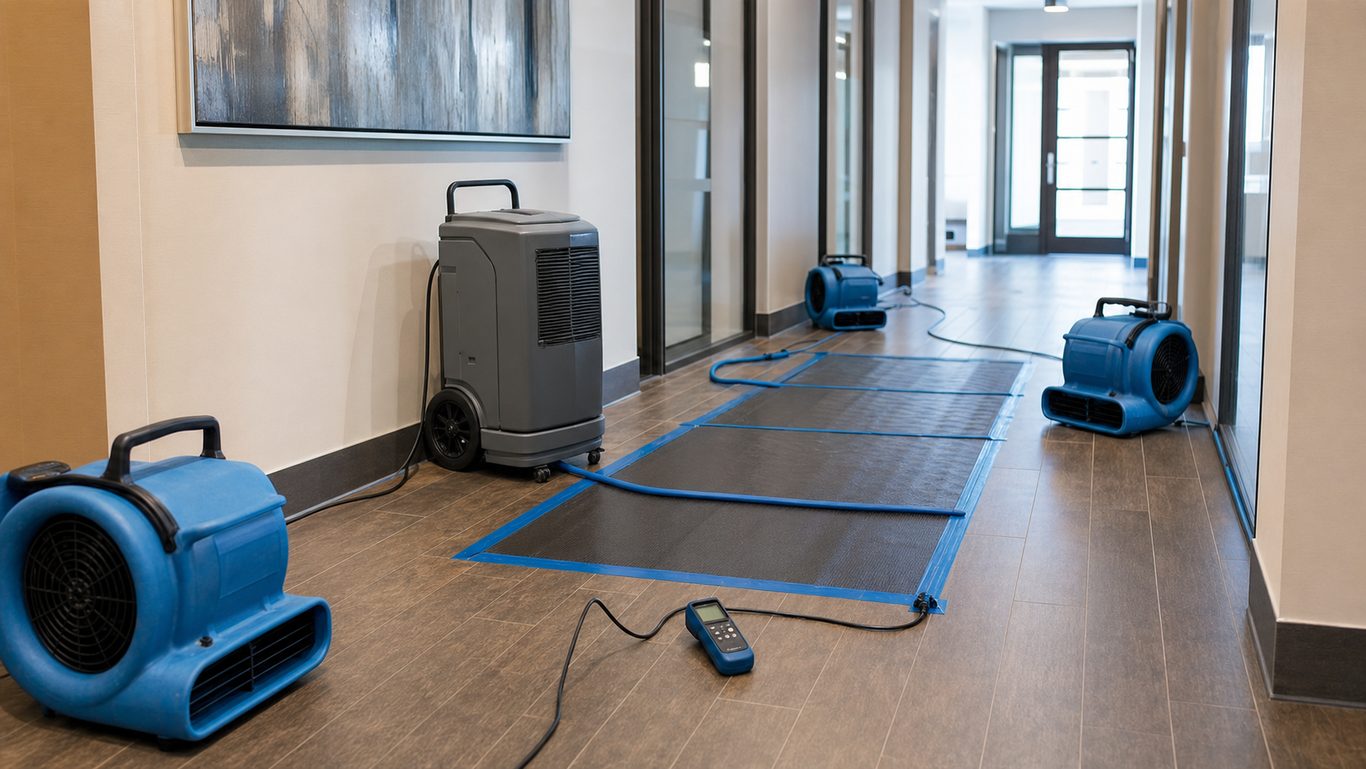
- Equipment placement — air movers (one per 50–60 sq ft of wet wall), commercial dehus sized to room volume, HEPA scrubbers if Category 2/3 or mold suspected.
- Daily monitoring — moisture readings logged, equipment adjusted, drying progress documented.
How mitigation is priced
Xactimate line items, regional pricing. Equipment is billed per piece per day (e.g., DRY-DEHU = dehumidifier per day; EQU-AIR = air mover per day). Demo is billed per linear foot or per square foot. Antimicrobial application is billed per square foot. The mitigation bill on a contained 200 sq ft kitchen loss in OKC typically runs $1,800–$3,500; whole-floor losses run $5,000–$12,000.
How long it takes
Most residential water losses dry to S500 targets in 3–5 days when mitigation starts inside 24 hours. Class 4 specialty drying (concrete, hardwood, dense wood floor systems) can take 7–10 days. Mitigation that takes longer than 7 days without a documented Class 4 reason usually means equipment was undersized.
Restoration: the rebuild phase
Once the structure is dry, restoration begins. New drywall, mud and tape, paint, trim and baseboards, flooring, cabinets if affected, sometimes plumbing repairs if pipes were the source. Restoration is essentially residential reconstruction priced like a remodel — but limited to the scope of damage from the loss.
What's in a restoration scope
- Drywall replacement (R&R) where demo'd.
- Texture matching to the existing wall surface.
- Paint — primer, top coat, often the full wall to a natural break for color match.
- Trim, baseboards, casing — replaced and stained or painted.
- Flooring R&R — carpet and pad, hardwood refinish or replacement, tile, vinyl plank.
- Cabinets, vanities, and countertops where damaged.
- Insulation R&R in any wall cavity that was opened.
- Final cleaning and contents return.
How restoration is priced
Same Xactimate engine, different line-item set. Pricing reflects current OKC-area labor and material rates. Code upgrades (e.g., bringing exposed wiring up to current code when the wall is open) are typically a separate line and are covered by Oklahoma policies that include code-upgrade coverage.
How long it takes
Typical OKC residential rebuild: 2–6 weeks for a single-room scope, 6–10 weeks for whole-floor, 12+ weeks for whole-house or large losses with custom finishes. Material lead times (cabinets, certain tile, color-matched hardwood) drive most of the timeline beyond 6 weeks.
Why both phases matter for your claim
Insurers expect both phases. Skipping mitigation or doing it incompletely creates secondary damage — mold, structural rot — that your carrier may decline to cover, arguing it resulted from inadequate mitigation. Skipping restoration leaves your home in a half-repaired state. The full claim covers both phases.
The two-invoice pattern
Mitigation invoice goes in first, typically inside week 2, paid at full RCV (no depreciation on mitigation labor and equipment days). Rebuild invoice goes in after work is complete, typically paid in two phases: ACV up front, RCV holdback after final invoice. The mitigation check usually clears 30–45 days from claim open; the rebuild check follows the work timeline. See our step-by-step Oklahoma claim guide for the full payment flow.
Why a single contractor for both phases is preferable
When mitigation and restoration are split between two companies, three things happen. First, the mitigation company's documentation often doesn't match the restoration company's scope, creating insurance back-and-forth. Second, things fall through the cracks — the mitigation crew leaves, the restoration crew shows up two weeks later, and what should have taken 4 weeks total ends up taking 10. Third, neither company owns the result; the homeowner becomes the project manager whether they want to or not.
The handoff failures we see most
- Material misidentification — mitigation assumes drywall demo was full sheets when the rebuild assumes patches.
- Cabinet decisions — mitigation pulls a vanity for drying; rebuild assumes it'll be reinstalled, but the toe-kick swelled and it can't be reused.
- Code-upgrade scope — exposed wiring brought up to code by mitigation isn't continued by rebuild because the rebuild contractor wasn't there for the inspection.
- Insurance documentation — mitigation moisture logs aren't delivered to the rebuild contractor, who then can't justify supplements when something is found mid-rebuild.
When a separate general contractor makes sense
On large losses (above $75,000) with custom finishes or a homeowner who already has an architect/GC relationship, a separate rebuild contractor can make sense. We hand off documentation cleanly and remain available for moisture verification during the rebuild.
Equipment and personnel by phase
Mitigation phase
IICRC S500-trained technicians, a project manager, truck-mount extraction, 6–20 air movers, 1–4 commercial dehus (LGR or desiccant), HEPA air scrubbers if needed, moisture meters, hygrometer, FLIR thermal camera. Crew of 2–4 on a typical residential loss, scaling to 6–8 on whole-floor or large commercial.
Restoration phase
Carpenters, drywall hangers and finishers, painters, flooring installers, plumbers and electricians as needed, project manager carrying through from mitigation. Crew sizes vary by trade and rotate based on work sequencing — drywall finish takes mud-tape-sand cycles with dry time between, so the painter doesn't show up until the drywall is fully cured.
What "dry standard" actually means in numbers
The transition between mitigation and restoration is moisture content. Materials don't go to rebuild until they're at S500 dryness targets, measured with calibrated meters and logged in writing.
- Wood framing: ≤16% moisture content (MC), with a baseline reading from an unaffected dry area in the same house setting the local target.
- Drywall: within 1% of the unaffected dry standard, measured with a pin meter.
- Concrete slab: relative humidity ≤75% on an in-situ probe (ASTM F2170), or ≤3 lbs/1000 sq ft/24 hr on a calcium chloride test (ASTM F1869).
- Hardwood flooring: ≤12% MC top and bottom, with the bottom reading typically governing.
- Insulation: dry to the touch and re-installed only if not contaminated; typically replaced.
If a contractor moves to rebuild without these readings on file, the homeowner is taking the risk that mold develops behind the new drywall. Demand the moisture log.
A typical OKC water loss timeline
The full sequence on a representative single-floor OKC water loss:
- Day 0: loss occurs, source stopped, restoration crew on-site, claim opened with carrier.
- Day 1: extraction, demo, equipment placed.
- Days 2–4: monitored drying, daily readings, mitigation invoice draft.
- Day 5: equipment removed, final dryness verified, mitigation invoice submitted.
- Days 6–10: adjuster meeting, rebuild scope written, scope reconciled.
- Days 10–14: drywall and trim demo balance, framing and electrical checks.
- Weeks 3–5: drywall installed, finished, painted; flooring installed.
- Weeks 5–8: cabinets, trim, final touches, contents return, final invoice and RCV holdback release.
Whole-floor and large losses typically run 8–14 weeks total. Anything past 14 weeks for a residential loss without a documented reason (custom millwork, structural rebuild, supply-chain delay) is a sign the project lost momentum.
Five questions to ask any restoration company before signing
- Are you IICRC S500 certified for water restoration and S520 for mold? Required for credible documentation.
- Do you handle reconstruction in-house or subcontract it? Single-contractor projects fail less often.
- Will you bill insurance directly to my carrier? Direct billing makes the claim flow simpler.
- Who is my single point of contact through the project? Project manager continuity matters across the phase handoff.
- What's your typical drying timeline for a loss like mine? Anything more than 5 days for a residential loss without a documented Class 4 reason is worth questioning.
Bonus question: Will you provide moisture logs in writing every day? The right answer is yes, and the homeowner gets a copy. See our full water mitigation and water damage restoration service pages for what's included on each side.
Where we work — OKC, Tulsa, and outlying Oklahoma
Our home base is Oklahoma City. The OKC metro — Edmond, Norman, Moore, Yukon, Mustang, Bethany, Midwest City, Del City, Choctaw, Nichols Hills — sees same-call dispatch with crews on-site in 30–60 minutes. The Tulsa metro — Tulsa, Broken Arrow, Owasso, Bixby, Jenks, Sand Springs, Sapulpa, Glenpool, Claremore — runs on positioned crews with same-day response. Outlying Oklahoma — Lawton, Shawnee, Guthrie, El Reno — sees same-day or next-day dispatch depending on traffic and severity. The full Oklahoma service area covers 27 cities; statewide dispatch for major losses outside that list.
How insurance pays the two phases — the line items in plain English
The carrier doesn't write two checks at random; the timing follows a predictable pattern. Knowing the pattern saves homeowners weeks of wondering when a payment is coming and removes most of the friction with the contractor's accounts-receivable side.
The mitigation invoice (week 1–3)
Mitigation labor is paid at full Replacement Cost Value (RCV) up front. There's no depreciation because there's nothing being "replaced" — the line items are equipment days, technician hours, and demo. A typical OKC residential mitigation invoice for a contained kitchen loss runs $1,800–$3,500; whole-floor losses $5,000–$12,000; large-loss commercial events $25,000+. The carrier typically issues the mitigation check 30–45 days after the invoice is submitted, sometimes faster if the relationship between contractor and carrier is established.
The rebuild ACV check (week 4–8)
Rebuild estimates are subject to ACV/RCV depreciation on each replaced item. The carrier issues an Actual Cash Value (ACV) check up front — the depreciated value of the replaced items — and holds the recoverable depreciation as RCV holdback until the work is complete. For a $14,000 rebuild estimate, ACV might be $9,500 with $4,500 in recoverable depreciation. The homeowner endorses the ACV check over to the contractor as work progresses, with a typical schedule of 30% deposit, 50% progress, 20% completion.
The RCV holdback (after final invoice)
Once the rebuild is complete and the contractor's final invoice is submitted, the carrier releases the RCV holdback against documented invoices. This requires the work to actually be performed within the policy's stated time window — typically 180 or 365 days. Take the ACV and never finish the work, and the holdback is forfeited. This is the most common reason homeowners feel under-paid on a claim: they took the ACV check, didn't complete the work in time, and lost the recoverable portion.
The full claim payment sequence is in our Oklahoma water damage insurance claim guide; the timing implications for budgeting the rebuild are in our first 24 hours playbook.
Need help now? See our full Water Mitigation service page or browse all restoration services. Don't see your city above? The full Oklahoma service area covers 27 cities.
Local context for this article: see our Oklahoma City, OK restoration page and the Water Mitigation in Oklahoma City service page.
This guide also pairs with full water damage restoration once mitigation is complete and mold remediation if the 72-hour window was missed.
Can the same contractor handle both mitigation and restoration in Oklahoma?
Yes — and most homeowners are better off when they do. A single contractor across both phases keeps documentation continuous (mitigation moisture logs flow directly into rebuild scope), eliminates the handoff failures that stall claims by 2–4 weeks, and keeps one project manager accountable for the result. We handle both phases in-house across the OKC metro, the Tulsa metro, and outlying Oklahoma cities. The exception is large-loss projects with custom architecture, where a separate general contractor sometimes makes sense — we hand off cleanly and remain available for moisture verification.
Authoritative resources referenced
Need restoration help in Oklahoma?
24/7 dispatch, IICRC standards, direct insurance billing.