OKC mold remediation cost matrix
Mold remediation pricing in Oklahoma City varies by three factors: contained-area square footage, severity (visible growth versus cavity-only versus HVAC-distributed), and the scope of porous material removal and replacement. Here is a matrix of typical 2025 OKC pricing across common job sizes and severity levels.
Small contained jobs ($1,200 – $2,500)
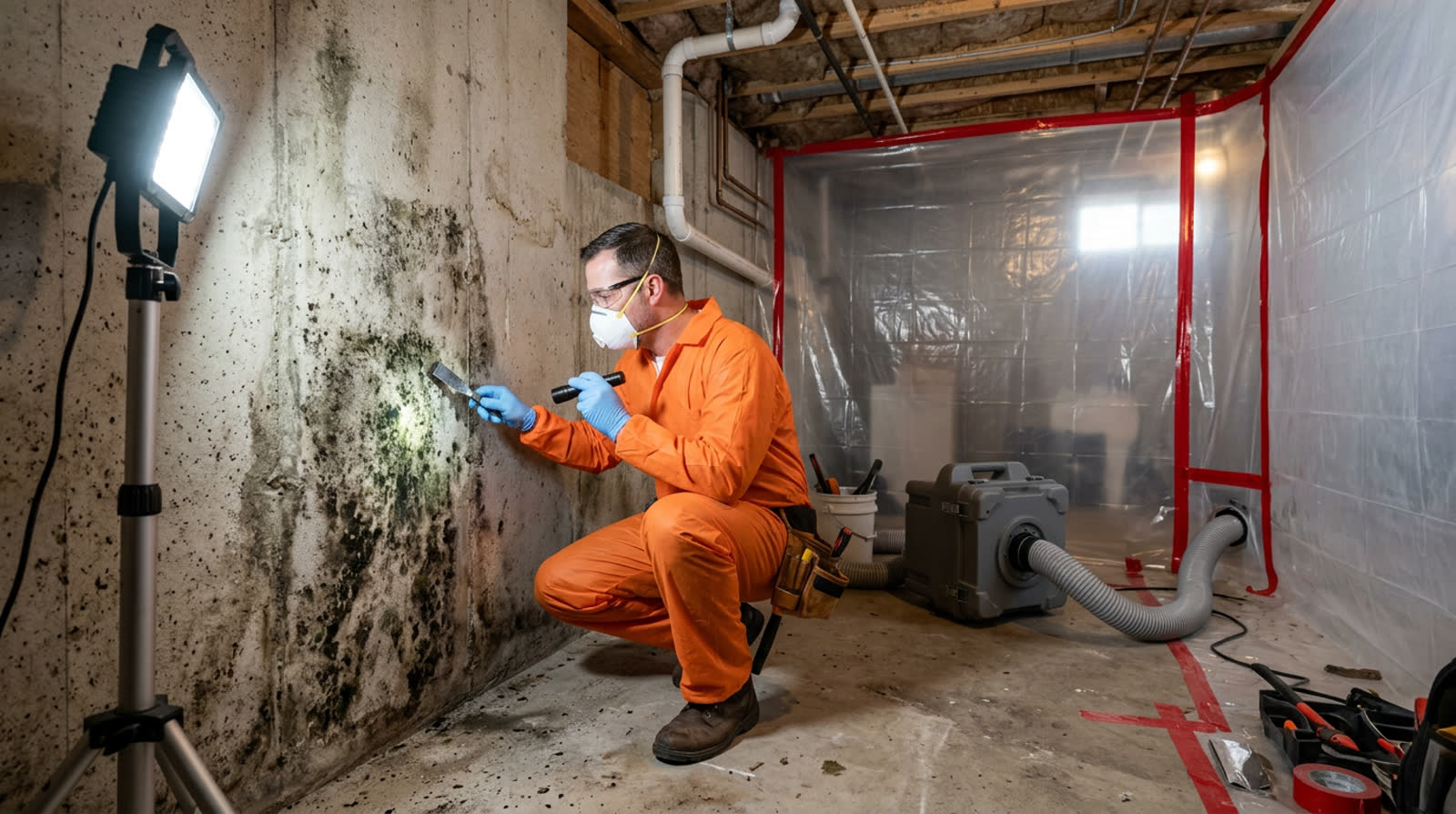
Single-fixture bathrooms (vanity wall behind a slow leak), pantry corners, single-window-wall casualties from condensation, and self-contained Category 1 closet losses. Typical scope: 30 to 80 square feet of contained area, drywall removed to 24 inches up, insulation removed where present, HEPA vacuum and damp wipe of framing, antimicrobial application, sealing primer optional. Equipment on site: one HEPA negative-air machine, two air scrubbers, one dehumidifier. Two to four working days.
Mid-sized residential jobs ($2,500 – $6,800)
Master-bath flood that hit an adjacent bedroom wall, kitchen sink supply-line failure that affected the under-cabinet area plus the wall behind, washing-machine-pan failure in a laundry that hit the adjacent hall and one bedroom. Typical scope: 80 to 250 square feet of contained area, drywall to 24 to 48 inches, partial cabinet R&R, full subfloor inspection, HEPA cleaning across two to three rooms. Equipment: 2 negative-air units, 3 to 4 air scrubbers, 2 dehumidifiers. Five to eight working days.
Large jobs ($6,800 – $14,000)
Whole-basement Category 1 or 2 losses, attic mold from prolonged roof leaks, two-story stair-cavity losses, and significant HVAC-distributed contamination. Typical scope: 250 to 600 square feet of contained area, multi-room drywall and insulation removal, HVAC duct cleaning, sometimes evaporator coil R&R. Equipment: 3 to 4 negative-air units, 5+ air scrubbers, 3+ dehumidifiers, often a desiccant dehumidifier on basements. Eight to fifteen working days.
Category 3 and large-loss jobs ($12,000 – $40,000+)
Sewage-driven mold (Category 3 from a sewer backup), large-area attic remediation across multi-story homes, slab-up basement remediation with significant material R&R, and any project that crosses 600 square feet of contained area. Typical scope: substantial framing R&R, HVAC R&R in some cases, full hardwood or LVP replacement, often custom cabinet R&R. Two to six weeks of work in remediation alone, with the rebuild as a separate phase. For the sewage-driven side specifically, see our sewage backup guide.
What is included in a typical OKC mold quote
An IICRC S520 mold remediation quote in Oklahoma City has specific line items. Knowing what they are helps you evaluate any quote you receive — and identify the red flags in flat-rate quotes that hide what's missing.
Standard line items
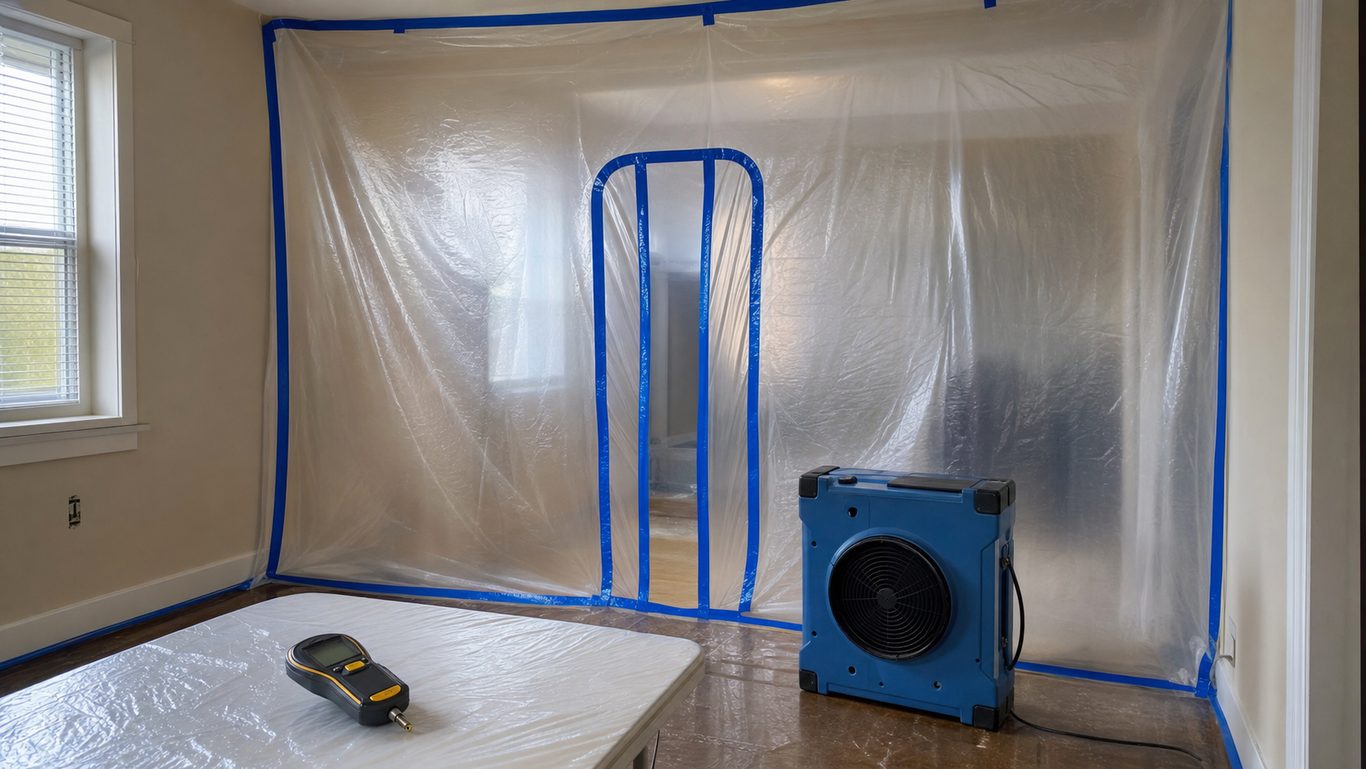
Inspection and protocol writing (with moisture map). Containment construction (poly, zip-walls, decon chamber). Negative-air machine rental with HEPA filtration. Air scrubber rental. Removal of mold-affected porous materials (drywall, insulation, baseboard, carpet, pad). HEPA vacuuming of framing and contained surfaces. Damp-wipe with EPA-registered antimicrobial. Sealing primer on residual framing where required. Air sampling pre and post (where scope includes it). Daily monitoring and re-inspection. Disposal of contaminated material in sealed bags. Reconstruction is typically billed separately.
What is usually billed separately
Reconstruction (drywall, paint, trim, flooring) is its own scope. Third-party post-remediation verification testing is usually billed by the independent hygienist, not the remediator. Cabinet replacement and large-furniture content remediation are often separate. HVAC system cleaning by an air-duct specialist is typically a separate vendor.
Red flags in a remediation quote
No containment line item. No moisture readings or moisture map referenced. Flat-rate "whole house" pricing without square-footage detail. No mention of HEPA negative air. No reference to IICRC S520. No itemized material disposal. No mention of post-remediation verification or air sampling. Any of those suggests a contractor pricing visible scrubbing rather than real remediation.
Worked example: a 240-square-foot master bath in NW OKC
Concrete numbers help. Here is a representative OKC line-item breakdown for a master-bath mold remediation following a shower-pan failure. Numbers reflect 2025 OKC residential market pricing and will vary with scope.
Scope
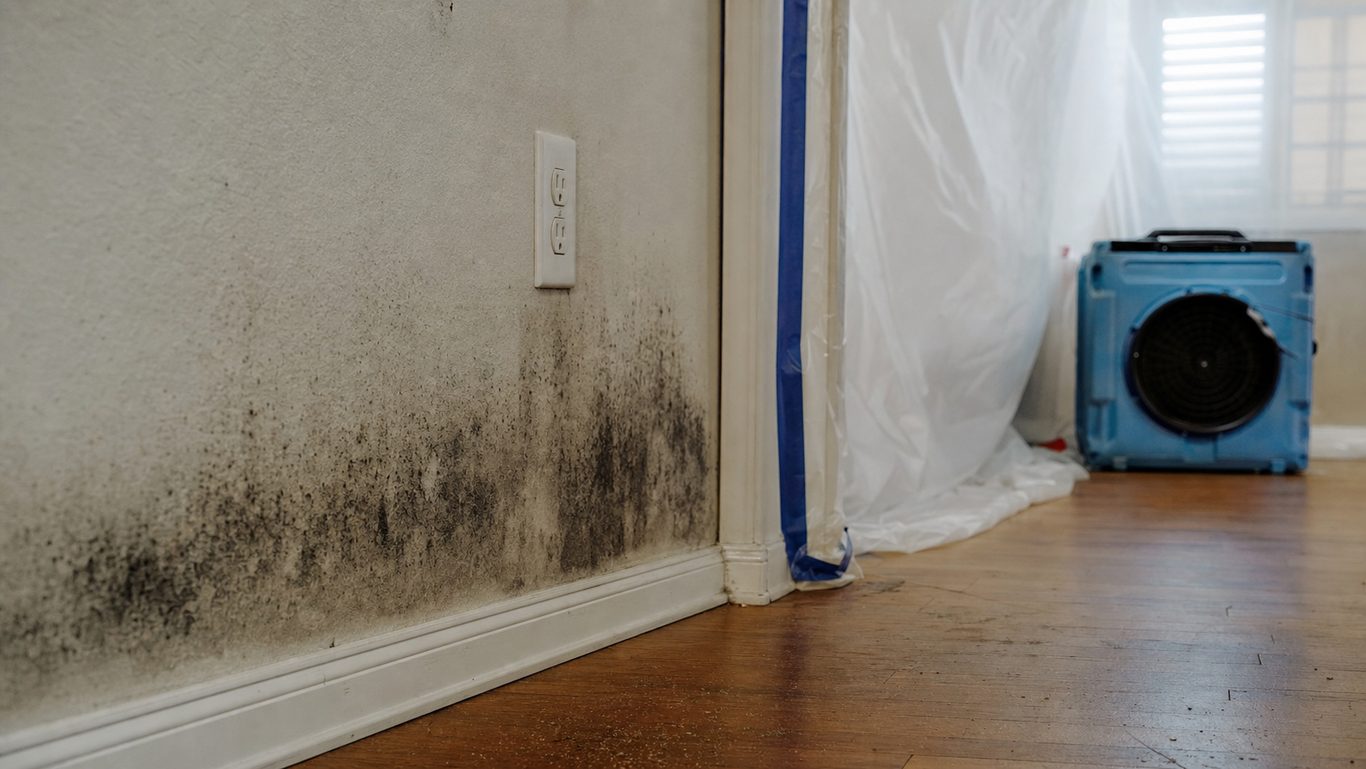
Failed shower pan leaked under the tile floor for an estimated 3 to 4 weeks before discovery. Visible mold along the bottom 18 inches of the bath wall and the adjacent bedroom wall sharing the plumbing chase. Subfloor saturated under the bath; one floor-joist top showed surface mold. Bath: 80 sq ft. Adjacent bedroom wet section: 160 sq ft. Total contained area: 240 sq ft. Severity: Condition 3 in bath, Condition 2 in bedroom.
Line items
Inspection and protocol writing: $350. Containment (poly, zip-walls, decon): $475. Negative-air machine, 5 days: $325. Two air scrubbers, 5 days: $400. Drywall demo to 24", both walls: $580. Insulation R&R: $215. Baseboard R&R: $190. Subfloor patch (4×4 section): $410. HEPA vacuum and damp-wipe framing and contained surfaces: $720. Antimicrobial: $185. Sealing primer (B-I-N) on framing: $240. Air sampling pre and post (3 samples): $420. Disposal: $180. Project management and final walk: $390.
Subtotal remediation: $5,080. Reconstruction (drywall, paint, baseboard install, tile patch in bath): $3,600 separate scope. Total: $8,680. Insurance: covered water loss with mold sub-limit of $10,000 — claim paid in full minus deductible.
Worked example: a whole-basement Category 3 in Edmond-adjacent OKC
A larger and messier scenario: a backed-up floor drain in a finished basement, undiscovered for an entire 3-day weekend while the homeowner was out of town. Returns Monday morning to standing sewage and active mold.
Scope
Finished basement, 950 sq ft. Sewage covered the entire floor to a depth of 0.5 inches at the lowest point. Drywall wicked sewage 14 to 18 inches up every wall. Carpet and pad fully contaminated. Bathroom vanity saturated. HVAC supply-air boots on the floor — contamination distributed via duct.
Line items (highlights)
Category 3 emergency response and PPE: $1,850. Containment construction (full basement isolation, decon chamber): $2,400. Sewage extraction and disposal: $2,200. Carpet and pad removal and disposal: $1,900. Drywall demo to 24" throughout: $4,800. Insulation R&R throughout: $1,650. Vanity, baseboard, and trim R&R: $2,100. HVAC duct cleaning by specialist subcontractor: $2,800. HEPA vacuum and damp-wipe framing: $3,400. Antimicrobial and sealing primer: $1,800. Air and surface sampling pre and post: $1,150. Equipment (3 negative-air units, 5 scrubbers, 3 dehumidifiers, desiccant) for 12 days: $4,200. Disposal: $850. Project management: $1,450.
Subtotal remediation: $32,550. Reconstruction (drywall, paint, baseboards, trim, carpet replacement): $24,000 separate scope. Total: $56,550. Insurance: depends on whether the homeowner had a sewer-and-drain backup endorsement. Without it, sewer backup is typically excluded — a routine and painful Oklahoma scenario.
How Oklahoma homeowner's insurance treats mold
Mold coverage in Oklahoma is among the most misunderstood parts of the policy. Most homeowners assume "I have a homeowner's policy, so mold is covered." That is rarely fully true. Here is how Oklahoma carriers actually handle it.
The mold sub-limit
Most Oklahoma policies cap mold-specific coverage at $5,000 to $10,000 unless a higher-limit endorsement is in place. The cap applies to mold-related expenses across the claim — testing, remediation, reconstruction of mold-affected materials. The water damage that caused the mold is paid against the dwelling limit; the mold portion of the work hits the sub-limit. A $10,000 mold remediation following a covered $20,000 water loss can fully consume the mold sub-limit while the water loss was nowhere near the dwelling limit.
Trigger conditions: covered water loss, reasonable mitigation
Carriers generally pay mold against the sub-limit when (a) the mold resulted from a covered water loss (sudden and accidental discharge) and (b) the homeowner took reasonable mitigation steps and the mold occurred anyway. If either condition fails, the mold is typically excluded — most commonly because the underlying water was excluded (gradual leak, flood) or because mitigation was delayed past industry-reasonable timelines (the 72-hour window). Our 72-hour window guide explains how that timing works.
What pushes a mold job out of coverage
Deferred maintenance (an obvious slow leak ignored for months). Undisclosed prior water damage (the carrier discovers the loss is a recurrence on a previously-paid claim and the underlying repair was inadequate). Lack of documentation tying the mold to a specific covered event. Sewer backup without the endorsement. Flood without an NFIP policy. Any of those typically results in a denial of the mold portion even if the carrier writes some coverage on the rest of the loss.
Why testing is sometimes paid out of pocket
Independent indoor-hygienist testing — pre-remediation scoping samples or post-remediation verification — is sometimes paid by the carrier as part of the remediation scope and sometimes excluded. Many Oklahoma carriers will pay for one round of post-remediation air sampling but not for pre-remediation "is there mold here" testing. Homeowners who suspect mold but have no visible growth often pay $300 to $700 for an initial inspection and sampling out of pocket.
How to negotiate the mold scope with your adjuster
Mold scoping is the most negotiable phase of a water claim. Adjusters often write the initial mold scope conservatively and adjust it after re-inspection. Knowing how to push back with documentation rather than argument is the difference between a fully-paid mold claim and a partial denial.
When to ask for a re-inspection
If the adjuster's scope omits items clearly visible in your photos, omits reasonable square-footage assumptions, or refuses to credit air-sampling evidence of contamination, ask in writing for a re-inspection. Provide the photo evidence, the moisture map, the air-sampling report, and the contractor's commentary. Most Oklahoma carriers will re-walk the loss with the contractor and adjust the scope; some will send a senior adjuster instead.
Documentation that moves scopes
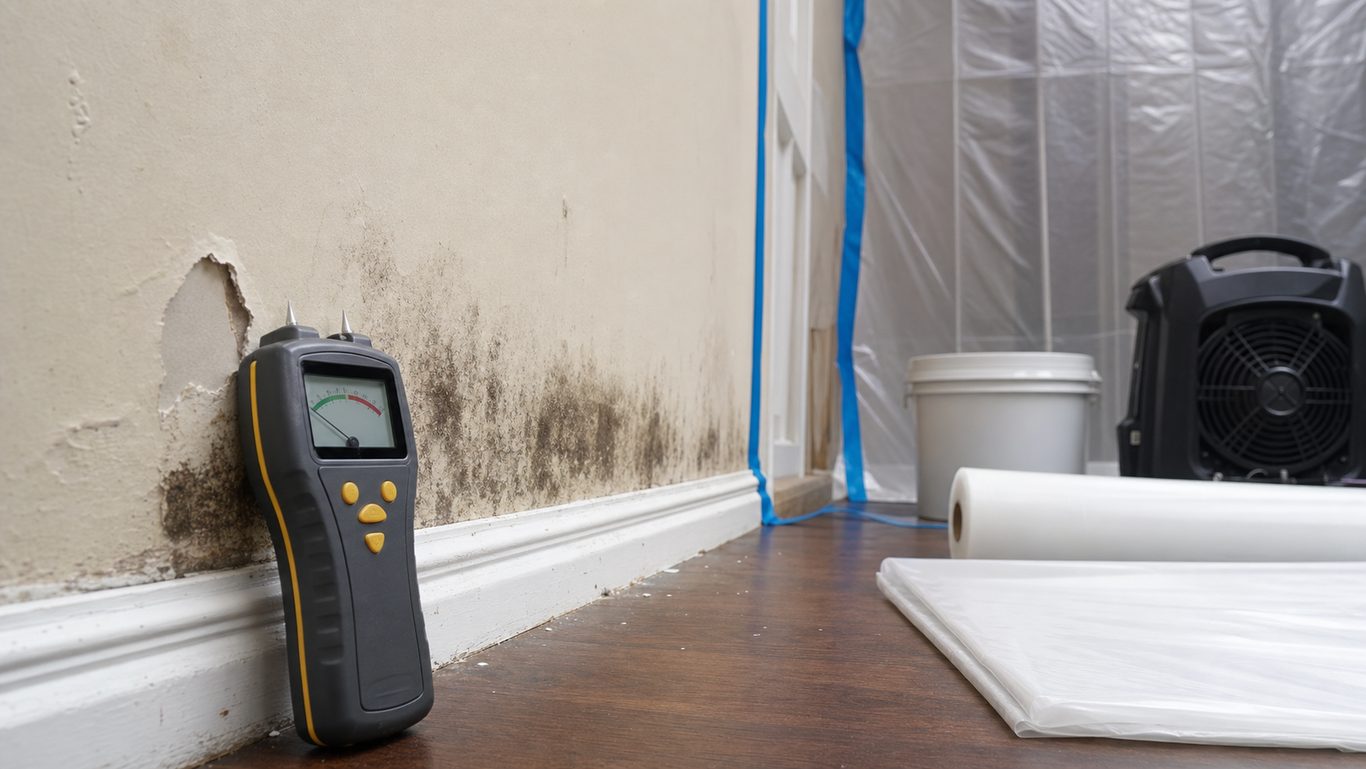
Air sampling results from before remediation (showing elevated indoor counts versus outdoor controls) anchor the case for full remediation rather than partial scrubbing. Visible moisture meter readings on every wall, ceiling, and floor — daily log entries — anchor the case for full drying and full removal. The contractor's IICRC S520 protocol document anchors the case for the specific remediation steps. Without those three elements, scopes drift toward whatever the adjuster's first impression was.
Independent testing versus remediator-performed testing
Mold testing falls into two categories: pre-remediation scoping ("is there mold here, where, and how much?") and post-remediation verification ("did the remediation succeed?"). Both can be performed by an independent indoor-environmental-quality firm or by the remediation contractor. The right choice depends on the loss and the homeowner's risk profile.
Why independent testing matters on disputed scopes
If the scope is disputed — adjuster says no remediation needed, contractor says yes; or contractor says contained 80 sq ft, adjuster says contained 30 sq ft — independent air or surface sampling resolves the dispute with data rather than argument. An independent hygienist's report carries more weight than a remediator's report because the hygienist has no economic stake in the scope.
Pre-remediation independent testing in OKC typically runs $400 to $900 for a residential sample set covering 3 to 6 sample locations plus an outdoor control. Lab turnaround is 3 to 5 business days for standard direct-microscopy analysis. Faster turnaround is available for emergency scopes at a premium.
When remediator-performed testing is fine
On clean, undisputed losses where the cause is documented, the contained area is obvious, and the homeowner has no special health concerns, the remediation contractor's own air sampling at start and finish is usually adequate. The contractor's chain of custody to a third-party lab still applies — the samples are analyzed by an accredited microbiology lab, not by the contractor's office.
Cost split: testing in the claim versus out of pocket
Many Oklahoma carriers cover one round of post-remediation verification testing as part of the claim. Pre-remediation scoping testing is more often paid out of pocket and credited to the claim if the testing confirms growth. Homeowners with asthma, immunocompromise, or infants in the home often pay for additional independent testing regardless of carrier position because the verification is for the resident, not the claim file.
OKC neighborhoods and housing stock that drive cost variation
Mold remediation cost in OKC isn't just about square footage; the housing stock matters. Here are the OKC neighborhood patterns that show up in our cost estimates.
Mesta Park, Heritage Hills, and older Capitol Hill
Pre-1940 homes with plaster on lath rather than drywall — substantially harder to demo cleanly and harder to match in reconstruction. Plaster removal pricing runs roughly 1.4x to 1.8x drywall removal. Many of these homes also have horsehair plaster that creates respirable hazards during demo, requiring specific PPE.
Mid-century single-stories (NW OKC, Edmond corridor)
1950s to 1970s ranch homes with crawl-space construction, often original cast-iron drains and galvanized supply lines that fail with age. Crawl-space mold from prolonged condensation or slow drain leaks is one of our most common OKC scenarios. Crawl-space remediation pricing is heavily influenced by access — clearance under 24 inches drives crew time up sharply.
1990s+ Deer Creek and far-NW OKC
Newer construction with PEX or copper supply, OSB sheathing, and large open floor plans. Mold typically follows a single appliance failure (washer pan, fridge ice-maker, dishwasher supply) and the open floor plans mean wider distribution. Square footage of contained area runs higher per loss in these homes, but per-square-foot cost is often lower because demo is cleaner.
Bricktown and downtown lofts
Concrete-floor construction with exposed brick and limited drywall makes mold scenarios less common but more dramatic when they happen. Sprinkler discharges, HVAC condensate failures, and shared-stack plumbing failures from neighboring units are the typical drivers. Coordination with building management and HOA insurance often shapes the timeline more than the technical scope.
Companion guides on this site: why mold grows after water damage and the 72-hour window, how to file a water damage insurance claim in Oklahoma, sewage backup health risks, and hidden water damage warning signs. See our mold remediation service page, mold remediation in OKC, Edmond mold remediation, and our Oklahoma City coverage page.
Need help now? See our full Mold Remediation service page or browse all restoration services. Don't see your city above? The full Oklahoma service area covers 27 cities.
Local context for this article: see our Oklahoma City, OK restoration page and the Mold Remediation in Oklahoma City service page.
This guide also pairs with water damage restoration that prevents mold from forming and water mitigation inside the 72-hour window.
Does Oklahoma homeowner's insurance cover mold remediation in Oklahoma City?
Sometimes — and only up to your policy's mold sub-limit. Most Oklahoma policies cap mold coverage at $5,000 to $10,000 unless you have a higher-limit endorsement. The mold must result from a covered water loss (sudden and accidental discharge) and the homeowner must have taken reasonable mitigation steps. Mold from gradual leaks, flooding without flood insurance, or sewer backup without a sewer-backup endorsement is typically excluded. Read your declarations page for the mold sub-limit before you assume.
Authoritative resources referenced
Need restoration help in Oklahoma?
24/7 dispatch, IICRC standards, direct insurance billing.