What should Edmond homeowners do first after a frozen pipe bursts?
The first step after a frozen pipe bursts in Edmond is to stop the water source before it spreads into walls, flooring, cabinets, and ceilings. Close the nearest fixture valve if the break is at a sink, toilet, water heater, washing machine, or appliance supply line. If that does not stop the flow, use the main water shutoff. In many Edmond homes, the main shutoff may be in the garage, near the water heater, in a mechanical closet, or near the meter. If you do not know where it is, treat that as an emergency task for the whole household after the cleanup is complete.
Once water is off, avoid wet electrical areas. Do not step into standing water if outlets, extension cords, ceiling fixtures, or a breaker panel may be involved. If you can safely reach the breaker panel from a dry location, turn off affected circuits. If the panel is wet or the path to it is wet, stay out and wait for professional help. A frozen pipe loss often happens during winter weather, when homeowners are tired, cold, and trying to move quickly. Slow down enough to avoid a preventable injury.
The third step is documentation. Take photos and video before cleanup begins. Show the source area, every affected room, wet trim, wet drywall, floors, ceilings, closets, cabinets, and personal property. Then call a plumber and a restoration company at the same time. The plumber repairs the pipe. The restoration company extracts water, maps moisture, dries materials, removes what cannot be saved, and documents the work for insurance. Those are separate roles, and waiting on one before calling the other can add hours of damage.
How do you safely stop water from a frozen pipe leak?
You safely stop water from a frozen pipe leak by controlling the source without opening wet walls or disturbing electrical risks. If the burst is visible under a cabinet, behind a toilet, at a washing machine box, or near a water heater, close the local valve first. If the leak is inside a wall, ceiling, attic, garage wall, crawl space, or slab area, shut down the whole house. After water is off, open a faucet at a low point and another at a high point to relieve pressure in the system. That can reduce ongoing dripping until the plumber repairs the line.
Do not cut drywall while the water is actively running unless a professional tells you to. Opening the wrong area can release trapped water, expose wiring, or spread damage into a larger area. Use towels only to slow movement at thresholds, not as a drying plan. If water is coming through a ceiling, set buckets under active drips and keep people away from sagging drywall. Wet ceiling drywall can fail suddenly. A small stain can become a large collapse if insulation above it is saturated.
Frozen pipe cleanup is especially time-sensitive because the pipe may have split hours before the water shows. The leak often starts when the line thaws, not when it freezes. Edmond homes with plumbing in exterior walls, garage walls, attics, and bonus-room spaces are vulnerable during hard freezes and north-wind events. The Ready.gov winter preparedness guidance recommends protecting pipes and acting quickly during cold weather because home systems can fail fast in winter conditions. Once the water is stopped, the next job is finding how far it traveled.
What damage should you document before frozen pipe cleanup starts?
Document every visible sign of water before materials are moved or removed. Start with wide photos from each corner of every affected room. Then take closer photos of the pipe location, wet drywall, baseboards, floor seams, carpet, rugs, cabinets, ceiling stains, contents, and any water line on trim. If the leak came from an attic or wall, photograph the rooms below and the path water followed. If water entered closets or adjacent rooms, photograph those areas even if the damage looks minor.
Video is helpful because it shows context. Walk slowly from the suspected source through each affected area and narrate the date, time, room names, what you found, and what you already did to stop the water. Save original files instead of relying only on texted images. Text messages can compress photos and scatter them across conversations. A single cloud folder with original photos, plumber invoices, restoration documents, and receipts is easier for homeowners, adjusters, and contractors to review.
Ask the restoration company for moisture readings and photos during the drying process. Documentation should not stop after the first call. Good mitigation records include inspection notes, moisture maps, equipment logs, demolition photos, and dry-standard readings. This matters because frozen pipe claims can involve plumbing, mitigation, contents, and reconstruction. The guide on Oklahoma water damage insurance claims explains why early photos and drying documentation can prevent confusion when the adjuster reviews flooring, drywall, trim, paint, or cabinet scope.
When does frozen pipe cleanup need professional drying?
Frozen pipe cleanup needs professional drying whenever water reaches drywall, insulation, subflooring, cabinets, carpet, ceilings, baseboards, or rooms below the leak. A plumber can fix the broken pipe, but the pipe repair does not dry the structure. Water can wick upward behind baseboards, move under floating floors, collect beneath cabinets, and stay trapped inside insulation. If the break happened overnight or while the home was empty, assume hidden moisture exists until it is checked with meters.
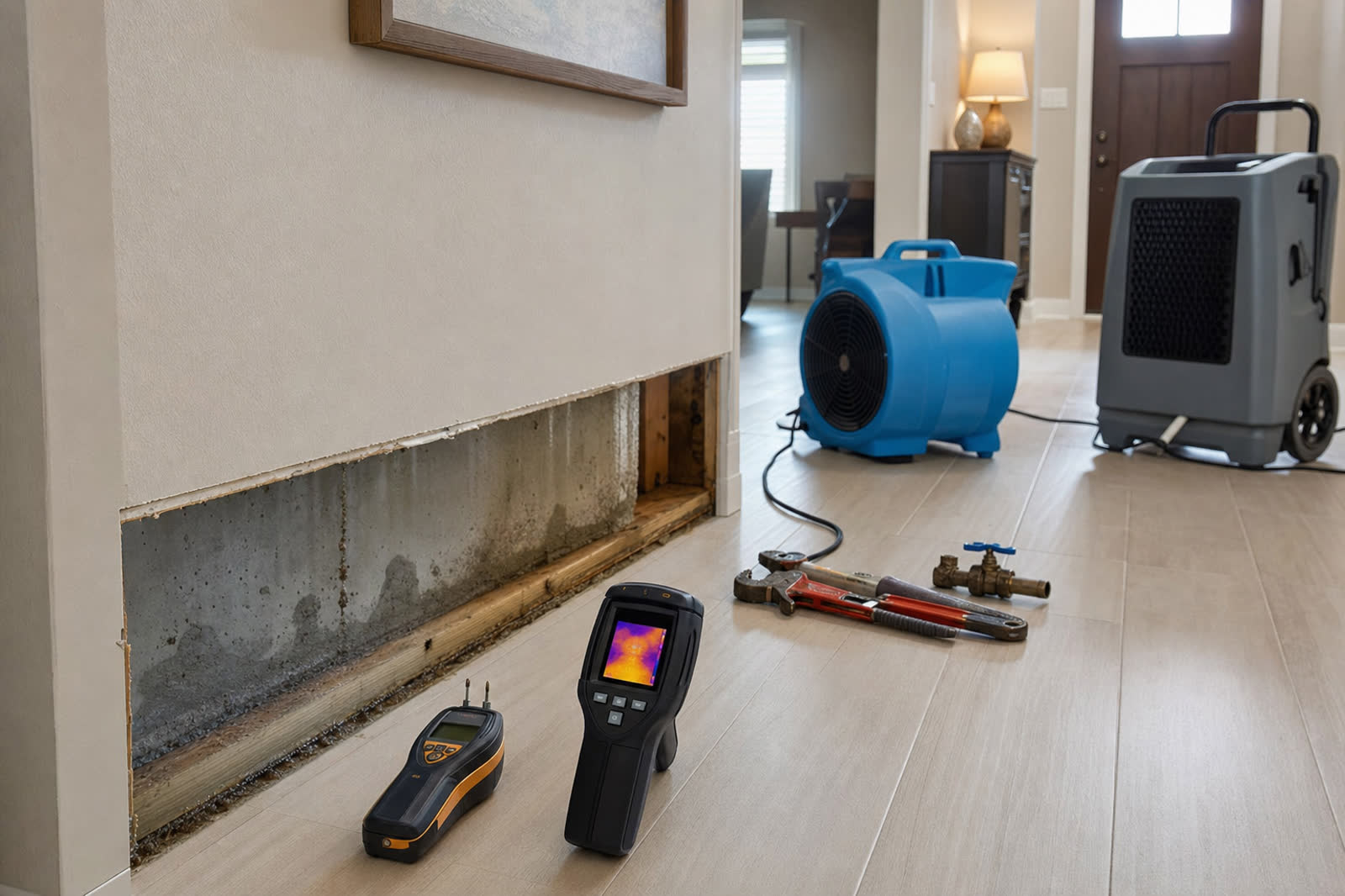
Professional drying starts with extraction and moisture mapping. Technicians use moisture meters, thermal imaging, and inspection openings to determine what is wet. They may remove baseboards, detach toe kicks, lift carpet, remove pad, drill drying holes, or cut drywall at a clean line when insulation or cavities are saturated. The goal is not to tear out everything. The goal is to remove materials that cannot dry correctly and create airflow paths for materials that can be saved.
This is the difference between plumbing repair and water damage restoration. Plumbing stops the mechanical failure. Restoration stabilizes the building materials after the water event. If the loss is caught quickly and the water is clean, many materials may dry in place. If water sat too long, insulation is soaked, microbial growth is visible, or the leak passed through dirty cavities, removal becomes more likely. A clear drying plan gives the homeowner a better path than guessing with box fans and hoping the wall cavity is dry.
How do restoration crews dry an Edmond home after frozen pipe damage?
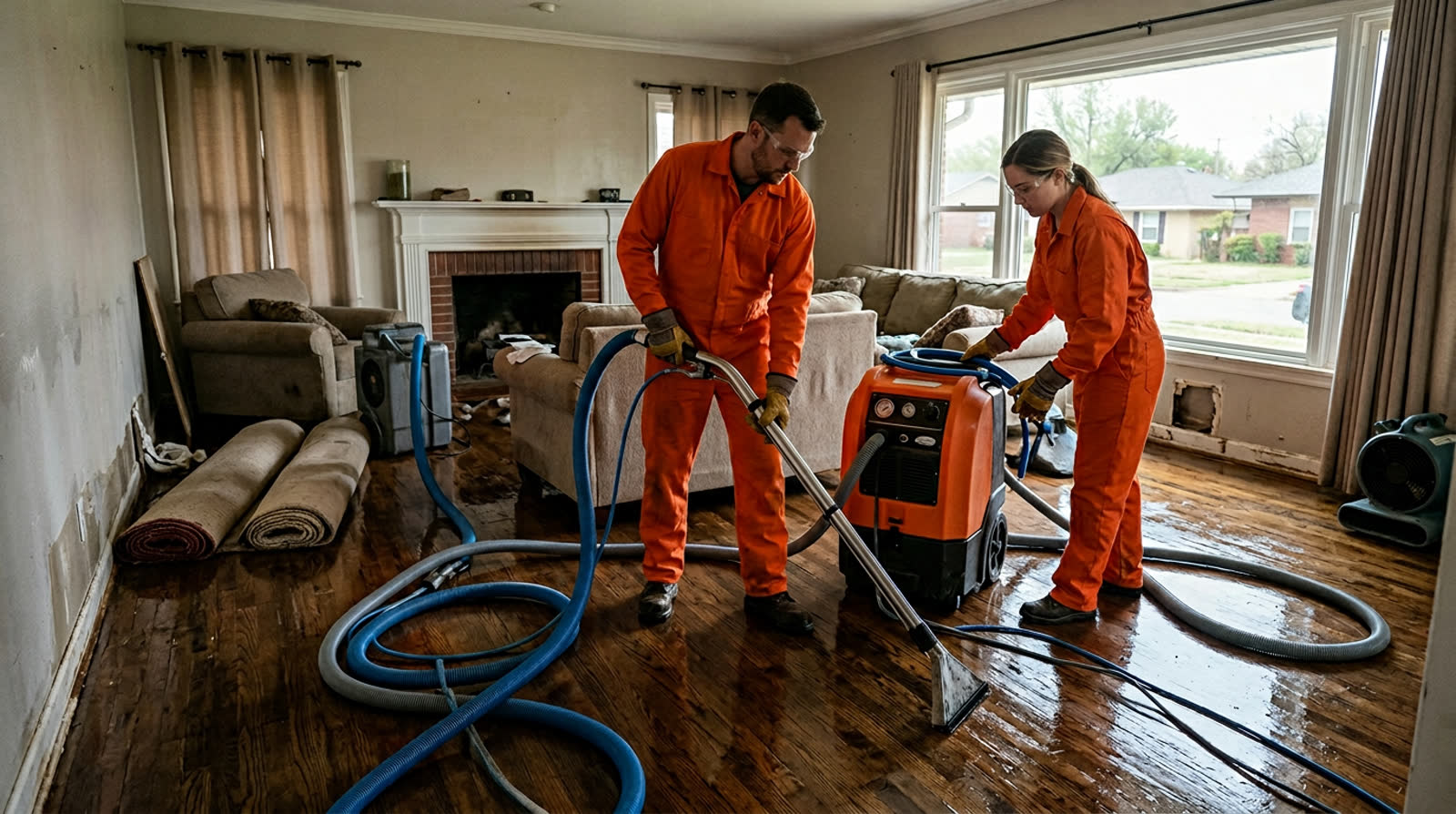
Restoration crews dry an Edmond home after frozen pipe damage by controlling water removal, airflow, humidity, and temperature. First, they remove standing water with extraction tools. Then they open trapped areas as needed so wet materials can actually receive airflow. Air movers push controlled air across wet surfaces, while dehumidifiers remove moisture from the air. Without dehumidification, fans can simply move damp air around the house and slow the process.
Drying should be measured, not guessed. Technicians should record moisture levels at the start of the job and continue checking until affected materials reach acceptable dry readings. The IICRC S500 water damage restoration standard is the restoration industry reference for water damage inspection, drying, and documentation. Homeowners do not need to know every technical term, but they should expect a crew to explain what is wet, what is being dried, what must be removed, and how progress will be measured.
Equipment usually runs continuously for several days. It can be noisy and warm, but shutting it off overnight can slow drying and raise mold risk. If readings stall, the crew may need to move equipment, open more cavities, remove saturated insulation, or change containment. The finish line is not when a wall looks dry or when the floor feels dry. The finish line is when moisture readings support repairs. That matters because rebuilding over wet materials can trap moisture behind new paint, trim, cabinets, or flooring.
Why are Edmond homes vulnerable to frozen pipe water damage?
Edmond homes are vulnerable to frozen pipe water damage because Oklahoma weather can swing from mild to hard-freeze conditions very quickly. Pipes in exterior walls, garages, attics, crawl spaces, bonus rooms, and poorly insulated cabinet areas can freeze when cold wind finds gaps around framing or utility penetrations. Water expands as it freezes, pressure builds, and a pipe can split at a weak fitting, elbow, valve, or previous repair. The water may not release until the pipe thaws, which is why homeowners sometimes discover the damage after temperatures rise.
Different Edmond neighborhoods have different risk patterns. Older homes may have aging copper, galvanized lines, older shutoffs, or prior plumbing patches. Newer homes can still have vulnerable runs in garage walls, attic chases, and second-floor plumbing near exterior walls. Homes north and west of the Oklahoma City metro can also see stronger wind exposure during winter fronts. A pipe does not need to be outdoors to freeze. It only needs enough cold air movement and enough time below freezing.
Prevention should become part of the repair conversation. After the emergency is stable, ask the plumber why the pipe failed and ask the restoration crew where water traveled. Prevention may include pipe insulation, air sealing, heat access to cabinets, crawl-space improvements, garage-wall protection, smart leak sensors, and a labeled main shutoff. The American Red Cross frozen pipe guidance recommends practical steps for preventing and thawing frozen pipes, but local construction and wind exposure still determine where a specific home is most vulnerable.
How much does frozen pipe cleanup cost in Edmond?
Frozen pipe cleanup cost in Edmond depends on how much water escaped, how long it ran, which materials were affected, and whether demolition or reconstruction is needed. A small clean-water break caught quickly may require limited extraction, a few drying machines, moisture checks, and minor baseboard or drywall access. A larger overnight loss can involve multiple rooms, ceiling damage, wet insulation, cabinet removal, flooring removal, contents handling, and several days of equipment.
Insurance coverage depends on the policy and the cause of loss, but sudden and accidental discharge from a plumbing system is commonly covered under many homeowner policies. Coverage can change when damage is gradual, neglected, connected to sewage backup, or affected by mold limits. Homeowners should stop the water, document the damage, mitigate quickly, and preserve receipts. Do not throw away damaged materials or contents before they are photographed unless there is a safety reason to do so.
Ask for the project to be separated into clear phases: plumbing repair, water mitigation, and reconstruction. That makes the estimate easier to understand. The plumber repairs the pipe. Mitigation dries the structure. Reconstruction returns drywall, paint, trim, cabinets, and flooring after materials are dry. For broader location coverage, the service area page shows the Oklahoma communities Trustworthy Restoration serves, including Edmond and the surrounding Oklahoma City metro. If the loss is active, the first priority is limiting further damage, not waiting days for a perfect repair estimate.
When should Edmond homeowners call restoration instead of waiting?
Edmond homeowners should call restoration as soon as a frozen pipe releases water into building materials. Waiting is risky because water moves behind surfaces and cold-weather losses are often discovered late. Call immediately if water reaches floors, walls, ceilings, cabinets, carpet, insulation, baseboards, or rooms below the source. Call even faster if the home was empty, the leak ran overnight, or the water came through a ceiling.
It is reasonable to call a plumber first if water is actively running, but restoration should not wait until after every plumbing detail is finished. The pipe repair and drying plan can move at the same time. A restoration crew can protect unaffected rooms, start extraction, document damage, and prepare access for drying while the plumber handles the broken line. This reduces the chance that a clean supply-line loss becomes a bigger demolition or mold problem.
If you are unsure, ask for an inspection. Moisture meters and thermal imaging can confirm whether wet areas are limited or spreading. Trustworthy Restoration can inspect affected Edmond homes, explain which materials can dry, document readings, and help homeowners understand the next phase. For urgent water losses, the safest assumption is that hidden moisture is present until proven otherwise. The earlier that assumption is tested, the easier the cleanup usually becomes.
Need help now? See our full Water Damage Restoration service page or browse all restoration services. Don't see your city above? The full Oklahoma service area covers 27 cities.
Local context for this article: see our Edmond, OK restoration page and the Water Damage Restoration in Edmond service page.
This guide also pairs with emergency water mitigation and mold remediation when drying is missed.
Can I thaw the pipe myself before cleanup starts?
You can gently warm an accessible frozen pipe with safe heat such as warm air, but do not use an open flame, torch, or high-heat device. If the pipe has already split or water is appearing in the home, shut off the water first and call a plumber. Restoration should begin once water has reached building materials because pipe thawing does not dry walls, floors, cabinets, or insulation.
Authoritative resources referenced
Need restoration help in Oklahoma?
24/7 dispatch, IICRC standards, direct insurance billing.