Why get a mold inspection in Oklahoma City at all?
Most Oklahoma City homeowners call for a mold inspection for one of four reasons: a musty smell that does not go away, visible discoloration on a wall or ceiling, a recent water event that may have left hidden damage, or a real estate transaction where the buyer or lender wants documentation. In every case, the inspection answers two questions: is there mold, and where is the moisture source feeding it?
Answering the second question is the part most amateur inspections miss. Mold without a moisture source does not grow back. Mold with an unaddressed moisture source comes back within weeks of remediation. A real inspection finds both.
What happens on the day of a mold inspection in OKC?
A typical mold inspection in an Oklahoma City home runs in a predictable order:
- Walk-through interview. The inspector asks about the history: when did the smell or stain appear, what water events has the home had, any past flooding or roof leaks, any health concerns motivating the inspection.
- Exterior survey. The inspector walks the exterior to check grading, downspout discharge, roof condition, and any siding or trim issues that allow water in.
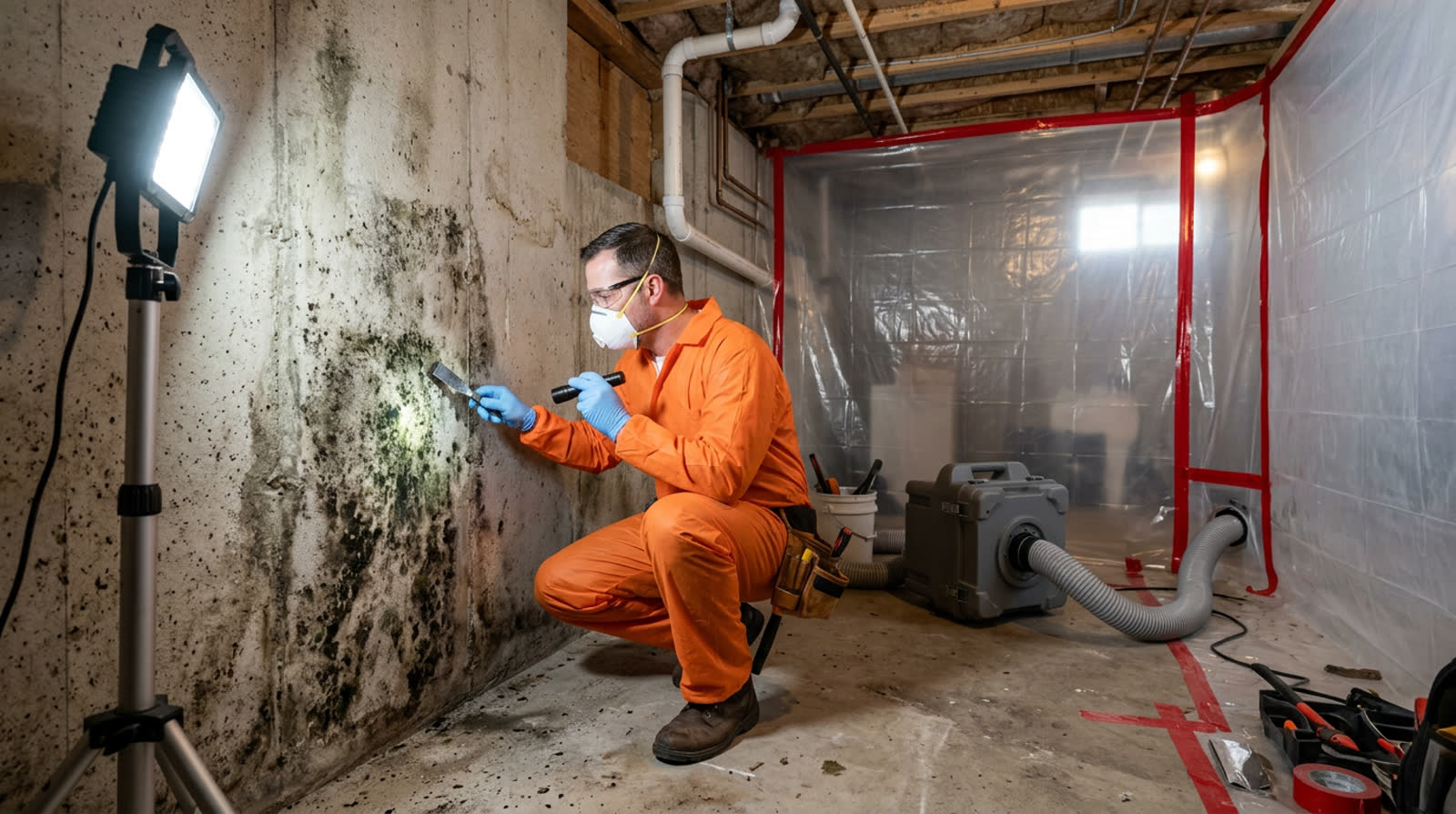
- Interior visual survey. Every room is walked. Particular attention to bathrooms, kitchens, laundry rooms, the area around the HVAC, attic accesses, crawlspaces, and any below-grade space.
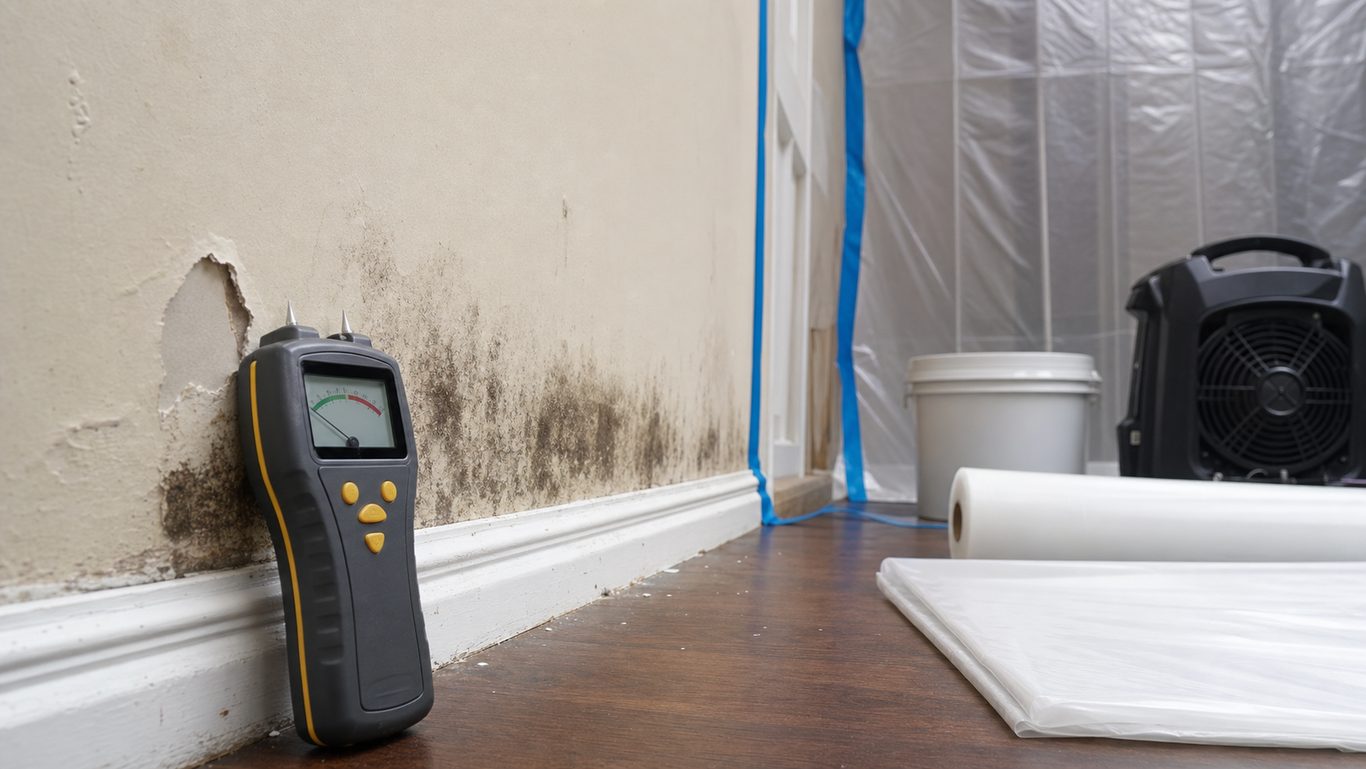
- Moisture and thermal scan. The inspector uses a moisture meter on suspect surfaces and a thermal camera to find cool spots that indicate hidden moisture.
- Sampling, if justified. If visible mold or hidden growth is suspected, the inspector may take a surface tape lift, a swab, or an air sample for lab analysis. Not every inspection needs samples.
- Recommendations. Verbal summary at the end of the visit, then a written report follows.
Total on-site time is usually one to three hours for a typical OKC single-family home. Commercial or multi-story properties take longer.
One often-misunderstood point about mold inspections: the inspector is gathering evidence, not making a medical judgment. A good Oklahoma City mold inspection report says where mold was found, what type was identified by lab analysis, and what moisture conditions are feeding it. It does not say whether the mold is causing the homeowner's symptoms — that is a question for a physician, sometimes informed by the inspection report. Homeowners who go into an inspection expecting a yes-or-no answer on health risk often leave disappointed; homeowners who go in looking for documented findings about their home leave with exactly what an inspection delivers.
Visual inspection: what is the inspector actually looking for?
The visual survey is the most important step. Lab samples without a corresponding visual finding can be misleading. The inspector looks for:
- Discoloration on drywall, ceilings, baseboards, and around windows.
- Staining or warping on flooring.
- Visible mold growth on walls, ceilings, behind toilet tanks, under sinks, around HVAC vents.
- Water staining that indicates a past or ongoing leak.
- Damaged or missing caulk, grout, or sealants at bathrooms and kitchens.
- Visible condensation or rust on HVAC equipment, supply lines, and refrigerant lines.
- Signs of pest entry that can be a path for moisture.
For OKC homes specifically, attics and HVAC closets are high-yield areas because the storm-belt climate is hard on roofs and humid summers stress air handlers.
Moisture mapping: the most underrated part of a mold inspection
Moisture meters and thermal imaging are how a good inspector finds hidden wet zones behind drywall and under flooring. A pinless moisture meter pressed against a wall reads relative moisture content of the material behind the paint. A thermal camera shows temperature differences across surfaces; cool spots usually indicate wet material because evaporation cools the surface.
In an OKC home, common hidden wet zones include:
- Inside exterior walls below windows where flashing failed.
- Behind kitchen base cabinets from a slow supply leak.
- Under the dishwasher, water heater, or washing machine pan.
- Around bathtub and shower surrounds where caulk has failed.
- In ceilings below upstairs bathrooms.
- Along the bottom of exterior walls in homes with negative grading.
Mapping moisture before sampling saves time and money. If the meter shows the moisture is contained to one wall, the inspector samples there. If it shows a wider footprint, the sampling plan expands.
Moisture mapping has changed substantially in the past decade thanks to better thermal cameras. A modern infrared imager can show temperature contrasts of less than half a degree, which makes hidden wet zones visible even through finished paint and trim. On an OKC inspection, the camera is paired with a moisture meter to confirm the cool spot is actually wet and not just a cold-air draft from a leaky window or a refrigeration line behind the wall. The two-tool method dramatically reduces false positives compared to relying on either tool alone.
Sampling: when is it actually needed?
Sampling is not always required. A visible mold colony on a bathroom ceiling does not need a lab report to confirm it is mold; it needs remediation. Sampling adds value when:
- There is a musty odor with no visible growth, and the source needs to be pinpointed.
- A real estate transaction requires documentation.
- A health concern is being investigated and the type or concentration of mold matters.
- Post-remediation verification is needed to confirm the remediation worked.
Common sampling methods on OKC inspections:
- Tape lift: A clear adhesive tape pressed against visible growth, then sent to a lab for microscopic identification.
- Surface swab: A sterile swab rubbed across a suspect area, used for culturable testing.
- Air sample: A cassette pulled with a calibrated pump for a measured volume of air. The lab counts spores and identifies genus. Always paired with an outdoor control sample so indoor counts can be compared to baseline.
Results usually return in three to five business days.
What is in the written mold inspection report?
A defensible Oklahoma City mold inspection report includes:
- The date, address, and reason for the inspection.
- Weather and indoor conditions during the visit.
- A summary of visible findings, room by room.
- Moisture meter and thermal imaging readings with photos.
- Lab results for any samples taken, with the outdoor control comparison.
- Identification of the moisture source feeding any mold finding.
- A recommended scope of remediation: what should be removed, what should be cleaned in place, and what should be tested again after remediation.
- A note on any conditions that need a different specialist (roofer, plumber, HVAC tech) before remediation can succeed.
That report is what a homeowner uses to file a claim, hire a remediation company, satisfy a buyer, or get a doctor's question answered.
The written report is also a real-estate artifact. Oklahoma buyers and lenders increasingly ask for mold inspection documentation as a condition of closing on homes with any history of water damage. A defensible, photographed, sampled report with clear conclusions is what a closing attorney or title company will accept. A vague "we looked and saw nothing" letter typically is not. If an OKC homeowner is inspecting because they expect to sell within a year, asking the inspector to format the report for transaction use is a small upfront request that saves substantial back-and-forth at closing.
When does insurance pay for a mold inspection in OKC?
Insurance treatment of mold inspections in Oklahoma is conditional. Most policies do not pay for a routine, homeowner-requested mold inspection. They often do pay for an inspection that is part of a covered water-damage claim — when mold is suspected during the drying of a covered loss, the inspection and any subsequent remediation can usually be added to the claim, often subject to a mold sub-limit.
Homeowners who suspect mold from a known water event (a past plumbing leak, a roof leak, a slab leak) should call the carrier with the original loss in mind and ask how the inspection fits in. Trustworthy Restoration provides the inspection report and works with the adjuster directly.
Specific to Oklahoma City, the most common findings on a residential mold inspection are not exotic species but the predictable consequences of common moisture sources: a slow shower-pan leak feeding mold under a bathroom floor, a chronically wet washing-machine pan in a laundry closet, a poorly-flashed roof-to-wall transition above a kitchen window. None of these are dramatic, but each leads to real mold growth if left unaddressed. The inspector's job is to identify which of these common patterns is in play in the particular home and to write the report in a way that lets the homeowner act on it. The most useful reports name the source plainly and recommend a specific fix, not just "address moisture."
A final practical point: after remediation, schedule a post-remediation verification inspection from the same inspector who did the initial finding, or from a different inspector if independence matters for the situation. PRV closes the loop on the original finding, gives the carrier a clear endpoint for the claim, and provides a clean record for any future inquiry. Most OKC remediation projects benefit from PRV even when it is not formally required by the policy or transaction, because it converts a contested file into a closed one.
How Trustworthy Restoration handles Oklahoma City mold inspections
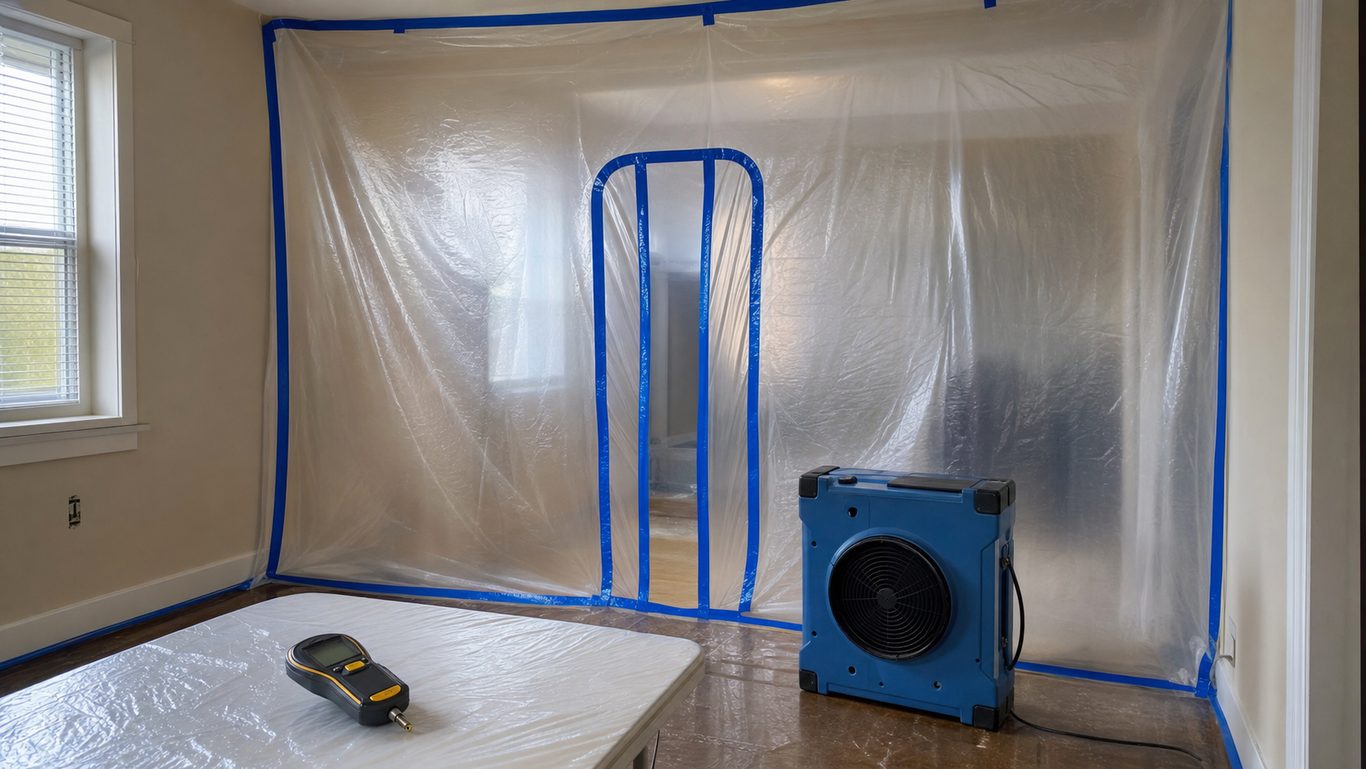
Our OKC inspections include the full visual survey, moisture mapping with meters and thermal imaging, sampling when it adds value, and a written report with photos and a recommended scope. We also handle the mold remediation if the report indicates it is needed, under containment with HEPA filtration and post-remediation verification. Call (405) 669-4484 to schedule an inspection across Oklahoma City, Edmond, Norman, Moore, and the surrounding metro.
How does an Oklahoma City inspector handle attics, crawlspaces, and HVAC?
Three areas in an OKC home almost always need a hands-on inspection beyond the visual room walk-through:
- Attic: The inspector accesses the attic and looks for roof-leak staining on the underside of the deck, condensation around vents, displaced insulation that indicates water travel, and any visible mold on the roof deck or rafters. Many OKC mold problems originate from a slow roof leak that goes undetected until the discoloration reaches a ceiling below.
- Crawlspace: If present, the crawlspace is entered and inspected for standing water, vapor barrier condition, sub-floor staining, joist condition, and HVAC duct integrity. Crawlspaces are also where rodent and pest entry points often correlate with moisture.
- HVAC system: The inspector opens the air handler if accessible, checks the evaporator coil, drain pan, and condensate line, and looks at duct interiors near the air handler. A dirty drain pan or chronically wet coil is a common indoor mold source that no amount of room cleaning will fix.
Skipping any of these three areas is the most common reason a mold investigation misses the actual source.
What if a mold inspection in OKC turns up nothing?
A negative inspection — no visible mold, no elevated moisture, no elevated air samples — is a valuable result. It rules out the obvious sources and pushes the homeowner toward other explanations for whatever symptom prompted the call. Common alternatives the inspector may flag:
- VOC off-gassing from new materials (paint, carpet, furniture).
- Dust or pet dander triggering allergic symptoms.
- Sewer gas from a dry trap or a broken vent stack.
- HVAC issues unrelated to mold (a dirty coil that smells when it cycles).
A good inspector will name the alternatives in the written report rather than leaving the homeowner with only a clean finding and no next steps.
Need help now? See our full Mold Remediation service page or browse all restoration services. Don't see your city above? The full Oklahoma service area covers 27 cities.
Local context for this article: see our Oklahoma City, OK restoration page and the Mold Remediation in Oklahoma City service page.
This guide also pairs with water damage restoration that prevents mold from forming and water mitigation inside the 72-hour window.
Should I get an inspection from a separate company before hiring remediation?
Some homeowners and adjusters prefer the inspector and the remediator to be separate, citing independence. Others prefer one company to handle both for continuity and shorter timelines. Both approaches are valid. If using one company for both, ask for the inspection report in writing and review the recommended scope before signing the remediation agreement, the same way you would review any contractor scope. The report should explain what was found and why it justifies the recommended work.
Authoritative resources referenced
Need restoration help in Oklahoma?
24/7 dispatch, IICRC standards, direct insurance billing.