Oklahoma storm damage by the numbers
Oklahoma sees an average of 56 tornadoes a year, more per square mile than any other state except Kansas in some years. Hailstorms drop ice the size of golf balls or larger on roofs across the state every spring; the May 16, 2010 OKC hailstorm produced softball-sized hail and generated more than $1 billion in insured losses on its own. Straight-line winds gust over 80 mph in summer thunderstorms, ripping shingles off and dropping branches through windows. Flash flooding from spring and early-summer rain regularly overwhelms drainage in OKC and Tulsa. The combined effect is one of the country's hardest residential storm climates and the reason Oklahoma homeowner's policies almost universally carry separate, higher wind-and-hail deductibles.
Recent severe-weather context for OKC and Tulsa metros
- May 20, 2013 Moore tornado — EF5; ~$2 billion in insured losses; established the modern tornado-claim playbook for Oklahoma carriers.
- May 16, 2010 OKC metro hailstorm — set the wind/hail deductible standard most carriers still use.
- April 27, 2024 Sulphur and Holdenville tornadoes — recent reminder that EF3+ events occur outside the OKC/Tulsa metros and across rural counties.
- Annual hail loss ratio — Oklahoma routinely ranks in the top 3 states nationally for hail-related insurance claims per insured home.
The practical implication for homeowners: you will deal with a storm claim at some point. Knowing the playbook before you need it is the difference between a clean settlement and an underpaid loss.
Right after the storm: safety first
Don't enter a damaged structure until utilities have been checked. Don't touch or go near downed power lines. Don't drive into standing water — six inches of moving water is enough to knock an adult off their feet, and twelve inches is enough to float most passenger vehicles. Once the property is safe to approach, document everything before any cleanup starts.
Utility safety
- Power: if you see downed lines, call OG&E (1-800-522-6870) or PSO (1-888-216-3523) immediately and stay 35+ feet clear. Do not touch standing water inside the home until power to affected circuits is confirmed off.
- Gas: if you smell gas, leave the house, leave the door open, and call Oklahoma Natural Gas (1-800-664-5463) from outside. Don't operate light switches or anything that could spark.
- Water: if a main supply line ruptured, shut the meter valve at the curb (you'll need a meter key — most hardware stores in OKC and Tulsa carry them).
Documentation before cleanup
Before you move a single board, take wide-angle photos of every elevation of the home, close-ups of every visible point of damage, and a video walkthrough narrating what you see. Photograph the roof from the ground from all four sides if you can. Photograph any contents in the path of leaks or debris. Save backups to cloud storage immediately — a damaged home gets walked through by adjusters, contractors, and helpers, and items move. Your photos and video are the contemporaneous record your carrier will work from.
First 24 hours: emergency mitigation
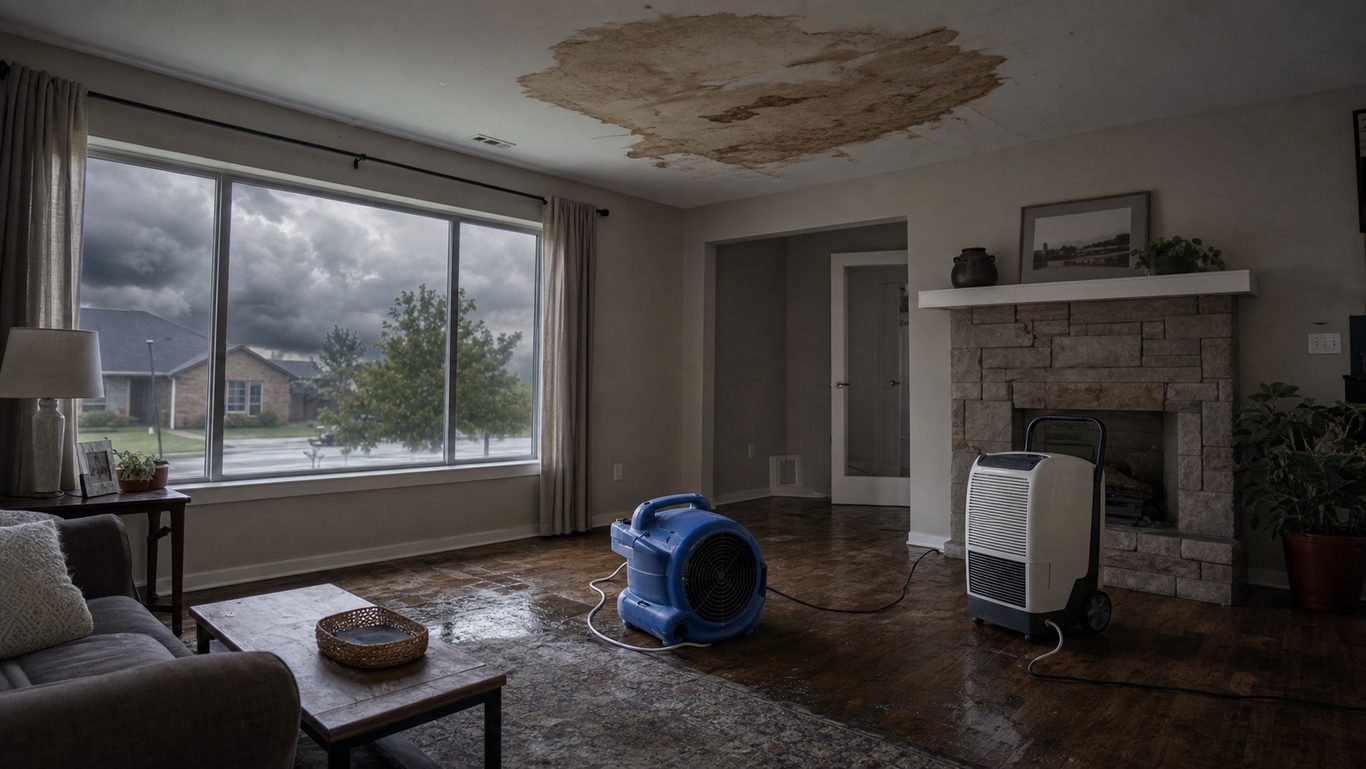
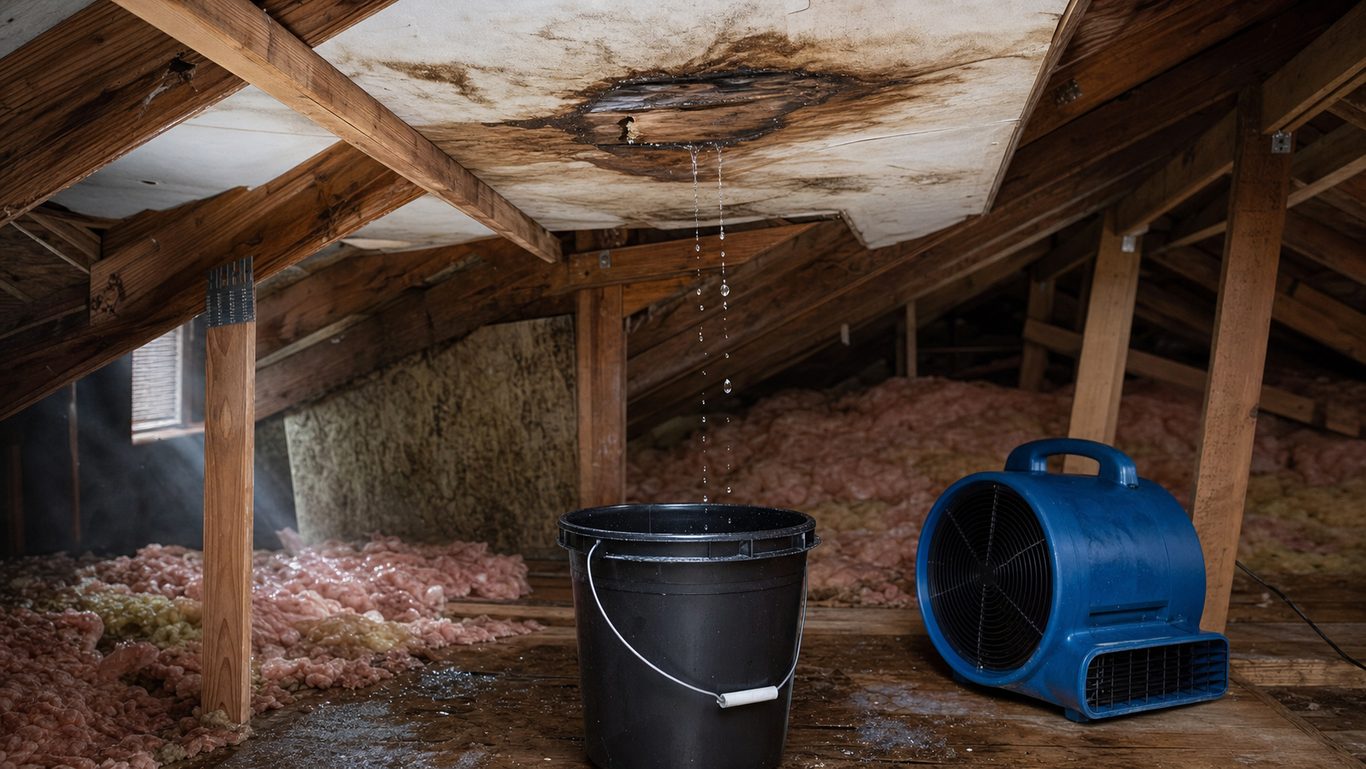
Roof tarp over breaches. Board-up over broken windows. Water extraction if rain got inside. Tree limbs cut clear of the structure. Power restored if utilities are safe. The goal is preventing further damage — your policy explicitly requires it under the Duties After Loss conditions, and your final settlement depends on it. Carriers routinely dispute consequential damage (mold, ceiling collapse, ruined contents) when mitigation was delayed.
Tarping and board-up specs
A proper roof tarp uses 6 mil reinforced poly minimum (8 or 10 mil if the tarp will be on for more than two weeks), lapped over the ridge by at least 4 feet, and battened with 1×3 furring strips screwed through the tarp into the rafters at 24-inch intervals on all four sides. Most insurance scopes pay for tarping at $0.85–$1.50 per square foot of tarped area plus a setup fee. Board-up uses 1/2-inch OSB or plywood, screwed (not nailed) into framing through the wall plate.
Water extraction when rain got inside
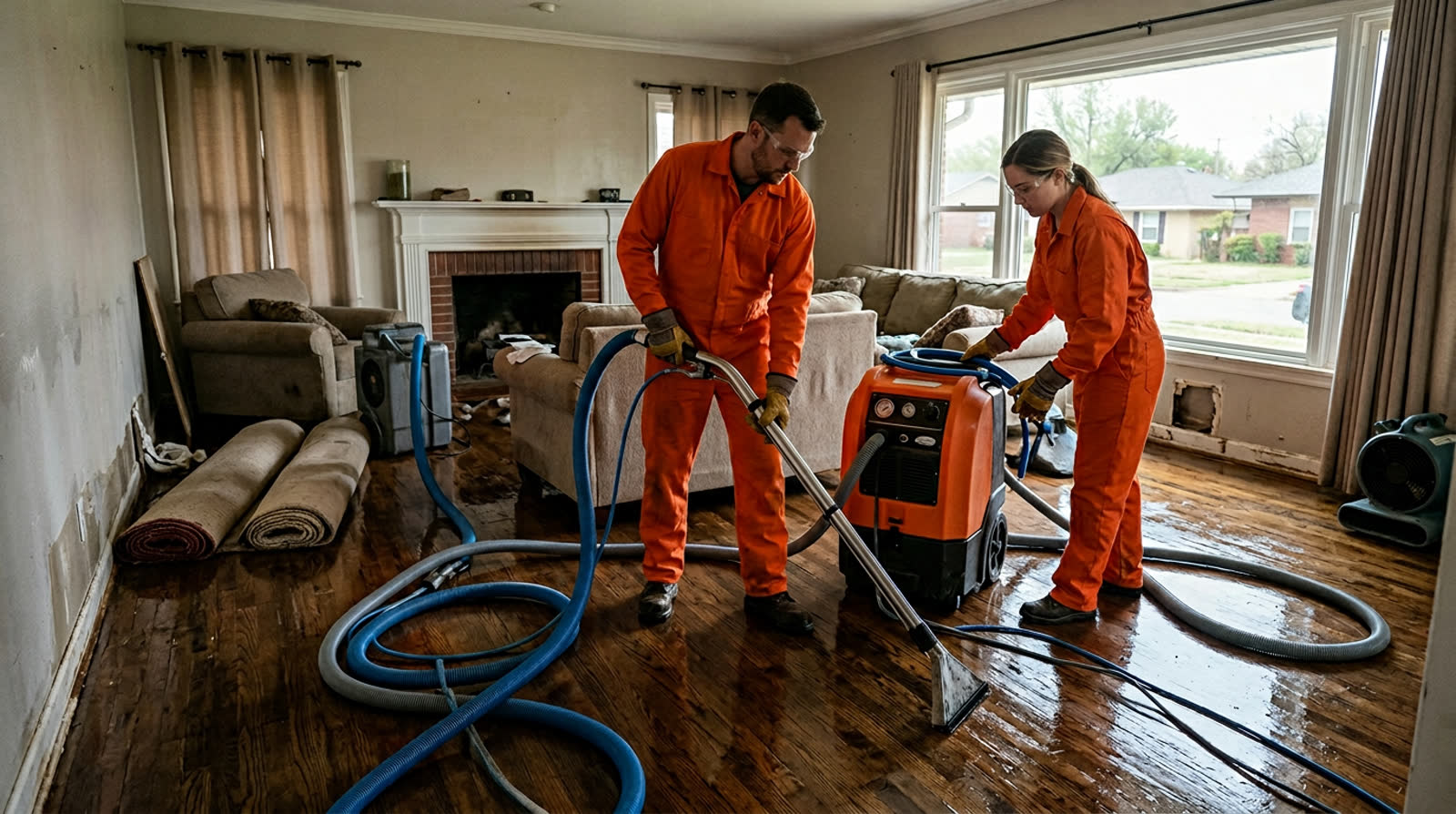
If rain entered through a roof breach or broken window, the same mitigation rules apply as any water loss: extract within 24 hours, demo unsalvageable wet materials, set up drying equipment. See our first 24 hours after water damage guide for the detailed playbook — the timing pressure (72 hours before mold becomes the expected outcome under IICRC S500) is the same for storm-driven water as it is for plumbing-driven water.
Tree and debris removal
Tree damage is a separate line item on most claims. The carrier covers removal of trees that fell on covered structures (the home, attached garage, fences, sometimes detached structures up to a sub-limit) — typically up to $500–$1,000 per tree with a $1,500–$5,000 cap per loss. Trees that fell in the yard but didn't hit a structure are not usually covered for removal. Save itemized invoices.
Tornado vs. hail vs. straight-line wind: scope differences
The three Oklahoma severe-weather perils generate very different damage patterns and different scopes of work. Most carriers and adjusters can tell which peril caused which damage from the photos alone, but the homeowner who knows the difference can advocate more effectively for a complete scope.
Tornado scope
- Roof — partial to total replacement; almost always full deck replacement on EF2+
- Wall sheathing and framing — if torsion damage is visible, structural engineering report required
- Windows and doors — full replacement on the impact side; often replacement of seals on the lee side
- Siding — replacement on impact-facing elevations
- HVAC — outdoor condenser units are commonly destroyed
- Interior — water intrusion through compromised envelope drives drywall, insulation, and flooring scope
- Contents — pack-out and off-site cleaning, often with substantial total-loss inventory
Hail scope
- Roof — bruised shingles and granule loss; full replacement at 8–10 hits per square on storm-facing slopes
- Gutters and downspouts — dents and seam separation; replacement common
- Soft metal flashing, vents, and condenser fins — replacement
- Siding — dings and impact fractures on vinyl, fiber-cement, and aluminum
- Window screens — replacement
- Skylights — frame and seal damage
- Painted surfaces — chip and pitting damage on painted wood trim
Straight-line wind scope
- Roof — shingle uplift, exposed nails, ridge cap displacement
- Fences — sectional or full replacement on storm-facing runs
- Trees and debris — removal and limb cleanup
- Detached structures — sheds, carports, and patio covers commonly damaged
- Window/seal compromise — pressure differentials can break seals without obvious damage
Hail damage hides in plain sight
Most hail damage to a roof isn't visible from the ground. Bruised shingles, cracked granules, dented flashing, and dinged vents read as "normal weathering" until a contractor with a chalk line and a roof rake identifies the impacts. Carriers expect this — they routinely send adjusters and engineers to confirm hail damage. A contractor who can advocate for the loss in the right technical language is critical.
How a proper hail inspection is conducted
- Soft-metal test points first: gutters, downspouts, gable vents, condenser fins. Dings on these are unambiguous indicators of hail size and direction.
- Roof rake on accessible slopes: chalk-marking each impact crater on a 10×10 foot test square per slope.
- Hit-count threshold: Oklahoma carriers generally require 8–10 hits per square on the storm-facing slopes for full roof replacement approval.
- Photo documentation: chalk-circled impacts photographed with a coin or quarter for scale.
- Functional damage criteria: bruising (a soft spot under finger pressure), fractured fiberglass mat (visible when granules are pushed aside), broken seal strips, and exposed asphalt.
What "cosmetic only" disputes look like
Carriers occasionally write hail scope as "cosmetic only" — meaning paint touch-up rather than replacement on metal trim, vents, and gutters. Push back when the soft metals show functional damage (dents that compromise water management, seal separation, gutter pitch alteration). Cosmetic-only disputes are one of the most common supplement issues on Oklahoma hail claims.
Working with your insurance carrier
Storm losses (hail, wind, tornado) are covered under most Oklahoma homeowner's policies. After major declared events, carriers deploy CAT (catastrophe) teams for faster response — but those teams move fast and inspect each property in 30–60 minutes. Submit your claim immediately, schedule your adjuster meeting as soon as possible, and have your restoration contractor on-site for that meeting if you can. The contractor and adjuster speak the same Xactimate scope-of-work language; the homeowner often doesn't, and meetings without a contractor present routinely under-scope the loss.
Carriers most active in Oklahoma after storm events
State Farm, Farmers, Allstate, USAA, Liberty Mutual, Travelers, and Progressive all carry meaningful Oklahoma residential market share. Each has slightly different supplement workflows and adjuster patterns. We bill all of them directly. For the full claim filing playbook — Xactimate scopes, ACV vs. RCV, supplements, ALE — see our Oklahoma claim filing guide; the process is identical for storm claims.
The wind-and-hail deductible
Oklahoma policies almost universally apply a separate, percentage-based wind-and-hail deductible — typically 1%, 2%, or 5% of the dwelling coverage limit. On a home with $300,000 dwelling coverage and a 2% wind/hail deductible, the homeowner is responsible for the first $6,000 of any wind or hail claim before coverage applies. Read your declarations page; this is the single most expensive surprise homeowners encounter on first claims.
Code-upgrade coverage and Ordinance & Law endorsements
Oklahoma adopted the 2015 IBC and IRC with state amendments, and most municipalities (OKC, Tulsa, Edmond, Norman, Moore, Broken Arrow) require current-code compliance during reconstruction. Code-upgrade and Ordinance & Law endorsements pay the difference between rebuilding to the original specs and rebuilding to current code. On a roof replacement that's almost always relevant — drip edge, ice-and-water shield in valleys and at eaves, and fully nailed (not stapled) underlayment.
Public adjusters and AOB pitfalls
Public adjusters represent the homeowner against the carrier for a percentage of the claim payout (Oklahoma caps PA fees at 10% on declared catastrophes, 15% otherwise). They can be useful on contested claims, especially total losses. Avoid signing an Assignment of Benefits (AOB) with a contractor — that legally transfers your claim rights to the contractor and removes your direct control over the settlement. Reputable Oklahoma restoration contractors do not require AOB.
Tarping, board-up, and the Oklahoma roofing claim window
Beyond the immediate mitigation, two timing issues matter on Oklahoma storm claims: how long the tarp can stay on, and how long you have to file or supplement the claim.
Tarp longevity
A reinforced 6 mil tarp installed correctly will last 30–60 days in Oklahoma weather. Beyond that, UV exposure degrades the poly and wind cycling loosens the battens. If reconstruction is delayed (carrier dispute, supply-chain shingle availability, contractor backlog after a major event) we replace the tarp at no additional homeowner cost — the carrier covers extended mitigation as a separate line item.
Statute of limitations and contractual limitations
Oklahoma's first-party property statute of limitations is two years from the date of loss for breach-of-contract suits against the carrier. Most homeowner policies also include a contractual limitations clause requiring suit within one or two years. Practical takeaway: don't wait. File the claim immediately, escalate to supplement requests as soon as the initial scope is incomplete, and engage the Oklahoma Department of Insurance early if the carrier delays past 60 days without a position.
Code upgrades on the roof rebuild
Common code-upgrade items on an Oklahoma roof rebuild that did not exist when the original roof went on:
- Ice-and-water shield in valleys and at eaves (3 feet up the roof)
- Drip edge on rakes and eaves
- Fully nailed (not stapled) underlayment
- High-wind shingle nailing pattern (6 nails per shingle in coastal-zone-equivalent applications)
- Synthetic underlayment (vs. felt) per most current shingle warranties
Rebuild scope and timeline
After a major storm event in Oklahoma, common scope items include roof replacement, gutter and downspout replacement, fascia and soffit repair, siding replacement on the storm-facing elevations, window and screen replacement, fence repair, exterior painting, and interior repair where water intrusion occurred. ALE (Additional Living Expenses) coverage in your policy covers temporary housing, meals, and ancillary costs if the home is uninhabitable.
Typical Oklahoma storm-claim timeline
- Day 0: storm event, mitigation called same day
- Day 1: tarp/board-up, water extraction if applicable, photos and claim filed
- Day 2–7: adjuster inspection (1–14 days depending on event severity and carrier CAT team availability)
- Week 2–3: initial scope released, supplements identified by your contractor
- Week 3–5: supplements approved, work scheduled
- Week 4–8: exterior reconstruction (roof, siding, gutters, windows)
- Week 6–12: interior repair if water intrusion occurred
- Week 12+: final ACV-to-RCV depreciation release with completed-work documentation
Total losses (homes destroyed by tornado) follow a different timeline — typically 6–12 months from settlement to occupancy, with the rebuild structured as a custom build rather than a repair.
Related restoration work that often runs alongside
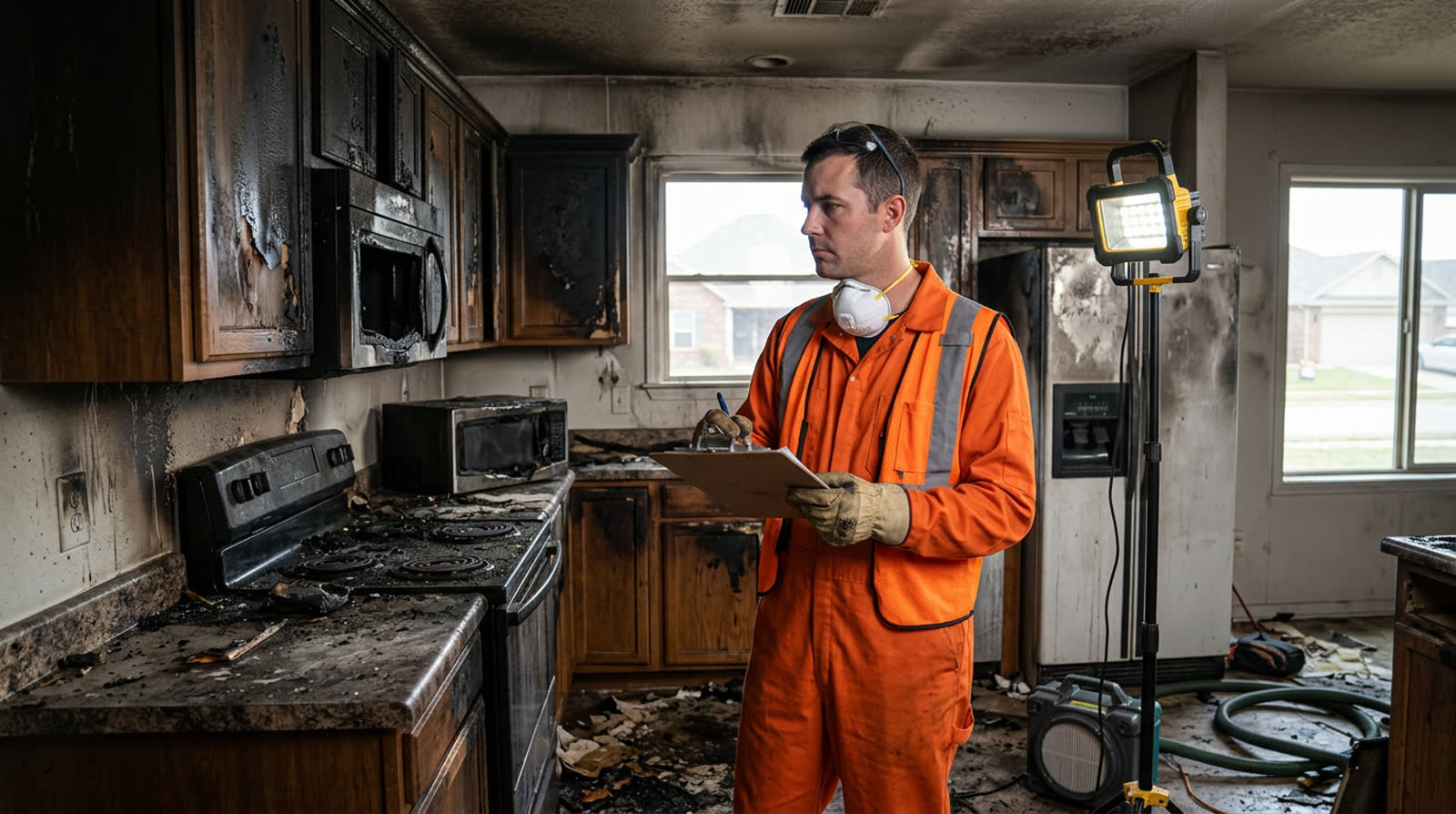
Storm jobs frequently overlap with other restoration scopes. If a tornado tore part of the roof off and rain saturated insulation and drywall before the tarp went on, you may also need water damage restoration and water mitigation. If the leak sat undetected for several days, mold remediation may be in scope too — see our 72-hour mold window guide for why timing matters. And if lightning ignited a structure fire, fire mitigation joins the same claim. We coordinate all of these in-house so you have one contractor, one project manager, and one set of insurance documentation across the full storm-damage scope.
Need help now? See our full Storm Damage Restoration service page or browse all restoration services. Don't see your city above? The full Oklahoma service area covers 27 cities.
Local context for this article: see our Oklahoma City, OK restoration page and the Storm Damage Restoration in Oklahoma City service page.
This guide also pairs with water damage restoration for any rain intrusion and water mitigation for active leaks after the storm.
Does insurance cover storm damage restoration?
Most homeowner's policies cover sudden, accidental water damage — burst pipes, supply line failures, appliance leaks. They generally do not cover gradual leaks or flood-zone flooding (which requires separate flood insurance). We bill insurance directly for covered losses and document everything for your claim.
Authoritative resources referenced
Need restoration help in Oklahoma?
24/7 dispatch, IICRC standards, direct insurance billing.