What should Bixby homeowners do first after bathroom ceiling water damage?
Bixby homeowners should first stop the bathroom water source and stay clear of any ceiling area that looks swollen, cracked, or sagging. Bathroom ceiling water damage often starts above the stained room, but the leak can travel through framing, plumbing openings, insulation, and drywall before it appears below. A small brown mark can hide a wet cavity above the ceiling.
If water is actively dripping, shut off the toilet, sink, tub, or main water valve if the source is not obvious. If the leak appeared after a shower, bath, toilet flush, or laundry cycle, stop using that fixture until it is checked. Move electronics, furniture, rugs, and valuables away from the affected area if it is safe. Place a container under active drips, but avoid standing directly beneath soft drywall.
Take photos before cutting, painting, or cleaning. Photograph the ceiling, the bathroom above, any wet flooring, baseboards, nearby walls, and damaged contents. Write down when the stain appeared, whether it grew after fixture use, and whether the ceiling feels soft or smells musty. That timeline helps the plumber, restoration team, and adjuster understand the source and damage path.
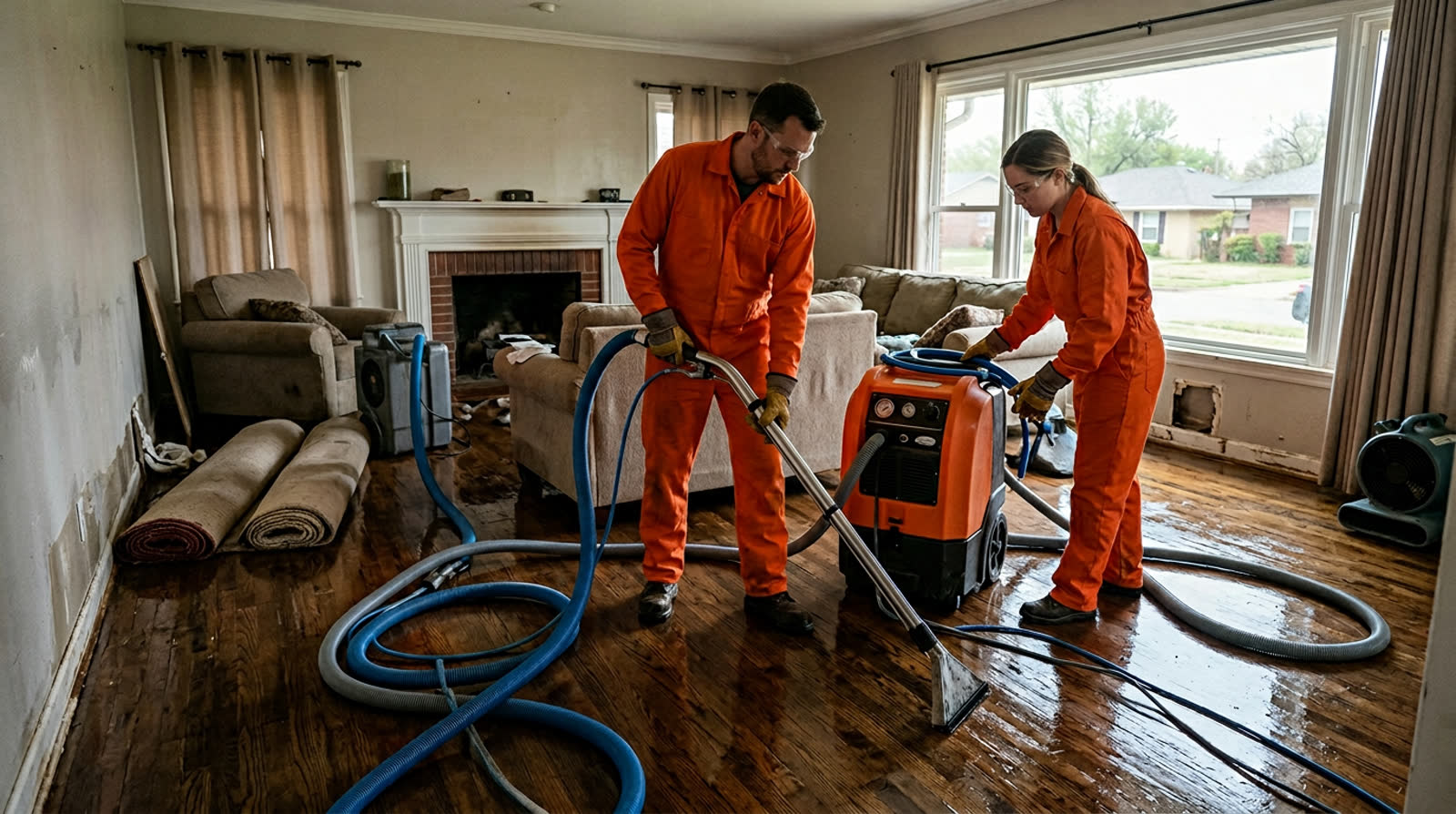
Trustworthy Restoration can inspect the ceiling, map moisture, protect the room, and dry affected materials after source control. The main water damage restoration page explains how inspection, drying, documentation, and repair planning work together. Bixby homeowners can also confirm local coverage on the Bixby restoration services page.
What causes bathroom ceiling leaks in Bixby homes?
Bathroom ceiling leaks in Bixby homes are commonly caused by toilet seals, shower pan issues, tub overflow leaks, supply line failures, drain line leaks, loose caulk, failed grout, sink plumbing, or water that escapes during normal bathroom use. The room below may show a stain even when the bathroom above looks mostly dry.
Toilet-related leaks can come from the wax ring, supply connection, tank hardware, or overflow events. Shower and tub leaks can come from drain assemblies, overflow plates, cracked caulk, failed grout, shower doors, or water escaping around the curtain or enclosure. Sink leaks can drip into the vanity cabinet, floor opening, or wall cavity before showing below. A small leak repeated over time can create more damage than one obvious spill.
The source matters because restoration should not begin with cosmetic repair. A plumber may need to inspect the fixture above the stain. If the source is not fixed, drying will not last. If the leak involved wastewater, the cleanup plan may also change because water category affects what materials can be dried and what may need removal.
Homeowners should avoid assuming that the visible stain is the only affected area. Water can spread across ceiling drywall, soak insulation, enter wall cavities, or affect flooring below. For broader early-response guidance, see water damage cleanup in the first 24 hours, which explains why source control and documentation come before finish repairs.
How do you know if bathroom ceiling drywall needs removal?
Bathroom ceiling drywall may need removal if it is sagging, soft, crumbling, delaminated, contaminated, repeatedly wet, or holding wet insulation above it. It may also need removal when the plumber needs access to a drain, supply line, or fixture from below. A small stain does not always require removal, but wet or weakened material should not be covered with paint.
Drywall absorbs water through the paper facing and gypsum core. When the back side is wet, the room-facing side may look better than the hidden side. If insulation above the drywall is wet, the ceiling can stay damp longer and may carry extra weight. If the bathroom leak involved toilet overflow or drain water, the material decision may be more conservative than with clean supply water.
A restoration inspection checks moisture readings, ceiling firmness, stain size, odor, source type, and whether nearby walls or trim are affected. If the drywall can dry in place, equipment placement and monitoring should show progress. If readings do not drop, or if the material has lost strength, controlled removal is usually the better path.
Removal should be documented with photos and readings. The goal is to remove enough damaged material to dry the cavity, not to demolish unaffected areas. After drying, the repair phase can include drywall replacement, texture matching, primer, paint, and final cleanup.
The related guide on ceiling water damage repair in Oklahoma City explains how ceiling safety, insulation, and drywall conditions shape the repair plan.
Can a bathroom ceiling leak create mold or odor?
A bathroom ceiling leak can create mold or odor when moisture remains in drywall paper, insulation, framing, or wall cavities after the visible area appears dry. Bathrooms already create humidity, so hidden moisture from a leak can be easy to underestimate. A musty smell near the stain or bathroom above should be treated as a warning sign.
Mold risk increases when the source continues, drying is delayed, materials stay wet, or the ceiling is painted before moisture is verified. Wet insulation can hold moisture against drywall and framing. A repeated shower or toilet leak can keep materials damp over time. If the leak involved wastewater, cleanup decisions may also need to consider contamination risk.
Bleach, odor sprays, and primer do not solve hidden moisture. They may change surface appearance or smell for a short time, but they do not dry the ceiling cavity. The correct sequence is source control, moisture inspection, drying or removal, verification, and then cosmetic repair. If visible growth appears, a mold-specific assessment may be appropriate after the source is controlled.
Trustworthy Restoration can help determine whether standard water damage drying is enough or whether mold remediation should be considered. The related guide on mold removal after water damage explains why drying decisions come before cleanup claims.
What if the bathroom leak involved toilet water or sewage?
If the bathroom leak involved toilet water or sewage, the cleanup plan may be more serious than a clean-water ceiling stain. Water category matters because toilet overflow, drain backups, and sewage can introduce contaminants into drywall, insulation, flooring, and wall cavities. Materials that might dry after a clean supply leak may need removal after contaminated water exposure.
Homeowners should avoid touching wet materials, using household fans, or spreading water into unaffected rooms if sewage may be involved. Wear caution around affected contents, flooring, and ceiling debris. Photograph the area if safe, stop using the fixture, and call the correct professionals. A plumber may need to clear or repair the drain issue while the restoration team handles cleanup and material decisions.
Ceiling leaks from a toilet can be confusing because the water may appear as a stain below rather than an obvious backup above. If the leak followed a toilet overflow, repeated clog, loose toilet, or drain issue, tell the restoration team. That information changes the scope and safety decisions.
Trustworthy Restoration handles water damage and can evaluate whether the situation needs sewage-specific cleanup. The sewage cleanup service page explains why contaminated water requires different precautions than a clean roof or supply-line leak. Never assume a bathroom ceiling leak is clean until the source is known.
How is bathroom ceiling water damage dried?
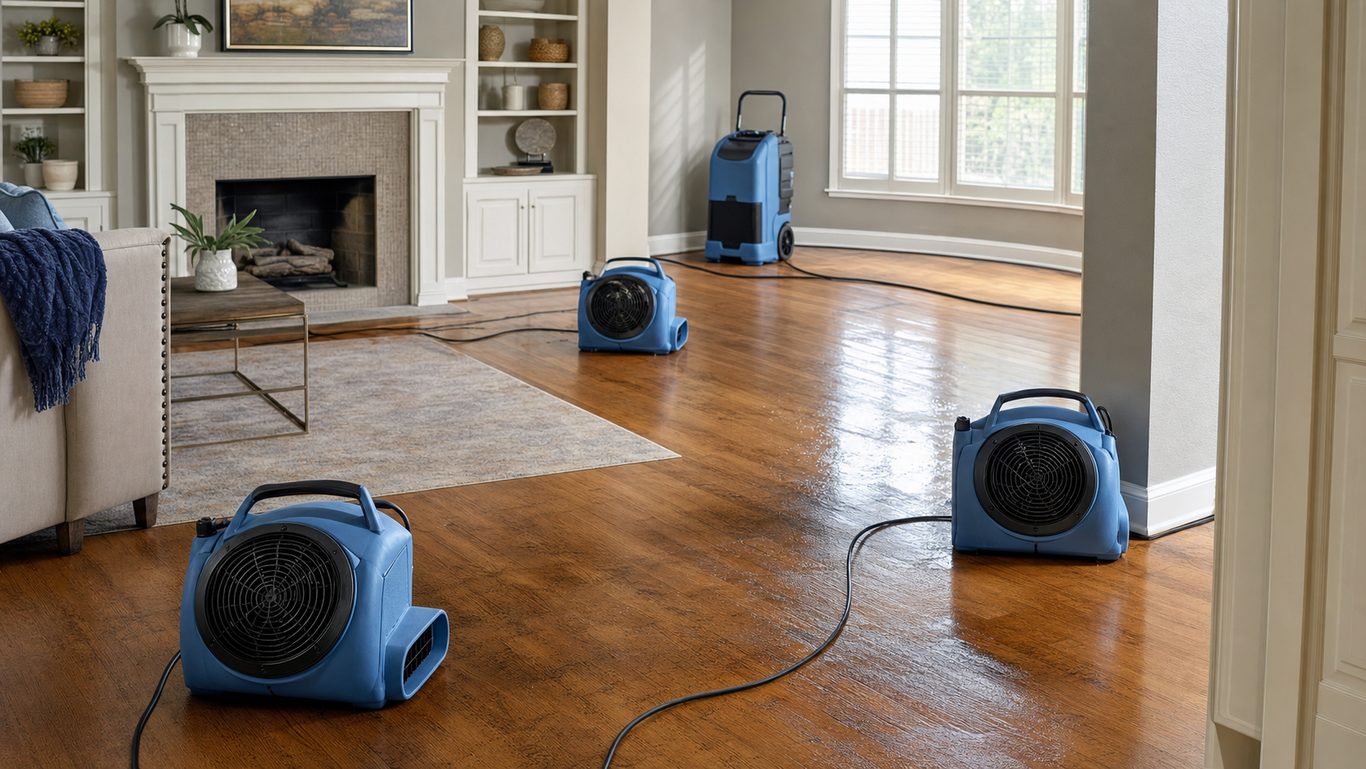
Bathroom ceiling water damage is dried by stopping the source, checking affected materials, removing unsalvageable material when needed, and using controlled airflow and dehumidification to dry the ceiling cavity and nearby surfaces. The drying setup depends on the source, water category, wet insulation, drywall condition, and whether walls or flooring below were affected.
If the drywall is firm and insulation is not wet, drying may be limited. If the ceiling is soft, wet insulation is present, or the leak was repeated, controlled removal may be needed. If a plumber needs access to the fixture above, the opening may also support drying after the repair. Air movers and dehumidifiers should be placed based on the moisture map, not randomly.
Monitoring matters. Readings show whether drywall, framing, trim, and nearby walls are drying. If the readings stall, the plan may need adjustment. That might include moving equipment, creating targeted access, removing wet insulation, or expanding a small opening. The goal is verified dryness before reconstruction.
Homeowners should avoid turning off equipment because the room feels dry. Ceiling cavities can dry slower than the visible surface. Repairing too early can cause returned stains, odor, paint failure, or mold concerns. The guide on water mitigation versus restoration explains why drying and rebuild decisions should be separated.
What documentation helps with a bathroom ceiling water damage claim?
Useful documentation for a bathroom ceiling water damage claim includes photos, a written timeline, plumber findings, moisture readings, drying logs, invoices, and a list of affected materials. Coverage depends on the policy and cause of loss, but clear records make the claim easier to understand.
Take photos of the ceiling stain, the bathroom or fixture above it, wet floors, damaged contents, nearby walls, trim, and any opened ceiling cavity. Save plumber invoices or reports that identify the source. If the leak followed a toilet overflow, shower failure, supply line break, or drain issue, write that down. If water was contaminated, note the source and avoid cleaning away evidence before photos.
Restoration documentation should show what materials were wet, why drying or removal was needed, what equipment was used, and when the structure reached dry conditions. If drywall or insulation is removed, before-and-after photos help support the scope. If an adjuster is involved, keep claim numbers, contact names, and upload instructions together.
Trustworthy Restoration cannot decide policy coverage, but it can document the interior water damage accurately. The homeowners insurance water damage claim guide explains how Oklahoma homeowners can organize photos, reports, and timelines. The Oklahoma Insurance Department also provides general consumer insurance resources.
When should you call Trustworthy Restoration for bathroom ceiling damage in Bixby?
You should call Trustworthy Restoration for bathroom ceiling damage in Bixby when the ceiling is stained, soft, sagging, musty, dripping, near electrical fixtures, or connected to an unknown bathroom leak. You should also call when the same stain returns after painting or when the leak involved toilet water, drain water, or repeated fixture use.
Trustworthy Restoration helps Bixby homeowners protect the room below, inspect moisture, document damage, coordinate around source-control professionals, dry affected materials, and plan repairs after the structure is dry. The team looks beyond the surface stain to check whether insulation, framing, walls, trim, flooring, or contents were affected.
Bathroom leaks require careful source questions. A clean supply line, shower pan, tub overflow, toilet seal, and sewage-related leak can all create a ceiling stain, but they do not all produce the same restoration scope. The right response depends on the water source, material condition, and how long the leak was present.
For help, visit the contact page, review water damage restoration services, or check the service area page for surrounding Oklahoma communities. If the situation involves contaminated water, review the sewage cleanup service page before attempting cleanup.
Need help now? See our full Water Damage Restoration service page or browse all restoration services. Don't see your city above? The full Oklahoma service area covers 27 cities.
Local context for this article: see our Bixby, OK restoration page and the Water Damage Restoration in Bixby service page.
This guide also pairs with emergency water mitigation and mold remediation when drying is missed.
Is bathroom ceiling water damage always clean water?
No. Bathroom ceiling water damage is not always clean water. A supply line leak may be cleaner than a toilet overflow, drain leak, or sewage-related backup. The source matters because contaminated water can change material removal, safety precautions, and cleanup scope.
Authoritative resources referenced
Need restoration help in Oklahoma?
24/7 dispatch, IICRC standards, direct insurance billing.