What should Moore homeowners do immediately after a burst pipe?
Moore homeowners should immediately stop the water source, protect people from electrical hazards, and document the damage before cleanup changes the scene. If the burst line is under a sink, behind a toilet, at a washing machine, near a water heater, or at another visible fixture, close the nearest supply valve. If that does not stop the flow, shut off the main water supply. Many homes in Moore have the main shutoff in a garage, utility closet, crawl-space area, or near the meter. If you do not know the location, ask the plumber to label it before the job is finished.
Once the water is off, keep people and pets away from standing water until electrical risk is understood. Do not walk through water near outlets, cords, power strips, ceiling fixtures, or a breaker panel. If you can safely reach the panel from a dry location, turn off affected circuits. If the panel or the path to it is wet, stay out and wait for qualified help. The first hour after a burst pipe is chaotic, but no piece of furniture or flooring is worth an electrical injury.
After safety and shutoff, start a simple checklist: photos, plumber, restoration company, insurance claim, contents protection, and drying plan. The plumber repairs the pipe. The restoration company handles extraction, moisture mapping, drying, selective removal, sanitation when needed, and claim documentation. Those calls should happen in parallel because the house does not wait for paperwork. The longer water sits in drywall, insulation, cabinets, or flooring, the more likely the aftermath becomes expensive.
What belongs on a burst pipe documentation checklist?
A burst pipe documentation checklist should include wide photos, close-up photos, video, receipts, readings, and every communication tied to the loss. Start with wide photos from each corner of every affected room. Then take close-ups of the failed pipe or suspected source, wet drywall, trim, baseboards, floor seams, cabinets, ceilings, closets, rugs, furniture, electronics, boxes, and any water line visible on materials. If water moved through a ceiling, photograph the room above and the room below.
Video is useful because it records context that individual photos miss. Walk slowly from the source through each affected space and narrate the date, time, address, what you found, and what actions were already taken. Keep original files in a single cloud folder. Text messages can compress images and scatter evidence across conversations. A folder named with the date and property address makes the claim easier to review later.
Save plumber invoices, restoration work authorizations, equipment logs, moisture readings, material removal photos, receipts for supplies, temporary lodging records if applicable, and insurance claim notes. For a broader step-by-step claim guide, use the article on Oklahoma water damage insurance claims. A good documentation checklist does not guarantee coverage, but it gives the adjuster a clear timeline and gives the homeowner a record of why mitigation work was necessary.
How do you know where burst pipe water traveled?
You know where burst pipe water traveled by combining visible clues with moisture readings, not by relying on surface appearance alone. Water moves under baseboards, through flooring seams, into wall cavities, beneath cabinets, through ceiling drywall, and into rooms below the source. A small wet area near the pipe can become a larger affected area behind trim or under flooring. Carpet may feel better on top while the pad stays saturated underneath.
Moore homes can have several hidden water paths. A kitchen or bathroom leak can soak cabinet toe kicks and subflooring. A second-floor pipe break can affect ceiling insulation and light fixtures. A garage wall pipe can send water into adjacent interior walls. Homes that have been remodeled may include layers of flooring, older trim, patched drywall, or hidden plumbing routes that make the spread harder to read. That is why a restoration inspection should include meters and not just a flashlight.
A professional crew uses moisture meters, thermal imaging, and small inspection openings when needed. The goal is to find the boundary of the loss. Materials that can dry in place should be saved. Materials that trap water, swell, delaminate, or hold saturated insulation may need selective removal. The checklist item for homeowners is simple: ask the crew to show what is wet, explain why each material is being dried or removed, and document readings before repairs begin.
Include nearby rooms in the moisture check even when they look dry. In Moore homes, water can move under shared walls, through hallway flooring, and beneath bathroom vanities before it shows at the surface. A checklist should mark each adjacent room as checked, dry, or needing monitoring so nothing is skipped when crews return for daily readings.
When does a Moore burst pipe need water damage restoration?
A Moore burst pipe needs professional water damage restoration whenever water reaches drywall, flooring, ceilings, cabinets, insulation, carpet, baseboards, or contents. A plumber is essential, but the plumber repairs the pipe rather than drying the structure. If the break happened overnight, during a freeze, upstairs, inside a wall, or while the home was empty, hidden moisture is likely and should be tested.
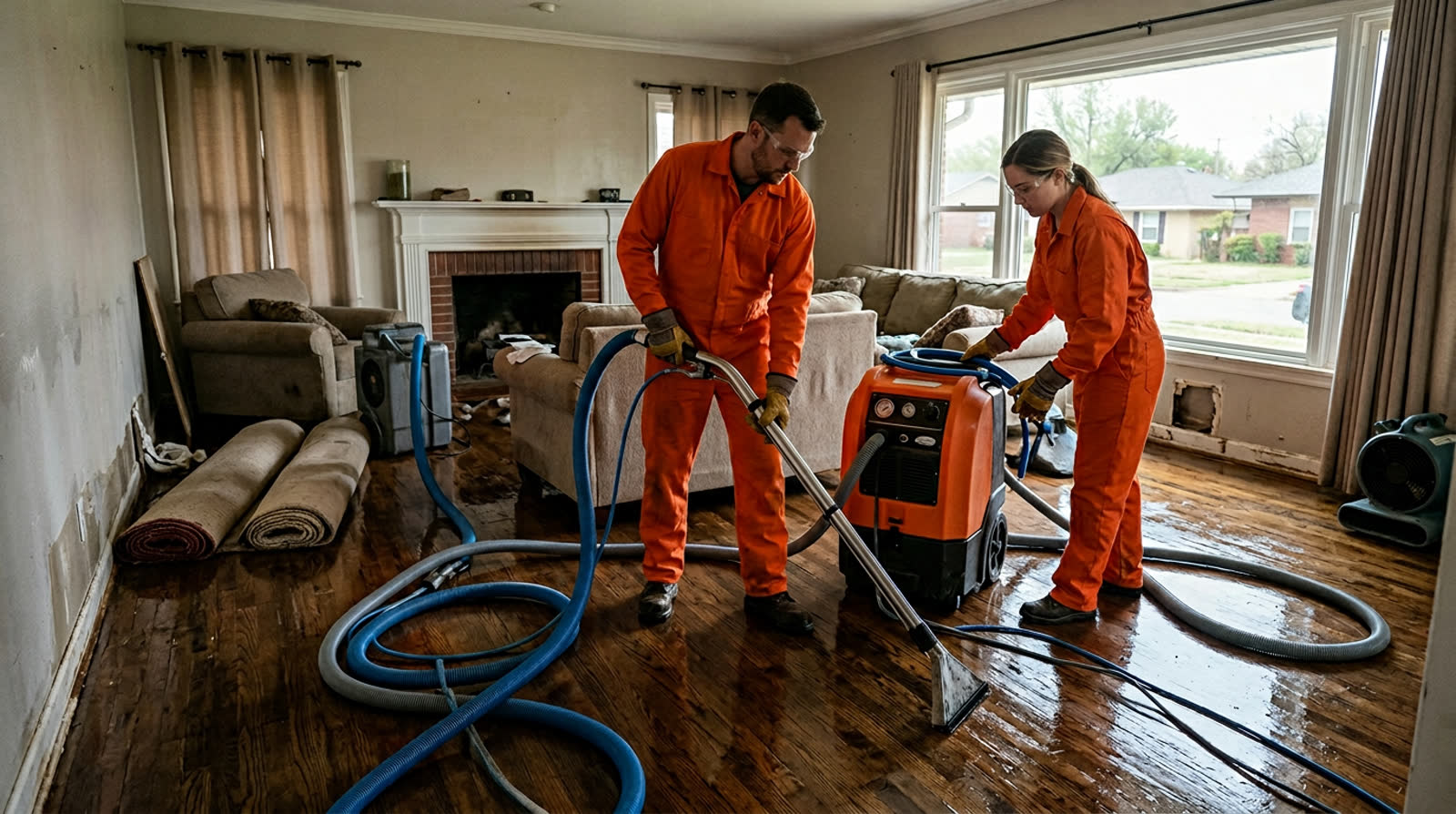
Restoration starts with extraction and moisture mapping. Crews remove standing water, check affected materials, set drying goals, and decide what can dry in place. They may remove baseboards, detach toe kicks, lift carpet, remove wet pad, drill drying holes, or cut drywall at a clean line when insulation is wet. The purpose is controlled access. Random demolition is not the goal. Drying the structure correctly is the goal.
The difference between mitigation and rebuild is important. Mitigation stops active damage and dries the structure. Reconstruction replaces drywall, paint, trim, cabinets, and flooring after dry readings are reached. The guide on water mitigation versus restoration explains that split in detail. Keeping those phases clear helps homeowners understand invoices, avoid confusion with the adjuster, and prevent repairs from starting over wet materials.
What drying steps should be on the homeowner checklist?
The drying checklist should include extraction, moisture mapping, equipment placement, daily readings, and confirmation before repairs. Extraction comes first because standing water and saturated carpet slow every other step. After extraction, air movers create controlled airflow across wet materials while dehumidifiers remove moisture from the air. Without dehumidification, fans can push damp air around the house without drying hidden cavities.
Drying should be measured. Ask the restoration crew where the moisture readings started, which materials were wet, which materials were removed, and what dry target they are using. The IICRC S500 water damage restoration standard is the industry reference for water inspection, mitigation, and drying. Homeowners do not need to memorize the standard, but they should expect a clear explanation of the drying plan and progress.
Equipment often runs continuously for several days. It may feel noisy and warm, but shutting off professional drying equipment overnight can slow progress and increase secondary damage risk. If readings stall, the crew may move equipment, open additional cavities, or remove saturated material that is blocking airflow. The checklist item is not simply “turn on fans.” It is “confirm the affected materials are dry enough for rebuild with readings.” That step protects the repairs that follow.
How should Moore homeowners handle insurance after a burst pipe?
Moore homeowners should handle insurance by opening the claim promptly, documenting the loss, mitigating further damage, and saving every invoice and reading. When you call the carrier, ask for the claim number, adjuster contact information, deductible, coverage limits, and any instructions about emergency mitigation. Many policies require reasonable steps to prevent additional damage, and starting extraction and drying is usually part of that duty.
Do not wait days for an adjuster while water sits in walls or flooring. Take photos first, then allow necessary mitigation. Keep damaged materials available for documentation when safe, and ask the restoration company for photos of removed materials. Save plumber invoices because they help show the source and repair. Save equipment logs and moisture readings because they help show why dry-out was needed and when the structure was ready for repairs.
If the loss affects multiple rooms, request a clear separation between plumbing repair, mitigation, and reconstruction. The plumber’s invoice should explain the pipe failure and repair. The restoration invoice should explain extraction, drying, material removal, equipment, and monitoring. Reconstruction should explain drywall, paint, trim, cabinets, and flooring after dry standards are reached. This organization helps the adjuster review the claim without mixing unrelated phases into one vague total.
Keep a running note of every phone call, claim upload, and contractor visit. Include the date, person spoken with, and next action. This simple log prevents confusion when the plumber, restoration crew, adjuster, and rebuild contractor are all working from different parts of the same loss.
What mistakes make burst pipe aftermath worse?
The biggest mistakes after a burst pipe are waiting too long, relying on household fans, skipping photos, throwing away materials before documentation, and rebuilding before dry readings are reached. Waiting gives water more time to move into cavities and porous materials. Household fans may move air across surfaces, but they do not remove moisture from the air or prove that insulation, subflooring, or wall cavities are dry. Photos matter because the original scene proves the spread and source of the loss.
Another mistake is assuming the pipe repair solves the water damage. It solves the plumbing failure, but it does not dry drywall, cabinets, flooring, or ceilings. A third mistake is turning off professional equipment overnight because of noise. Drying plans depend on continuous airflow and dehumidification. Interruptions can extend the job and make readings stall.
Homeowners should also avoid signing off on reconstruction while moisture questions remain. New drywall, paint, trim, or flooring can trap water if installed too soon. Ask for final readings. Ask what areas were wet. Ask whether insulation was affected. Ask if the crew found any signs of contamination or mold risk. The checklist is not about doing everything yourself. It is about asking the right questions so the recovery does not skip a critical step.
When should you call Trustworthy Restoration in Moore?
You should call Trustworthy Restoration in Moore as soon as burst pipe water reaches building materials or spreads beyond a small, isolated area. Call immediately if water touches drywall, flooring, baseboards, cabinets, ceilings, carpet, insulation, or contents. Call even faster if the pipe broke inside a wall, upstairs, in a garage wall, during a freeze, or while the home was empty. Those situations often involve hidden moisture that is not visible from the room.
It is fine to call a plumber first when water is active, but restoration should not wait until every plumbing detail is finished. A restoration crew can extract water, map moisture, protect unaffected rooms, document damage, and set drying equipment while the plumber repairs the pipe. Early action may reduce demolition and give the insurance claim a cleaner record.
Trustworthy Restoration helps Moore homeowners with water extraction, moisture mapping, structural drying, selective material removal, sanitation when needed, claim documentation, and repair planning. If you need service beyond Moore, the service area page lists Oklahoma communities where the team dispatches for water, fire, storm, sewage, and mold damage. The safest assumption after burst pipe water is that hidden moisture exists until readings prove otherwise.
Need help now? See our full Water Damage Restoration service page or browse all restoration services. Don't see your city above? The full Oklahoma service area covers 27 cities.
Local context for this article: see our Moore, OK restoration page and the Water Damage Restoration in Moore service page.
This guide also pairs with emergency water mitigation and mold remediation when drying is missed.
Can I start cleanup before my insurance adjuster sees the burst pipe damage?
Yes. You should take reasonable steps to prevent further damage, but document everything first. Take photos and video, save receipts, keep damaged materials available for documentation when safe, and ask the restoration company for moisture readings and drying logs. Waiting days for an adjuster while water sits in walls or flooring can make the damage worse.
Authoritative resources referenced
Need restoration help in Oklahoma?
24/7 dispatch, IICRC standards, direct insurance billing.