What are the first signs of a slab leak in an Oklahoma City home?
The first signs of a slab leak in an Oklahoma City home are usually subtle: a water bill that jumps without explanation, a warm spot on the floor, damp carpet or buckling flooring, mildew odor near baseboards, low water pressure, or the sound of water running when every fixture is off. Some homeowners also notice moisture along exterior foundation edges, loose floor tiles, or baseboards that swell in one room without an obvious spill.
Slab leaks can stay hidden because the pipe is below the concrete or routed through a floor assembly. Water may move sideways under flooring before it becomes visible. In some homes, the first sign is not a puddle but a musty smell, a dark line at the bottom of drywall, or a flooring seam that begins to cup. If the leaking line is hot water, the floor may feel warm in one spot. If it is a cold line, the clue may be constant meter movement or a damp room that never dries.
The safest homeowner step is to confirm whether water is still moving. Turn off all fixtures and appliances, then check whether the water meter continues to move. If it does, call a licensed plumber for leak location and call a restoration company if any flooring, drywall, trim, cabinet base, or carpet is damp. For Oklahoma City homeowners, the restoration side matters because a slab leak can soak materials for days before anyone sees damage.
How is slab leak detection different from regular plumbing troubleshooting?
Slab leak detection is different from regular plumbing troubleshooting because the failed line is often hidden below concrete, under flooring, or behind finished materials. A visible sink leak can usually be traced by sight. A slab leak requires a plumber to use pressure testing, listening equipment, thermal imaging, line tracing, or isolation testing to narrow the location before opening floors or walls. Good detection avoids unnecessary demolition.
Homeowners should avoid guessing and cutting into floors based only on where moisture appears. Water can travel before it rises into carpet, tile, wood flooring, or drywall. The wet area may not be directly above the broken pipe. A plumber determines the source and repair method. A restoration crew determines what materials were affected by the escaping water and whether drying, removal, sanitation, or reconstruction planning is needed.
This split is important. The plumber may recommend a spot repair, reroute, manifold work, or repipe section depending on the age and condition of the plumbing. The restoration crew may recommend extraction, baseboard removal, cabinet toe-kick inspection, dehumidification, floor removal, or drywall cuts depending on moisture readings. Slab leak detection finds the pipe problem. Water damage restoration deals with the building materials that absorbed the water.
What should homeowners do before the slab leak repair starts?
Before slab leak repair starts, homeowners should document the suspected damage, protect contents, and avoid disturbing materials that need to be photographed. Take wide photos of each affected room and close photos of wet flooring, baseboards, walls, cabinets, rugs, closets, and any visible stain or swelling. Record the water meter if it is moving while fixtures are off. Save water bills that show unusual usage. If a plumber confirms the line failure, ask for written notes explaining the source and repair recommendation.
Move small contents out of wet areas when it is safe, but photograph them first if they are damaged. Do not throw away rugs, boxes, flooring pieces, or cabinet contents before they are documented. If water is near electrical outlets, cords, or appliances, stay out of the area until power risk is understood. Slab leak water can look minor on the surface while moisture sits under flooring or inside walls, so avoid walking repeatedly over swollen wood or loose tile.
Call the insurance carrier if there is visible damage or if restoration will be needed. Ask for the claim number, deductible, adjuster contact, and instructions for emergency mitigation. The guide on Oklahoma water damage insurance claims explains how to organize photos, invoices, moisture readings, and mitigation records. Even when the plumbing repair itself is limited, the water damage documentation should start early.
When does a slab leak need water damage restoration?
A slab leak needs water damage restoration whenever moisture reaches flooring, drywall, baseboards, cabinets, carpet, insulation, or contents. A plumber repairs the failed line, but the pipe repair does not dry the structure. If the leak was active for days, affected a hot water line, raised humidity, created odor, or caused flooring movement, a restoration inspection should happen before repairs begin.
Restoration starts with moisture mapping. Technicians check floors, wall bases, cabinet toe kicks, nearby rooms, and sometimes rooms on the opposite side of shared walls. They may use moisture meters, thermal imaging, and controlled inspection openings to determine where water traveled. The goal is to find the wet boundary, not to remove materials blindly. Some materials can dry in place. Others trap water or lose structural integrity and need selective removal.
The difference between mitigation and reconstruction matters here. Mitigation extracts water, controls humidity, opens trapped areas, and dries the building. Reconstruction replaces flooring, drywall, trim, cabinets, or paint after dry readings are reached. The article on water mitigation versus restoration explains why those phases should stay separate. Rebuilding over slab-leak moisture can trap dampness below new finishes and create odor, swelling, or mold later.
How do restoration crews dry materials after a slab leak?
Restoration crews dry materials after a slab leak by removing accessible water, opening trapped areas when needed, controlling airflow, reducing humidity, and tracking moisture readings until materials reach dry standards. Slab leaks are tricky because moisture can sit under flooring, along wall plates, below cabinets, or inside porous materials. Surface drying is not enough. The crew must confirm what is wet and what is dry.
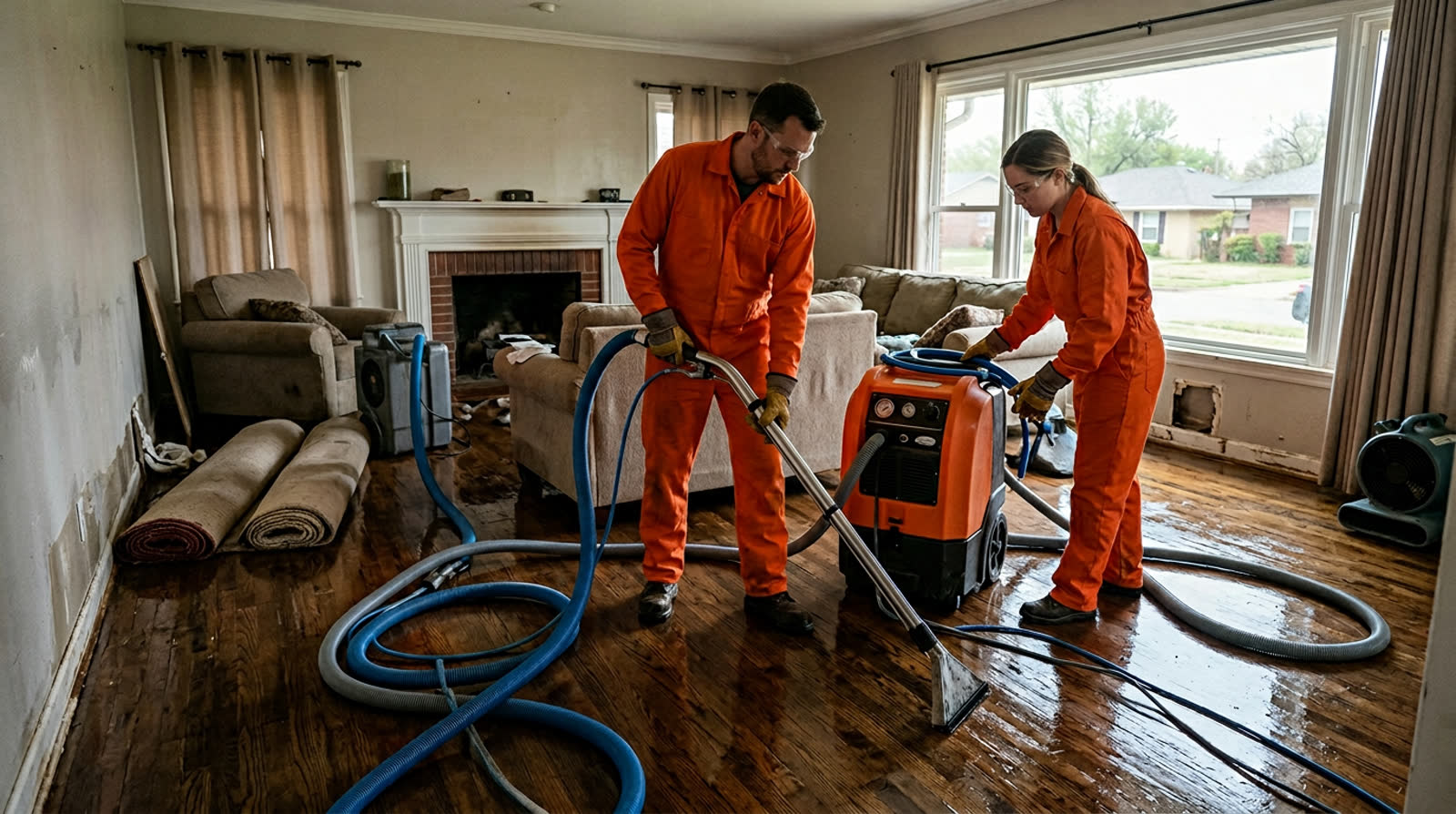
Air movers push air across affected surfaces and into opened cavities. Dehumidifiers pull moisture from the air so evaporation continues. If flooring is trapping water, the crew may need to lift carpet, remove pad, remove damaged laminate, detach baseboards, open cabinet toe kicks, or make small drywall access cuts. The IICRC S500 water damage restoration standard is the industry reference for inspection, drying, and documentation. Homeowners should expect a drying plan that is explained in plain language, not a guess based on appearance.
Equipment usually runs continuously for several days. It can be loud and warm, but turning machines off overnight can slow drying and raise secondary damage risk. If readings stall, the crew may change equipment placement, open more trapped areas, or remove materials that are blocking airflow. The finish line is final moisture readings, not a dry-looking floor. For slab leaks, that distinction is critical because dampness below flooring can linger after the room looks normal.
What repair options might a plumber recommend for a slab leak?
A plumber may recommend a spot repair, line reroute, partial repipe, or larger plumbing update depending on the leak location, pipe material, pipe age, and whether the system has a history of failures. A spot repair opens the affected area and repairs the specific leak. A reroute bypasses the leaking line and runs a new line through a wall, attic, or other accessible route. A repipe section may be recommended when multiple lines are vulnerable or when the existing system is near the end of its service life.
The restoration plan should coordinate with the plumbing plan. If a spot repair requires opening the slab or flooring, the restoration company should document affected materials before demolition, protect nearby rooms from dust, and monitor moisture after the plumbing work is finished. If a reroute avoids opening the slab but the floor is already wet, drying still needs to happen. The least invasive plumbing repair is not automatically the least invasive restoration project.
Homeowners should ask the plumber for a written explanation of the cause, location, and recommended repair. Ask whether the leak was on a hot or cold line, whether pressure testing was performed, and whether other lines appear at risk. Then ask the restoration crew what materials were affected and whether they can be dried before rebuild. A clear repair path prevents confusion between the plumbing invoice, mitigation invoice, and reconstruction estimate.
How should Oklahoma City homeowners document a slab leak claim?
Oklahoma City homeowners should document a slab leak claim from the first suspicion through the final dry readings. Save water bills, meter videos, plumber leak-location notes, photos of wet materials, restoration moisture readings, equipment logs, material removal photos, and receipts. Take wide photos and close-up photos before moving furniture or removing flooring. If the leak affects cabinets or closets, photograph contents before relocating them.
Insurance coverage depends on policy language and the facts of the loss. Many policies distinguish between sudden water damage and long-term seepage, and some policies treat plumbing repair differently from resulting water damage. That is why timeline matters. Document when you first noticed signs, when you called the plumber, when mitigation started, and what actions were taken to prevent more damage. A simple running log with dates, names, and next steps is useful when the claim is reviewed later.
Also document drying. Ask for starting readings, daily readings, photos of opened areas, and final readings before reconstruction. If flooring, trim, drywall, cabinets, or paint need repair, the adjuster will want to understand why those items were included. Clear photos and readings help connect the plumbing source to the resulting water damage. Without that connection, a slab leak claim can become harder to explain than a visible burst pipe loss.
When should you call Trustworthy Restoration for slab leak damage?
You should call Trustworthy Restoration for slab leak damage as soon as moisture reaches flooring, drywall, cabinets, trim, carpet, contents, or rooms beyond the suspected source. Call immediately if there is a mildew odor, buckling floor, wet carpet, swollen baseboards, cabinet damage, or a water meter that keeps moving while fixtures are off. Slab leaks can stay hidden long enough for moisture to spread under finishes, so early inspection matters.
Trustworthy Restoration can help with water extraction, moisture mapping, structural drying, selective material removal, claim documentation, and repair planning after the plumber locates the leak. The team can also check adjacent rooms and wall bases so the drying plan does not miss hidden moisture. For homeowners in Oklahoma City and nearby communities, the goal is to stabilize the home before flooring, trim, cabinets, or paint are replaced.
If you need help outside the city core, the service area page lists Oklahoma communities where the team dispatches for water, fire, storm, sewage, and mold losses. Slab leak detection and repair should not stop with the plumbing fix. The building materials that absorbed the water need to be checked, dried, documented, and cleared before the home is put back together.
Need help now? See our full Water Damage Restoration service page or browse all restoration services. Don't see your city above? The full Oklahoma service area covers 27 cities.
Local context for this article: see our Oklahoma City, OK restoration page and the Water Damage Restoration in Oklahoma City service page.
This guide also pairs with emergency water mitigation and mold remediation when drying is missed.
Can a slab leak cause mold if the floor looks dry?
Yes. A slab leak can create mold risk even when the visible floor looks dry because moisture may remain under flooring, behind baseboards, inside cabinets, or in wall cavities. Mold risk depends on moisture, time, temperature, and materials. A restoration inspection with moisture readings is the best way to confirm whether hidden areas are dry enough for repairs.
Authoritative resources referenced
Need restoration help in Oklahoma?
24/7 dispatch, IICRC standards, direct insurance billing.