What should Broken Arrow homeowners do first after a burst pipe?
Broken Arrow homeowners should first stop the water, stay clear of wet electrical areas, and document the damage before anything is moved. If the failed line is under a sink, behind a toilet, near a water heater, at a washing machine, or at an appliance supply line, close the nearest valve. If that does not stop the flow, shut off the main water supply to the house. Main shutoff locations vary by home, so check the garage, utility area, crawl-space access, meter area, or mechanical closet.
After water is off, do a safety check. Do not walk through standing water near outlets, extension cords, power strips, ceiling lights, or breaker panels. If you can safely reach the electrical panel from a dry area, turn off affected circuits. If the panel or path is wet, stay out and call for help. Burst pipe restoration can wait a few minutes for safety. Electrical injuries cannot be undone.
Once people are safe, take photos and video. Show the source area, every affected room, wet trim, flooring seams, cabinets, ceilings, closets, and contents. Then call a plumber and a restoration company in parallel. The plumber repairs the pipe. The restoration company extracts water, maps moisture, dries the structure, removes unsalvageable materials, and documents the loss for insurance. Waiting until the plumbing work is completely finished before calling restoration can add hours of moisture exposure.
Why is burst pipe restoration more than a plumbing repair?
Burst pipe restoration is more than a plumbing repair because the pipe fix only stops the source. It does not dry drywall, insulation, cabinets, trim, carpet, subflooring, or rooms below the leak. Water can move quickly behind baseboards, through flooring seams, into wall cavities, and under cabinets. A room can look manageable from the doorway while hidden moisture is spreading behind finishes.
A plumber is essential, but a restoration crew answers different questions. What materials are wet? How far did water travel? Which materials can dry in place? Which materials are holding water against framing? Is insulation saturated? Are cabinets trapping moisture underneath? Are adjacent rooms affected? Those questions require moisture meters, thermal imaging, experience with water migration, and daily monitoring.
This distinction matters for insurance and repairs. A plumber invoice explains why the pipe failed and how it was fixed. A restoration invoice explains extraction, drying, material removal, equipment, and moisture readings. A rebuild estimate explains drywall, paint, trim, cabinet, or flooring work after materials are dry. Keeping those phases separate helps Broken Arrow homeowners understand the process and helps adjusters review the claim without confusing pipe repair with structural dry-out.
That separation also prevents missed scope. If a pipe bursts behind a cabinet or in an exterior wall, the plumbing repair may look finished while the wall cavity, subfloor, or cabinet base remains damp. A restoration scope should identify those materials, explain whether they can dry in place, and show the readings that support the decision. Without that step, repairs may cover wet materials and create odor, swelling, or microbial growth later.
How does water spread after a burst pipe in a Broken Arrow home?
Water spreads after a burst pipe by following gravity, framing, flooring transitions, wall cavities, and low points. A bathroom line can soak a vanity base before water reaches the hallway. A laundry line can run under flooring into adjacent rooms. A second-floor pipe can send water through ceiling drywall and insulation before the first drip appears downstairs. A garage wall line can push water into interior walls that look dry from the living area.
Broken Arrow homes include newer subdivisions, older homes, remodeled interiors, slab construction, crawl-space areas, and two-story layouts. Each construction type creates different water paths. Floating floors may trap water underneath. Carpet pad may stay saturated after the carpet face feels drier. Cabinets can hide water beneath toe kicks. Drywall can wick water several inches above the visible water line. These are the areas where secondary damage begins if drying is incomplete.
A restoration crew should map the affected area with readings. Ask what rooms were checked, which materials were wet, and where the dry boundary begins. Moisture mapping is not a sales tactic. It is the way crews avoid both under-scoping and unnecessary demolition. Materials that can dry in place should be saved. Materials that trap water, swell, delaminate, or hold saturated insulation may need selective removal so the structure can dry correctly.
Do not assume the affected area ends at the room doorway. Water can cross thresholds under flooring, move along shared walls, and collect at low spots several feet away from the visible source. In Broken Arrow homes with open floor plans, water may spread across living rooms, kitchens, and hallways before anyone notices. A careful moisture map should include adjacent rooms, closets, cabinet bases, and the room below when the leak is upstairs.
When should you call water damage restoration after a burst pipe?
You should call water damage restoration after a burst pipe whenever water reaches drywall, floors, ceilings, cabinets, insulation, carpet, baseboards, or contents. Call immediately if the leak was upstairs, inside a wall, in an attic, in a garage wall, or while the home was empty. Hidden moisture is common in those situations, and surface drying does not prove the structure is dry.
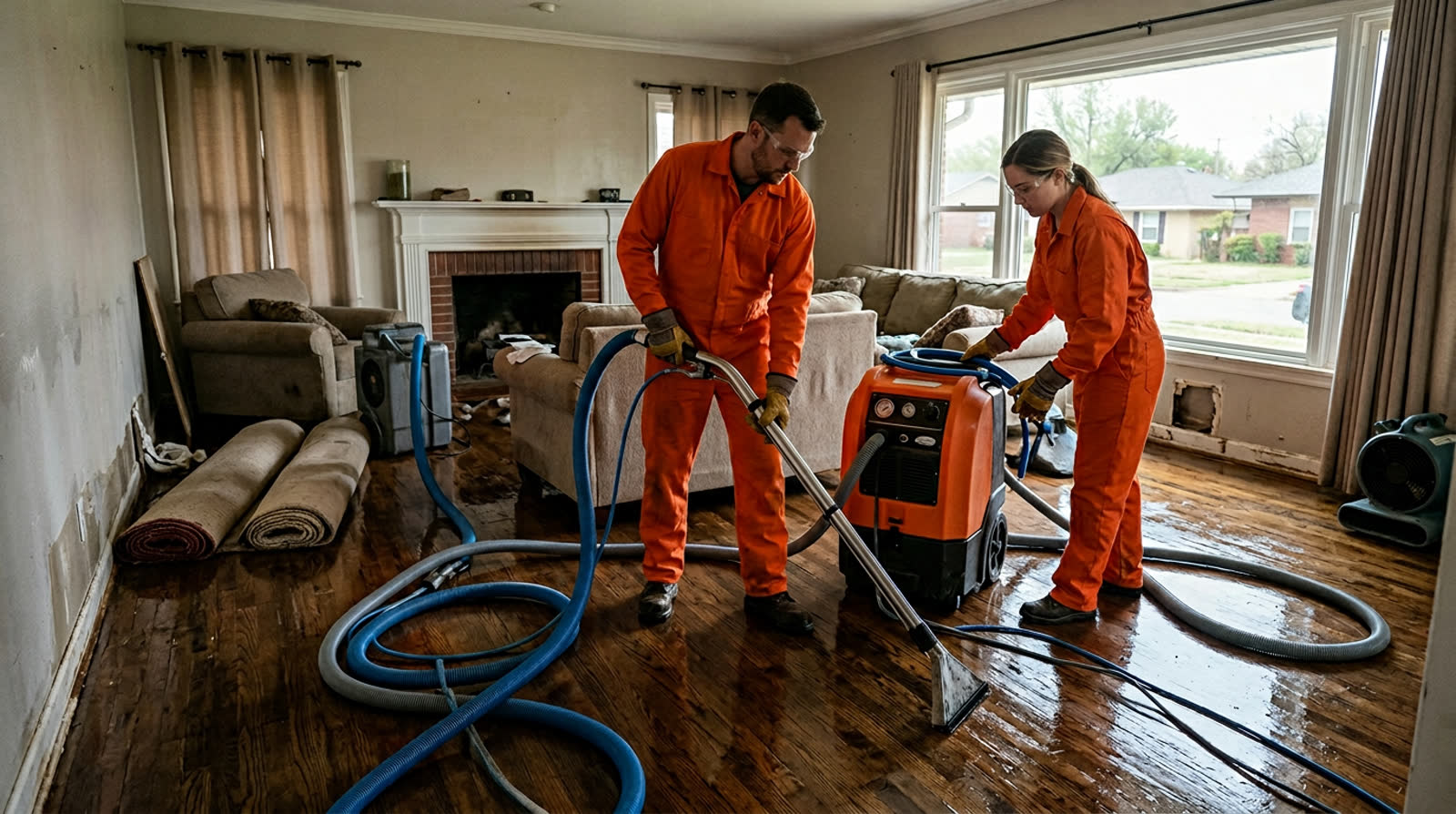
Professional restoration begins with extraction and moisture mapping. Technicians remove standing water, check affected materials, and set equipment based on the drying plan. They may remove baseboards, detach cabinet toe kicks, lift carpet, remove wet pad, drill small drying holes, or cut drywall at a clean horizontal line when insulation is wet. The goal is controlled access, not unnecessary demolition.
Mitigation and reconstruction should stay separate. Mitigation stops active damage and dries the building. Reconstruction replaces drywall, paint, trim, cabinets, and flooring after dry readings are reached. The guide on water mitigation versus restoration explains why the two phases matter. Rebuilding too early can trap moisture behind new materials and create mold, odor, or swelling after the claim appears closed.
What should happen during the drying phase?
During the drying phase, the restoration crew should remove standing water, create airflow across wet materials, control humidity, and monitor readings until the materials reach dry standards. Air movers push air across surfaces and into opened cavities. Dehumidifiers remove moisture from the air so evaporation continues. Without dehumidification, fans can move damp air around without actually drying hidden materials.
Drying should be documented. Ask where moisture readings started, what equipment was placed, why each machine is in that location, and when the crew will return for monitoring. The IICRC S500 water damage restoration standard is the industry reference for water mitigation, drying, and documentation. Homeowners do not need to understand the technical language, but they should expect clear explanations and daily progress.
Equipment usually runs continuously for several days. It can be noisy and warm, but shutting it off overnight can slow drying and raise secondary damage risk. If readings stall, the crew may move equipment, open more cavities, remove saturated insulation, or change containment. The finish line is not when the floor looks dry or the wall feels dry. The finish line is when moisture readings show the affected materials are ready for repair planning.
Homeowners can help by leaving equipment in place, keeping doors positioned as the crew requests, and reporting any new damp spots or odors. Do not unplug machines to reduce noise unless the restoration company approves it. The drying plan is based on airflow, humidity, and temperature working together, and even one night of downtime can slow progress enough to require extra monitoring.
How should Broken Arrow homeowners document a burst pipe claim?
Broken Arrow homeowners should document a burst pipe claim from the first hour through the final dry reading. Start with wide photos of every affected room before moving furniture or pulling materials. Then capture close-ups of the failed pipe or suspected source, wet baseboards, drywall staining, floor seams, cabinets, ceilings, closets, contents, rugs, boxes, and electronics. Video is helpful because it shows the path from the source through the affected areas.
Save original files in one folder along with plumber invoices, restoration paperwork, receipts, claim notes, equipment logs, material removal photos, and moisture readings. If the carrier gives instructions, write down the date, person, and action item. A simple running log prevents confusion when the plumber, mitigation crew, adjuster, and rebuild contractor are all working on different parts of the same loss.
For a broader Oklahoma claim walkthrough, use the guide on homeowners insurance and water damage claims. The key idea is that documentation should explain cause, spread, mitigation, and repair. Insurance coverage depends on policy terms and facts, but organized records make it easier to show that the loss was sudden, that mitigation was reasonable, and that repair scope follows the damage.
It also helps to photograph the drying setup after equipment is placed. Take pictures of fan locations, dehumidifiers, opened wall areas, removed baseboards, and any containment. Those photos show that mitigation began quickly and that the scope matched the visible and measured damage. If the claim is reviewed weeks later, those images can explain decisions that are hard to remember from memory alone.
What mistakes make burst pipe restoration harder?
The mistakes that make burst pipe restoration harder are waiting too long, relying on household fans, skipping documentation, removing materials before photos, and rebuilding before dry readings are confirmed. Waiting gives water more time to move into hidden spaces. Household fans may move surface air, but they do not remove humidity or prove that wall cavities, insulation, cabinets, or subfloors are dry. Skipping photos can make it harder to explain the original scope of damage.
Another mistake is assuming the plumber’s work completes the restoration. The pipe repair is only one part of the recovery. The structure still needs extraction, moisture mapping, drying, and sometimes selective demolition. Turning off professional drying equipment overnight is also a problem because drying plans depend on continuous airflow and dehumidification. Interruptions can add days to the job.
Homeowners should also avoid approving reconstruction too early. New drywall, paint, trim, or flooring can trap moisture if installed over wet materials. Ask for final readings before rebuild starts. Ask what areas were affected and what was removed. Ask whether insulation, cabinets, subflooring, or adjacent rooms were checked. A few direct questions can prevent a rushed repair from becoming a mold or odor problem later.
A final mistake is failing to plan prevention after the emergency. Once the home is stable, ask the plumber why the line failed and whether insulation, air sealing, pipe rerouting, or a smart leak shutoff would reduce risk. Ask the restoration crew where water traveled and which materials were most vulnerable. That information can help prevent the next freeze, supply-line failure, or hidden leak from turning into another major loss.
When should you call Trustworthy Restoration in Broken Arrow?
You should call Trustworthy Restoration in Broken Arrow as soon as burst pipe water reaches building materials or spreads beyond a small isolated area. Call immediately when water touches drywall, flooring, carpet, cabinets, ceilings, insulation, baseboards, or contents. Call even faster if the pipe burst upstairs, inside a wall, during a freeze, in a garage wall, or while nobody was home.
Pipe repair and drying can move at the same time. A restoration crew can extract water, protect unaffected rooms, inspect hidden moisture, document the loss, and set equipment while the plumber repairs the failed line. Early action can reduce demolition, shorten the drying timeline, and create a cleaner insurance documentation trail.
Trustworthy Restoration helps Broken Arrow homeowners with extraction, moisture mapping, structural drying, selective material removal, sanitation when needed, claim documentation, and repair planning. If you need help in nearby Oklahoma communities, the service area page lists the cities where the team dispatches for water, fire, storm, sewage, and mold losses. After a burst pipe, assume hidden moisture exists until readings prove otherwise.
Need help now? See our full Water Damage Restoration service page or browse all restoration services. Don't see your city above? The full Oklahoma service area covers 27 cities.
Local context for this article: see our Broken Arrow, OK restoration page and the Water Damage Restoration in Broken Arrow service page.
This guide also pairs with emergency water mitigation and mold remediation when drying is missed.
Can burst pipe restoration start before the insurance adjuster visits?
Yes. You should take reasonable steps to prevent more damage, but document the loss first. Take photos and video, save receipts, keep damaged materials available for documentation when safe, and ask the restoration crew for moisture readings and drying logs. Waiting days for an adjuster while water sits in walls or flooring can make the loss worse.
Authoritative resources referenced
Need restoration help in Oklahoma?
24/7 dispatch, IICRC standards, direct insurance billing.