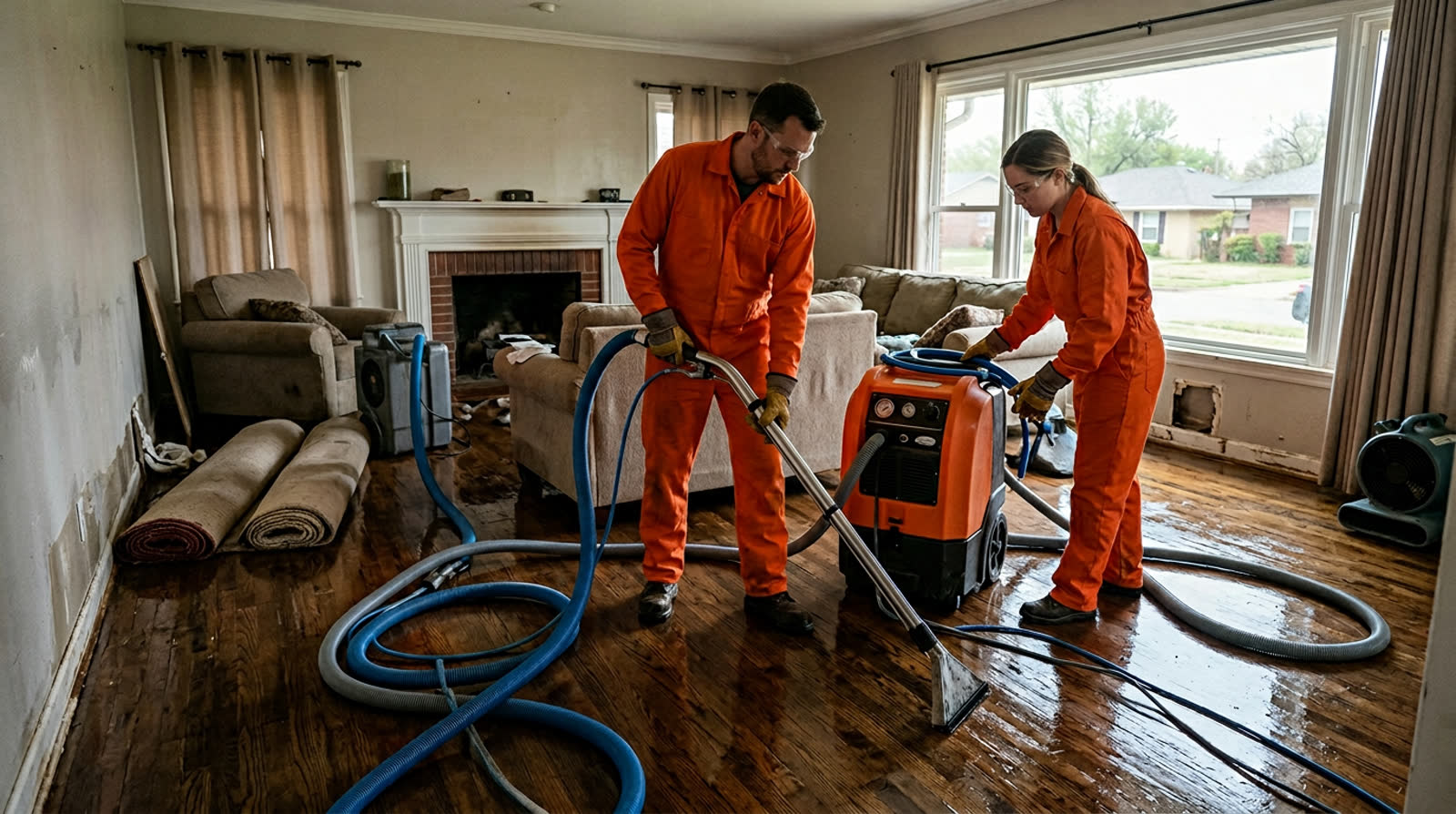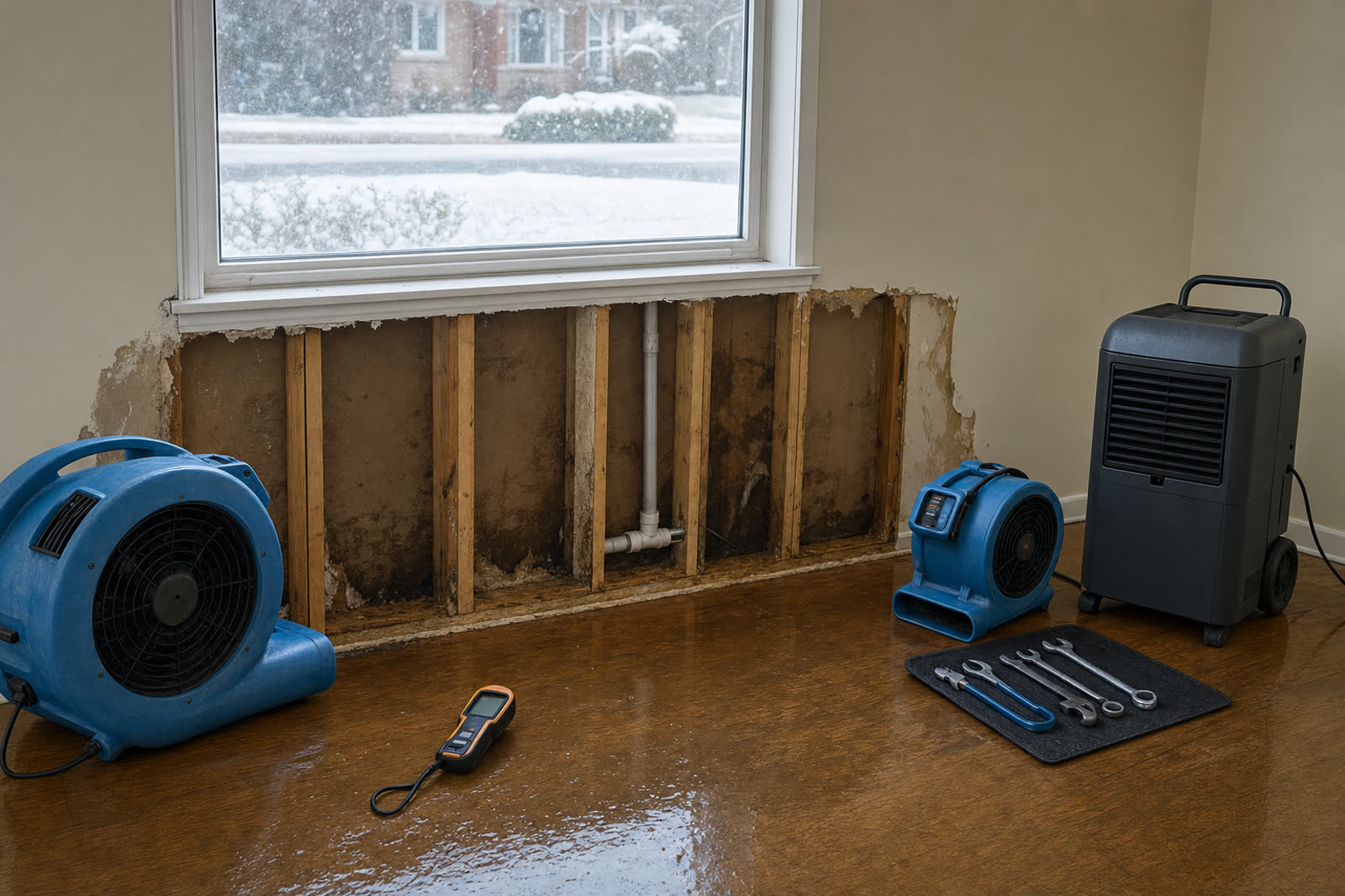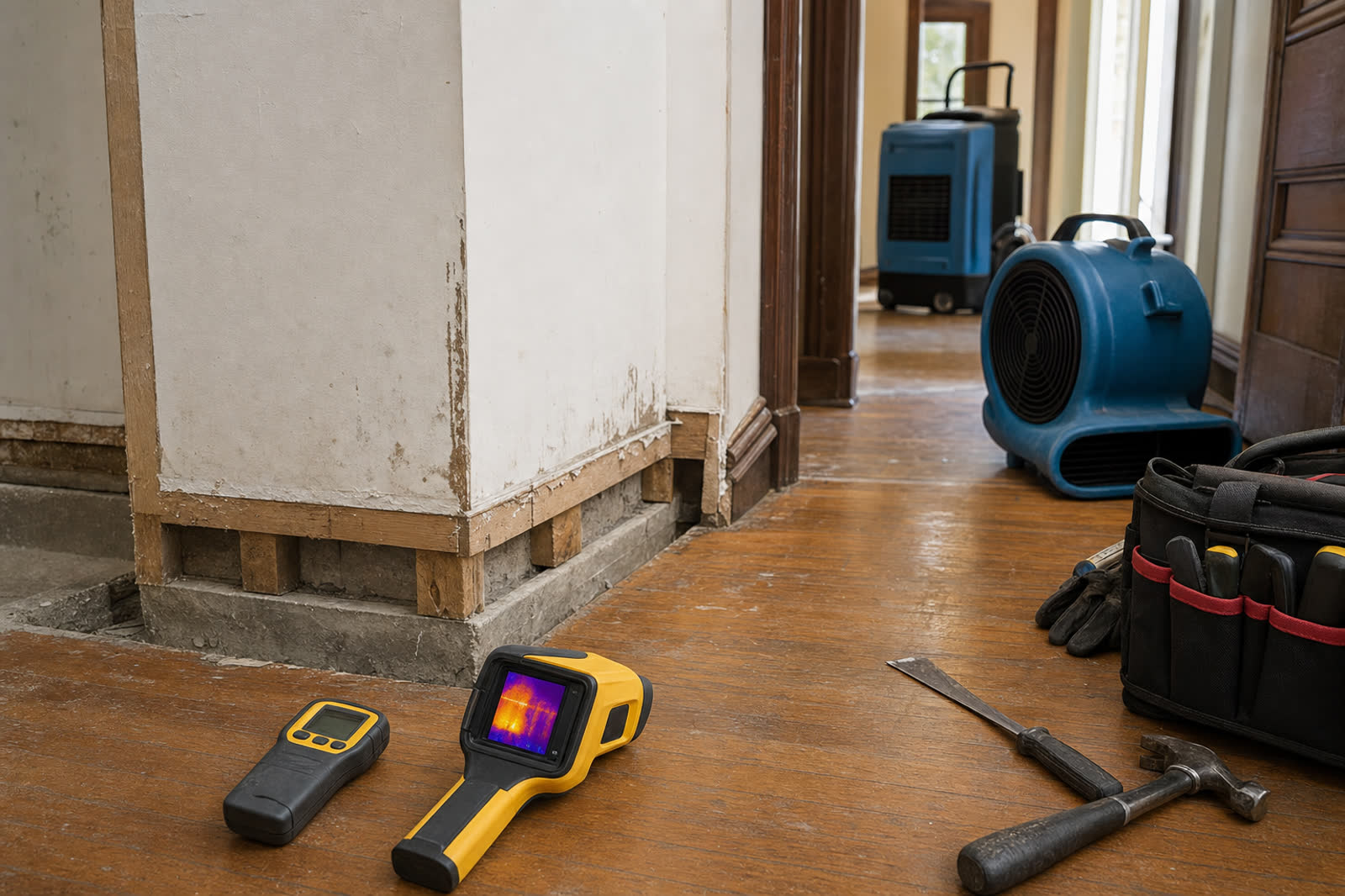
What should you do first after a roof leak causes water damage in Tulsa?
After a roof leak causes water damage in Tulsa, the first step is to stop new water from entering and protect the room below. Move furniture, electronics, rugs, and valuables away from the drip path if it is safe. Place containers under active drips, but do not stand under a sagging ceiling or touch wet electrical fixtures. If the leak is still active during rain, the roof may need emergency tarping or temporary protection before interior drying can work.
Document the damage before cleanup changes the scene. Take wide photos of the room, close photos of ceiling stains, dripping, wet flooring, damaged contents, attic conditions if safely visible, and any storm damage outside. Write down when the leak started, what weather was happening, and whether the stain grew over time. In Tulsa, wind-driven rain, hail, flashing failures, and roof penetrations can send water into attic insulation before the ceiling shows obvious damage.
The roof source and the interior damage are two different parts of the job. A roofer handles shingles, flashing, roof penetrations, or temporary roof protection. Trustworthy Restoration handles the interior water damage: moisture inspection, contents protection, safe material removal when needed, drying, monitoring, and documentation. If the ceiling is soft or bowed, stay clear until it is inspected.
For the interior side of the loss, start with the water damage restoration process. For storm-related source concerns, the storm damage restoration page explains how weather-driven water problems are handled alongside cleanup.
How can a roof leak damage more than the ceiling?
A roof leak can damage more than the ceiling because water often travels through attic insulation, rafters, ceiling joists, wall cavities, light fixtures, and flooring before it is noticed. The ceiling stain is only the most visible symptom. The actual moisture path may start several feet away from the stain and follow framing or ductwork before dripping into a room.
In Tulsa homes, roof leak water can enter through damaged shingles, flashing, vents, chimneys, skylights, roof valleys, or storm-created openings. Once inside, it may soak insulation, spread across ceiling drywall, run down wall cavities, or pool above trim. If the leak reaches exterior walls, it can affect paint, baseboards, windows, and flooring. If it enters near a ceiling fan or recessed light, electrical components may need evaluation before power is used.
Attic insulation is a common hidden problem. Wet insulation can hold water against drywall and framing, slow drying, and add weight to the ceiling. Even if the room below looks mostly dry, the attic side may still be wet. That is why a ceiling stain after a roof leak should not be treated as a paint-only repair.
Trustworthy Restoration checks the room below, the ceiling area, nearby walls, and accessible attic spaces to understand the full damage path. Moisture readings and visual inspection help determine whether materials can dry in place or need controlled removal. The related guide on roof leak water damage after OKC storms explains the same source-control principle for Oklahoma storm leaks.
When is roof leak water damage an emergency?
Roof leak water damage is an emergency when water is actively entering, the ceiling is sagging, electrical fixtures are wet, insulation is saturated, or the leak is spreading into multiple rooms. It is also urgent when a storm has opened the roof and more rain is expected. The longer the opening remains uncontrolled, the more water can enter the home.
Homeowners should stay away from ceiling sections that bow, crack, or drip from several points. A wet ceiling can release suddenly, especially when insulation above it is holding water. If water is near ceiling fans, recessed lights, outlets, appliances, or breaker panels, avoid those areas until they are checked. Do not turn on fixtures to test them.
Emergency response usually has two tracks. First, stop or reduce the source with roof protection, tarping, or repair by the right professional. Second, protect the interior with containment, contents moving, extraction if needed, and drying. Trustworthy Restoration can start the interior side once it is safe and the source is controlled or temporarily protected.
If the leak happened during severe weather, homeowners should also watch for hidden attic moisture. A ceiling stain may appear small on day one and grow after the next rain if the roof source remains open. For Tulsa homeowners, acting early can prevent a limited ceiling repair from becoming a larger drywall, insulation, flooring, and mold-prevention project.
If the damage is active now, use the contact page to request help and begin documentation while the roof source is being addressed.
How do restoration crews find hidden moisture after a Tulsa roof leak?
Restoration crews find hidden moisture after a Tulsa roof leak by combining visual inspection, moisture meters, thermal imaging as a screening tool, and attic or cavity access when available. The goal is to identify the moisture path from the roof source to the visible damage below. A stain on the ceiling rarely tells the whole story by itself.
The inspection usually starts in the affected room. Crews check the ceiling stain, drywall firmness, seams, paint bubbles, nearby walls, trim, flooring, and contents. If attic access is available and safe, they may check insulation, sheathing, rafters, framing, and roof penetrations above the stain. Thermal imaging can help locate temperature differences, but moisture meters confirm whether materials are actually wet.
Wall cavities matter because water can run down from the ceiling into vertical spaces. A homeowner may only see a ceiling mark while the upper wall, crown molding, window trim, or baseboard is also affected. If water moved into insulation or behind drywall, drying the surface is not enough.
The moisture map guides decisions. If drywall is firm and insulation is dry, drying may be limited. If insulation is wet or drywall has lost strength, controlled removal may be needed. If the roof source is still open, drying may need to wait for temporary protection or repair. The process is similar to other hidden water losses, and the guide on water mitigation versus restoration explains why measuring, stopping, and restoring damage happen in stages.
Can ceiling drywall be dried after a roof leak?
Ceiling drywall can sometimes be dried after a roof leak, but only if it is structurally sound, the source is stopped, the cavity is accessible enough to dry, and wet insulation is not holding moisture against it. If the drywall is sagging, crumbling, delaminated, or contaminated, removal is usually safer than trying to dry it in place.
Small stains do not always require full ceiling removal. However, painting over a stain before moisture is verified can hide the problem and create a return stain later. If insulation above the drywall is wet, it can slow drying and keep the drywall damp. If the ceiling has a textured finish or previous patch, the material may respond differently to moisture.
Drying can involve dehumidifiers, air movers, targeted openings, cavity drying, and attic-side insulation removal. The restoration team monitors readings to see whether the material is improving. If readings do not drop or the drywall loses strength, the plan should change. A good drying plan is based on material response, not a fixed number of days.
Homeowners should avoid poking a swollen ceiling unless they have been told how to do it safely. Releasing trapped water can reduce weight, but it can also create a sudden mess or safety risk if done incorrectly. If the ceiling is sagging, stay out from underneath it and let professionals handle the evaluation.
The companion article on ceiling water damage repair in Oklahoma City explains how ceiling material decisions are made after water has entered from above.
What documentation helps after storm-related roof leak damage?
Documentation after storm-related roof leak damage should show the weather event, the roof source if known, the interior moisture path, and the materials affected. Start with photos of the exterior roof area if it is safe from the ground, interior ceiling stains, active drips, wet contents, flooring, attic insulation, and any temporary protection. Do not climb on a wet or damaged roof to take pictures.
Save the date and approximate time the leak began, the storm conditions, and any contractor findings. If a roofer provides photos, tarping notes, or repair recommendations, keep those with the restoration records. If Trustworthy Restoration documents moisture readings, drying equipment, demolition decisions, and final drying results, keep that documentation together with invoices and photos.
Insurance coverage depends on the policy and the cause of loss. Storm-created openings, roof wear, maintenance issues, and interior water damage may be treated differently. A restoration company cannot guarantee coverage, but good records help the homeowner, roofer, restoration team, and adjuster understand the facts. The key is to document before cleanup removes evidence.
For Oklahoma homeowners organizing a claim, the homeowners insurance water damage claim guide explains what to collect. For general consumer information, the Oklahoma Insurance Department provides homeowner insurance resources.
How can you reduce mold risk after a roof leak?
You can reduce mold risk after a roof leak by stopping the roof source, removing or drying wet materials quickly, controlling indoor humidity, and verifying hidden spaces are dry before repairs are closed. Mold risk increases when insulation, drywall paper, framing, or wall cavities stay wet after the visible stain appears dry.
Roof leaks often wet porous materials. Ceiling drywall has paper facing. Insulation can hold water. Wood framing can stay damp. Wall cavities may trap humid air. If the leak is patched cosmetically without drying those materials, odors and staining can return. A musty smell after a roof leak is a sign that the moisture path should be checked.
Do not rely on bleach, paint, or odor products to solve a hidden moisture problem. Those products do not dry insulation, remove water from framing, or verify the ceiling cavity. The first priority is moisture control. Once the source is fixed and drying is documented, cosmetic repair has a better chance of lasting.
If visible growth appears or odors persist, the project may need a mold-specific inspection after the water source is controlled. Trustworthy Restoration can help determine whether standard water damage restoration is enough or whether mold remediation should be considered. The blog guide on mold removal after water damage explains why moisture control comes before cleanup claims.
When should Tulsa homeowners call Trustworthy Restoration for a roof leak?
Tulsa homeowners should call Trustworthy Restoration for a roof leak when water has affected ceilings, insulation, walls, flooring, contents, or electrical fixtures. They should also call if the roof has been tarped or repaired but interior materials are still damp, stained, musty, or sagging. Fixing the roof stops new water. It does not automatically dry the home.
Trustworthy Restoration helps with the interior side of the problem: moisture mapping, contents protection, safe material removal when needed, structural drying, documentation, and repair planning. The team can coordinate around roof source control while focusing on the materials inside the home. That helps prevent a roof leak from turning into ongoing odor, stains, mold concerns, or repeated ceiling repairs.
Tulsa homes can be affected by severe storms, wind-driven rain, hail, flashing failures, and older roof penetrations. Even a small opening can soak insulation and ceiling drywall before the homeowner sees a drip. The faster the source and interior moisture are handled, the more options the homeowner usually has.
For immediate next steps, visit Tulsa restoration services, review the water damage restoration service, or check the service area page for nearby Oklahoma coverage. If the ceiling is sagging or water is near electrical fixtures, stay clear of the affected area and request help before starting cleanup.
Need help now? See our full Water Damage Restoration service page or browse all restoration services. Don't see your city above? The full Oklahoma service area covers 27 cities.
Local context for this article: see our Tulsa, OK restoration page and the Water Damage Restoration in Tulsa service page.
This guide also pairs with emergency water mitigation and mold remediation when drying is missed.
Does a roofer fix the water damage inside the home?
A roofer usually fixes the roof source or installs temporary protection, but interior water damage often needs a restoration company. Trustworthy Restoration checks wet drywall, insulation, framing, walls, flooring, and contents, then dries and documents the affected materials after the roof source is controlled.
Authoritative resources referenced
Need restoration help in Oklahoma?
24/7 dispatch, IICRC standards, direct insurance billing.