Why do slab leaks create special problems in older Tulsa homes?
Slab leaks create special problems in older Tulsa homes because water can move through hidden layers before the damage is obvious. Many older properties have original trim, hardwood, older subfloor transitions, remodeled rooms, and additions that do not dry the same way as newer construction. A leak below or near a slab can move under finished flooring, wick into wall bases, and show up far from the plumbing failure.
In Tulsa neighborhoods with older housing stock, homeowners may see symptoms that look minor at first. A hallway may smell musty. A baseboard may swell near one corner. Hardwood may cup near a doorway. Tile grout may stay dark after cleaning. A water bill may climb even though no fixture is running. These signs matter because a slow slab leak can keep feeding moisture into materials for days or weeks.
The age of the home changes the restoration plan. Older wood trim can absorb water at the back side while the painted face looks normal. Plaster and older drywall repairs may hold moisture differently from modern drywall. Flooring may include several layers from past remodels, which can trap moisture between old and new materials. Cabinets may have older particleboard or plywood bases that respond poorly to repeated moisture exposure.
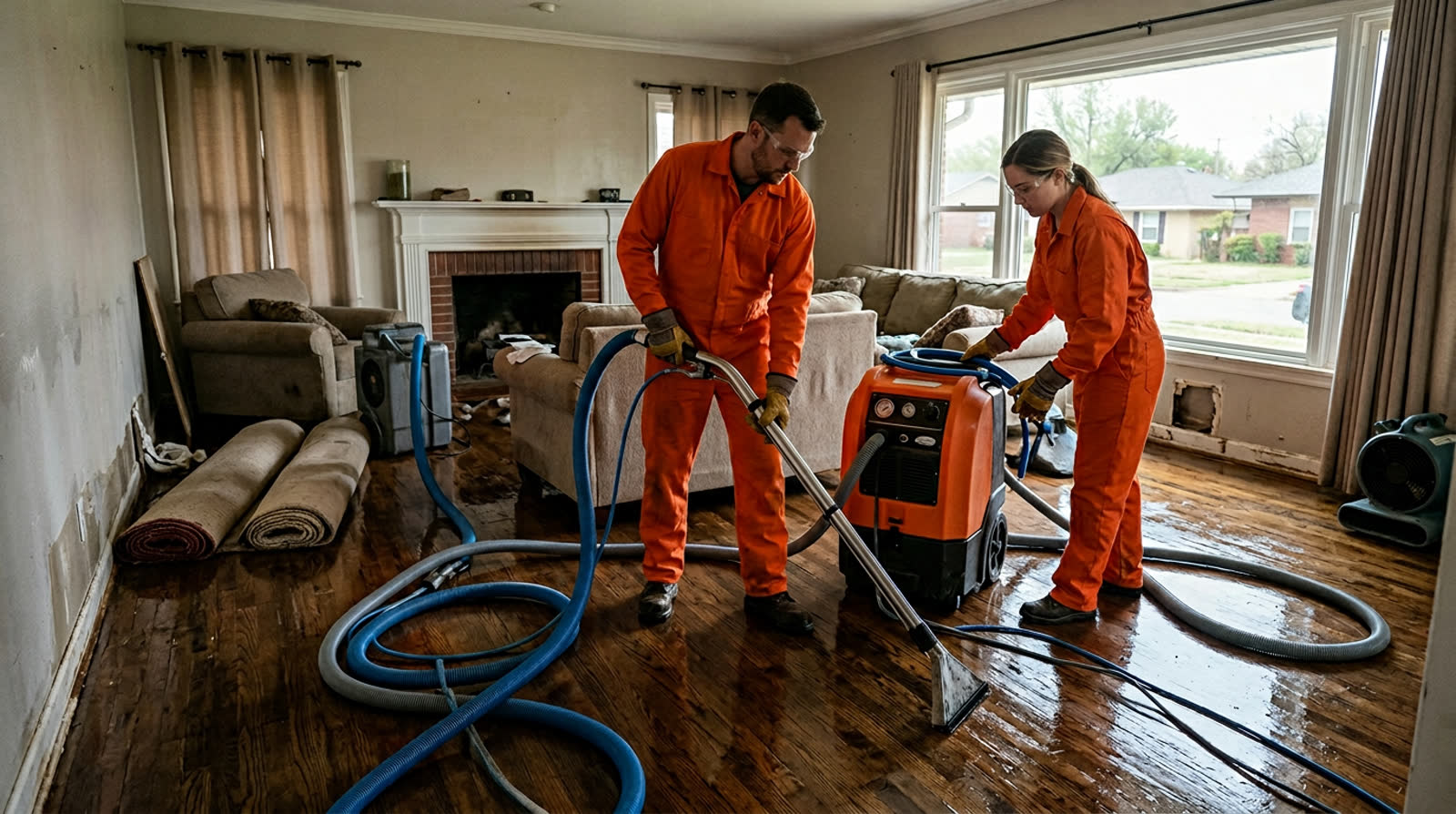
Trustworthy Restoration treats a slab leak in an older Tulsa home as a moisture investigation, not just a visible cleanup. The plumber locates and repairs the pipe problem. The restoration team checks how far the water moved, what materials are wet, what can dry in place, and what must be removed to prevent ongoing damage. For the main cleanup process, the water damage restoration page explains how inspection, drying, and repair planning fit together.
What are the most common signs of a slab leak in a Tulsa older home?
The most common signs of a slab leak in a Tulsa older home are warm floor areas, unexplained water bills, damp baseboards, musty odors, low water pressure, flooring movement, and water sounds when fixtures are off. Older homes can make these signs harder to interpret because prior remodels, crawlspace transitions, old flooring layers, and past repairs can hide the original moisture path.
Homeowners should pay attention to rooms that feel humid even when the HVAC system is working, wood floors that change shape, paint that bubbles near the floor, or trim that separates from the wall. A slab leak on a hot water line may create a warm tile or wood floor. A cold water line leak may show up as dark staining, persistent dampness, or a water meter that moves during a no-use test.
Odor is another early warning sign. A musty smell near a hallway, bathroom, kitchen, or laundry room can mean moisture is trapped behind baseboards or below flooring. That does not automatically mean mold is present, but it does mean the area should be inspected. If the moisture source continues, porous materials can become harder to dry and more expensive to restore.
Do not rely on the surface alone. Towels and household fans may make a floor feel dry while moisture remains below the finish layer. The better approach is to stop water use if the leak appears active, photograph the affected rooms, call a licensed plumber, and schedule a restoration moisture inspection. Tulsa homeowners can also review local coverage on the Tulsa restoration services page.
What should you do first when you find slab leak damage?
The first step after finding slab leak damage is to prevent more water from entering the structure. If water is actively spreading, shut off the main water valve or the affected line if you know where it is. If water is near outlets, cords, appliances, or electrical panels, avoid the area until it is safe. A slab leak can feel like a plumbing inconvenience, but water near electricity or unstable flooring can become a safety issue.
After safety and source control, document the home before removing materials. Take photos and short videos of affected floors, baseboards, walls, cabinets, closets, and any visible staining. Capture the water meter, water bill, plumber findings, and any rooms that smell damp. Older Tulsa homes often have materials that are difficult to match, so documentation before demolition can help with repair planning and insurance conversations.
Call a licensed plumber for leak detection and repair. The restoration team does not replace the plumber; the two roles should work together. The plumber handles the pipe issue. Trustworthy Restoration handles moisture mapping, extraction if needed, containment, drying, removal recommendations, and documentation of affected materials.
Homeowners should avoid tearing out flooring or trim without readings unless there is an emergency safety issue. Controlled removal may be necessary, but the decision should follow the moisture map. Removing the wrong materials can add cost, while leaving wet hidden materials in place can lead to odor, staining, and secondary damage.
For claim organization, the guide to homeowners insurance water damage claims in Oklahoma explains what photos, reports, and timelines are useful after a water loss.
How does moisture mapping work after a slab leak?
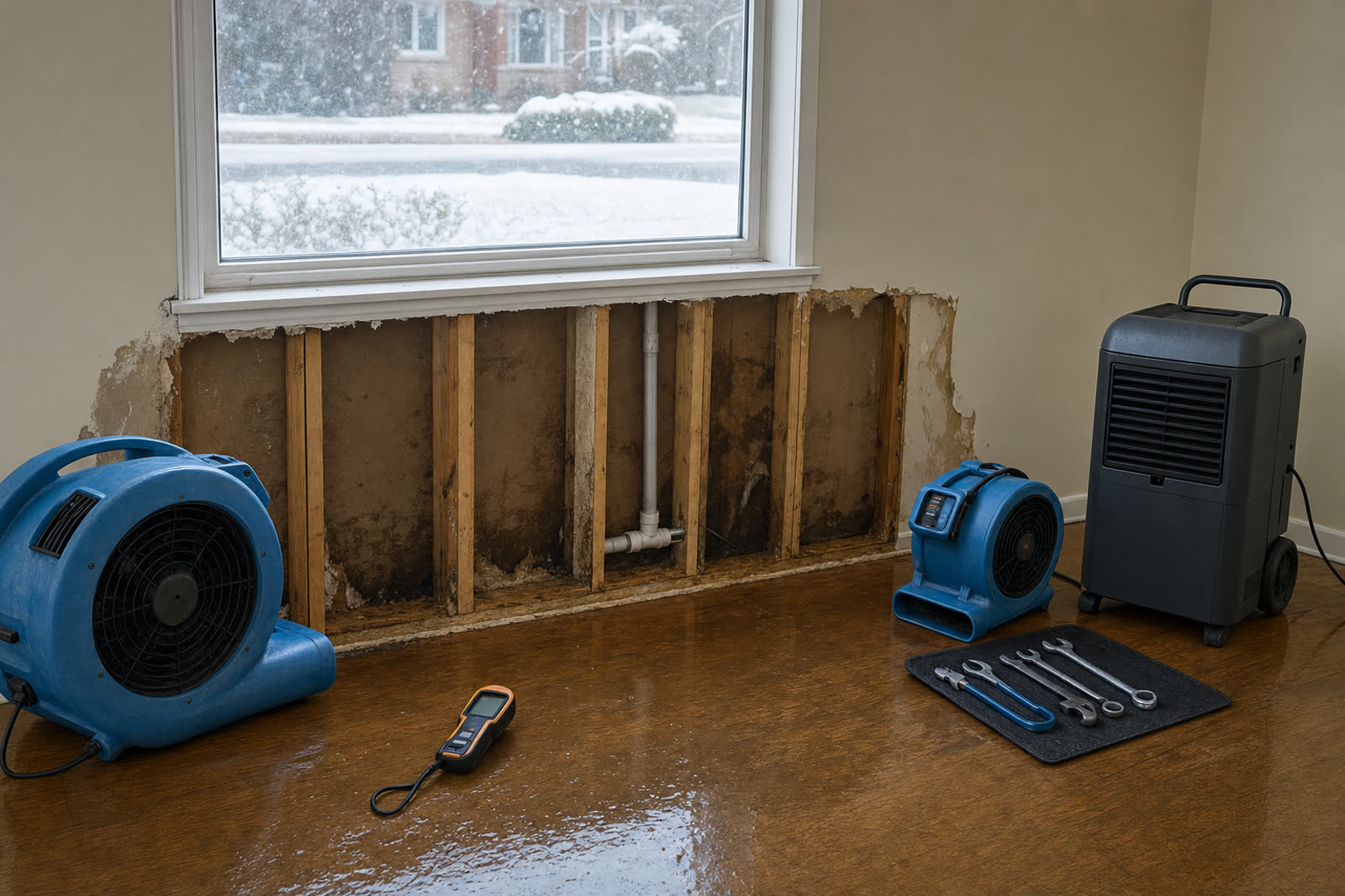
Moisture mapping after a slab leak means checking the affected area and nearby materials to find where water traveled. The visible wet spot is only the starting point. Water can move under flooring, through base plates, behind trim, under cabinets, and into adjacent rooms. Older Tulsa homes can have complex material layers, so the inspection needs to follow the water path instead of assuming the leak stayed in one room.
Restoration teams use moisture meters, thermal imaging as a screening tool, visual inspection, and material knowledge to separate dry areas from affected areas. Thermal imaging does not prove moisture by itself, but it helps locate temperature patterns that may need meter confirmation. Pin and non-pin meters help compare similar materials and identify moisture levels above normal.
The map should include floors, wall bases, trim, cabinets, closets, thresholds, and rooms on the other side of affected walls. If a slab leak occurred under a kitchen, moisture may affect toe kicks and cabinet bases. If it occurred near a hallway, water may travel below flooring into bedrooms. If it occurred near an older bathroom, past remodel layers may slow evaporation and hide trapped moisture.
A good moisture map helps answer three questions: what is wet, what can dry, and what should be removed. That information guides equipment placement, demolition decisions, and documentation. It also reduces guesswork for the homeowner, plumber, adjuster, and repair contractor.
The water mitigation versus restoration guide explains why stopping damage and restoring materials are related but not identical parts of the job.
Can original wood floors and trim be saved after a slab leak?
Original wood floors and trim can sometimes be saved after a slab leak, but the answer depends on moisture level, duration, finish condition, material thickness, and whether water reached the underside. Older Tulsa homes may have wood features that are worth protecting, but saving them requires early drying, accurate readings, and patience.
Wood can absorb moisture and change shape. Cupping, crowning, gaps, dark staining, loose boards, and finish failure are all signs that water has affected the material. Some movement may improve as the wood dries, while other damage may require refinishing or replacement. The key is not to force a decision on day one without understanding whether moisture is still present below or behind the material.
Baseboards and trim need special attention because they often wick water from the floor. The front face may look fine while the back side holds moisture. In some cases, careful removal allows wall cavities to dry and preserves trim for reinstallation. In other cases, trim may be swollen, split, or contaminated and should be replaced. The decision should be documented with photos and readings.
Flooring decisions are also tied to the plumbing repair plan. If the plumber needs access through the slab or flooring, removal may be necessary for repair. If the leak is rerouted and the flooring is not structurally compromised, drying may be possible. Trustworthy Restoration helps homeowners understand the restoration side while coordinating with the plumber's access needs.
If damp materials have produced persistent odor or visible growth, the mold remediation page explains the next inspection path after the water source is controlled.
How is professional drying set up for slab leak restoration?
Professional drying for slab leak restoration is set up around the materials that are wet and the direction moisture needs to move. Air movers are placed to encourage evaporation from affected surfaces. Dehumidifiers remove moisture from the air so materials can keep drying. If wall cavities, cabinet bases, or flooring layers are wet, targeted access or selective removal may be needed.
Older homes often need a more careful setup than open newer rooms. Original trim, tight hallways, plaster repairs, built-in cabinets, and layered flooring can block airflow. Drying equipment must target the wet areas without creating unnecessary disturbance in unaffected rooms. Containment may be used when demolition dust, odor, or material separation is a concern.
The drying plan should be monitored. Readings are taken at the start and during the project to show whether materials are improving. If moisture readings do not drop, the plan may need to change. That could mean repositioning equipment, adding dehumidification, removing trapped wet material, or opening a wall cavity. A fixed number of days is less important than documented drying progress.
Homeowners should avoid turning equipment off early because the room feels dry. Hidden materials often dry slower than the surface. Early shutdown can leave moisture in trim backs, cabinet bases, flooring layers, or wall cavities. The goal is to reach a defensible dry standard, not just make the room feel comfortable.
For larger water events that include exterior water intrusion, the storm damage restoration page explains how weather-related water problems are handled alongside structural drying.
What documentation helps with insurance after a slab leak?
Useful insurance documentation after a slab leak includes photos, a timeline, plumber findings, moisture readings, drying logs, invoices, and a list of affected materials. Coverage depends on the policy and cause of loss, so no restoration company can promise approval. But organized documentation helps the homeowner explain what happened and what work was necessary.
Start with the date symptoms were first noticed, the date the plumber inspected the home, the suspected or confirmed source, and the rooms affected. Photograph floors, walls, trim, cabinets, contents, meter readings, and any material removal. Keep the plumber's invoice or report because it can help separate the pipe repair from water damage restoration.
Restoration documentation should show the moisture map, equipment used, readings during drying, materials removed, and final drying results. This is especially important in older Tulsa homes where materials may be layered or historically valuable. If a baseboard or floor section must be removed, photos before and after removal help show why the work was needed.
Homeowners should also keep communication records. Write down claim numbers, adjuster names, dates, and instructions for uploading photos or invoices. Do not throw away damaged materials before inspection unless safety requires it. If emergency disposal is unavoidable, photograph everything first.
The Oklahoma Insurance Department offers consumer information for homeowners who need general insurance guidance or help understanding complaint options.
When should Tulsa homeowners call Trustworthy Restoration?
Tulsa homeowners should call Trustworthy Restoration when a slab leak has affected flooring, trim, drywall, cabinets, closets, or any finished area of the home. They should also call if the plumber has repaired the leak but the house still smells musty, flooring remains warped, baseboards are swollen, or moisture readings were never taken. The pipe repair stops the water source, but it does not dry the structure.
Trustworthy Restoration helps with inspection, moisture mapping, extraction when needed, selective removal recommendations, drying equipment, monitoring, documentation, and repair planning. The process is built for practical decisions: find what is wet, protect what can be saved, remove what cannot be dried safely, and verify the home is dry before rebuild work begins.
Older Tulsa homes need special care because the materials may not be easy to replace. Original wood, older wall systems, trim profiles, built-ins, and layered flooring deserve a measured approach. The goal is not unnecessary demolition. The goal is to prevent hidden moisture from creating bigger problems while preserving materials when it is reasonable to do so.
If you suspect slab leak damage, start by controlling the source, documenting what you see, and calling the right professionals. Visit the contact page to request help, review the water damage restoration service, or check the full service area for nearby Oklahoma coverage.
Need help now? See our full Water Damage Restoration service page or browse all restoration services. Don't see your city above? The full Oklahoma service area covers 27 cities.
Local context for this article: see our Tulsa, OK restoration page and the Water Damage Restoration in Tulsa service page.
This guide also pairs with emergency water mitigation and mold remediation when drying is missed.
Can a slab leak in an older Tulsa home dry on its own?
A slab leak in an older Tulsa home should not be assumed to dry on its own. Surface moisture may disappear while water remains under flooring, behind trim, inside wall cavities, or below cabinets. Older materials and remodel layers can slow drying and trap moisture, so professional readings are the safest way to confirm whether the structure is actually drying.
Authoritative resources referenced
Need restoration help in Oklahoma?
24/7 dispatch, IICRC standards, direct insurance billing.