What is the 72-hour drying window, and where does the number come from?
The 72-hour drying window is industry guidance reflected in the IICRC S500 standard for water damage restoration. It is the practical estimate of how long a wet building material can stay wet before mold growth becomes a meaningful risk. The exact timeline depends on temperature, humidity, the material, and the type of water, but for most Norman homes the number is roughly three days.
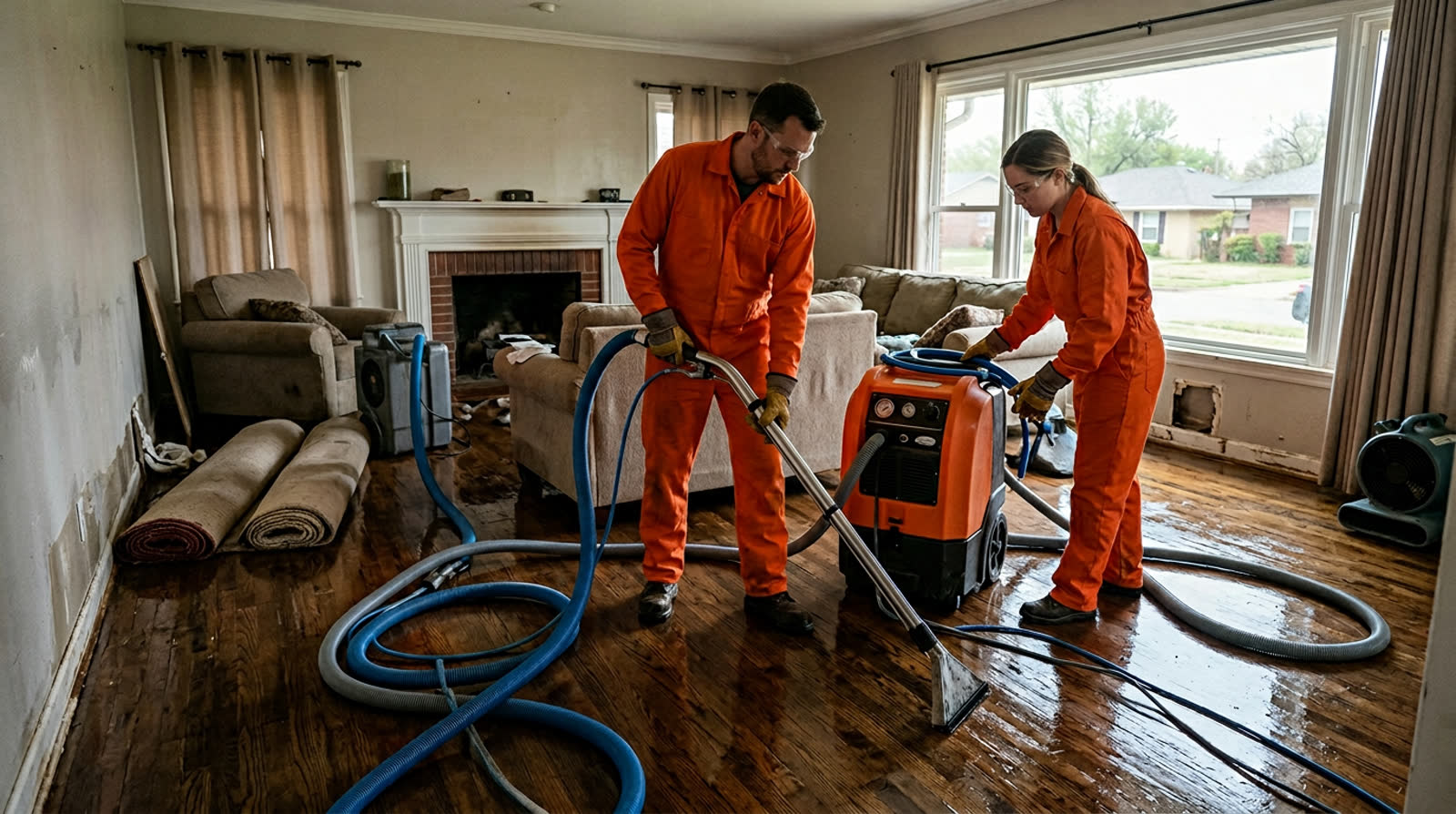
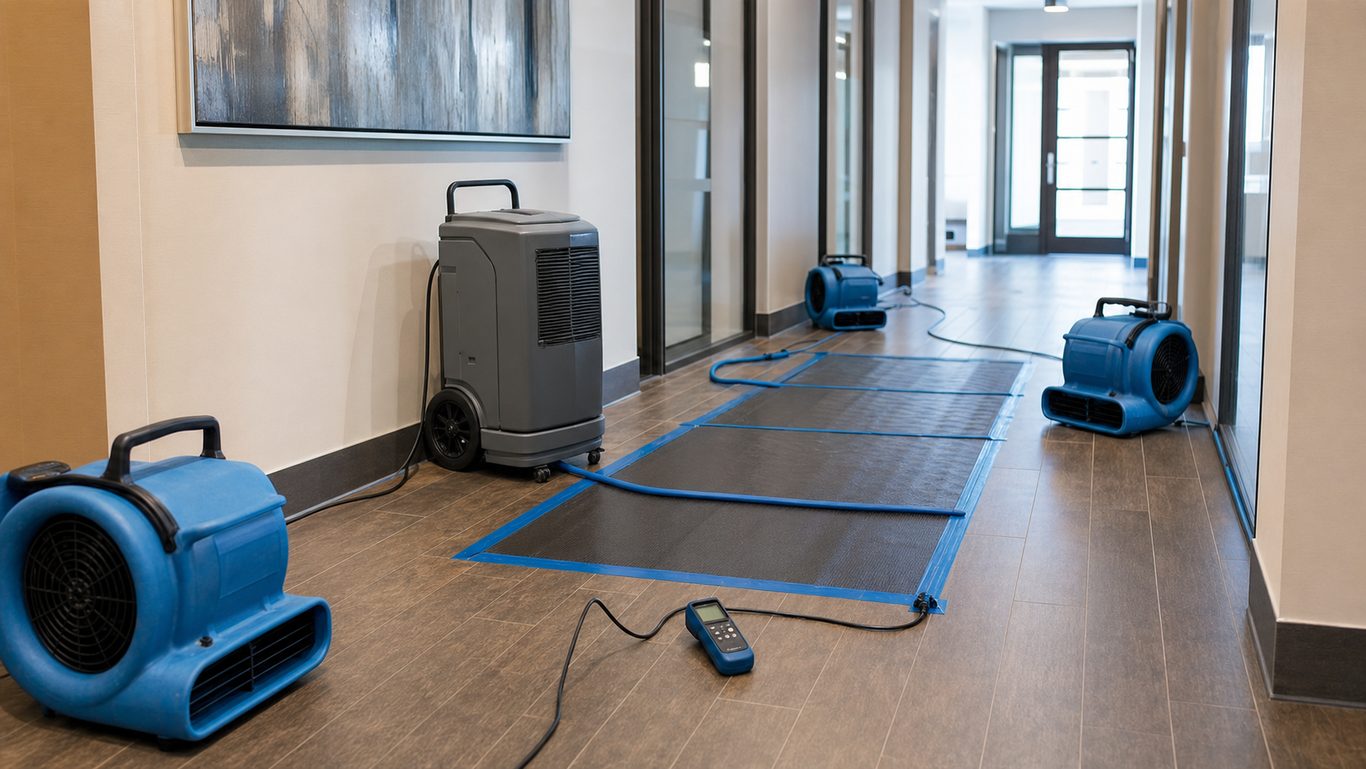
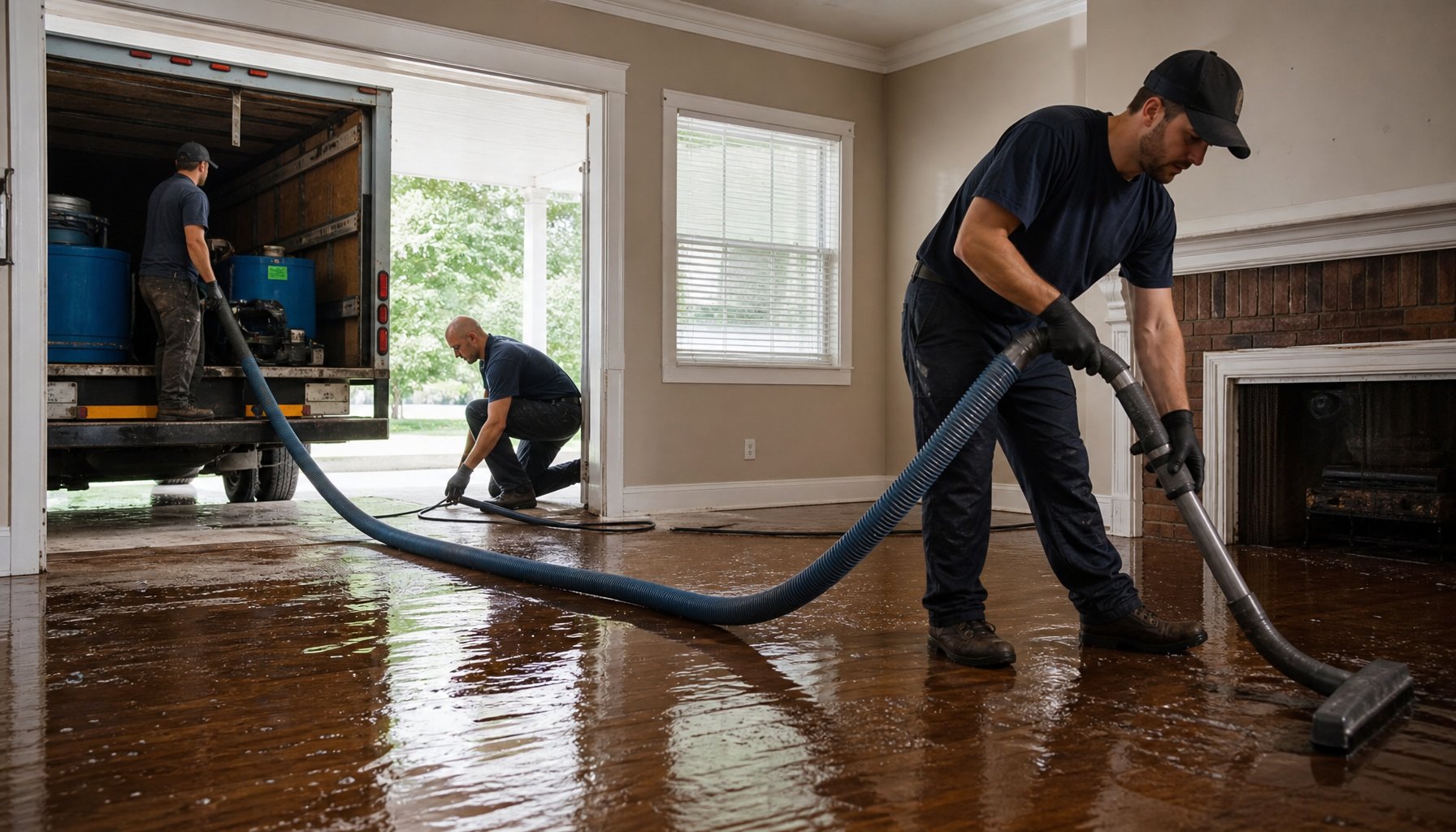
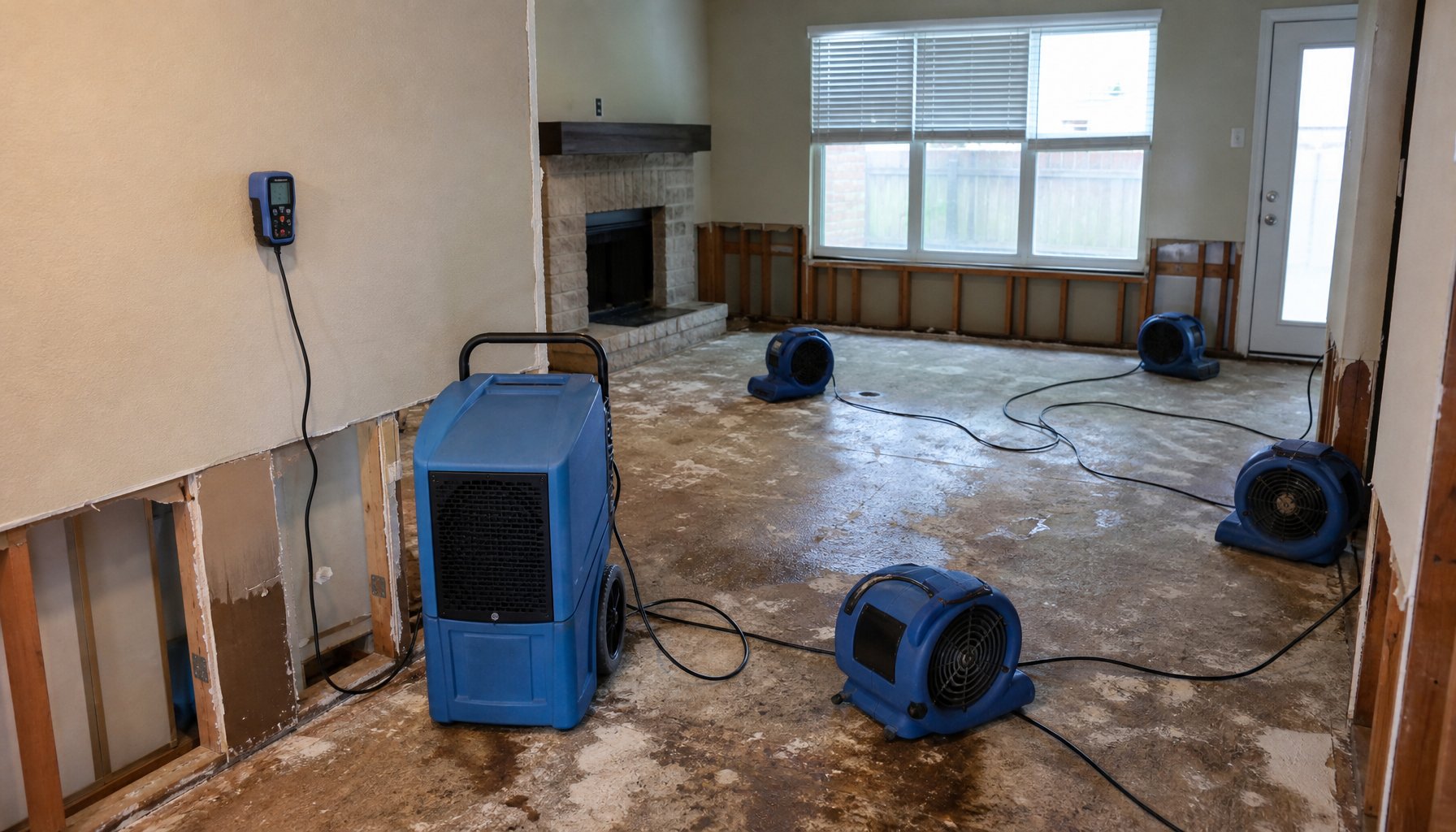
Inside the 72-hour window, the standard restoration scope is straightforward: extract standing water, remove unsalvageable materials, set up structural drying, monitor daily, and rebuild. Outside the window, mold growth changes the scope because contaminated materials have to be removed under containment rather than dried, and the air has to be tested or treated before the home is closed back up.
What happens to a Norman home in the first 72 hours after a water loss?
The first three days after a water event in a Norman home follow a predictable pattern if drying is not started:
- Hours 0-12: Standing water spreads horizontally across hard floors and saturates carpet and pad. Drywall begins to wick water upward from the baseplate.
- Hours 12-24: Wet materials begin to off-gas humidity into the room. Relative humidity in the closed space climbs above 60 percent, then 70 percent. Wood absorbs moisture along the grain.
- Hours 24-48: Mold spores already present in normal indoor dust find the wet, warm conditions they need to germinate. On wet drywall paper, this can be visible as faint discoloration. Inside wall cavities and under flooring it is usually invisible.
- Hours 48-72: Mold colonies establish on wet porous surfaces. Musty odor often becomes noticeable. At this point the project is shifting from a water-damage project to a water-damage-plus-mold project.
The chemistry does not care about the weekend, the homeowner's travel schedule, or the insurance adjuster's response time. The 72-hour clock starts when the materials get wet.
The 72-hour figure is also a useful planning anchor for homeowners who travel. A Norman homeowner heading out of town for a weekend should have a neighbor or friend with a key, the main water shutoff location written down, and a 24/7 restoration company's number on the fridge. Most catastrophic water losses Trustworthy Restoration responds to in Norman started while the home was empty. The leak that ran for four hours while someone was home and noticed becomes a routine project. The same leak running for four days while the family was in Colorado becomes a full-room reconstruction with mold scope attached. The difference is detection time, which is the same variable the 72-hour window measures.
Why is Norman especially sensitive to the 72-hour window?
Norman summers are warm and humid. Indoor temperatures of 75 to 85 degrees and a closed home holding humid air create ideal conditions for mold germination. A water loss in a Norman home in July reaches the mold-risk threshold faster than the same loss in a dry, cool February. The 72-hour figure is an average; in real Norman conditions, the practical window can be closer to 48 hours.
Norman housing stock also matters. Many homes built in the 1970s through 1990s have wood baseplates on concrete slabs, paper-faced gypsum drywall, and fiberglass insulation in exterior walls. All three are mold-friendly surfaces once wet. The combination is why local water damage restoration teams treat every Norman water loss as time-sensitive.
What changes when a Norman water loss runs past 72 hours?
When a water loss in Norman is not addressed inside the 72-hour window, the project scope shifts:
- Demolition scope widens. Wet drywall that could have been dried in place at hour 24 usually has to be removed at hour 96. Insulation that could have stayed often has to come out.
- Containment is added. Once mold growth is suspected, the work area is isolated with poly sheeting and negative air to prevent spore spread to clean parts of the home.
- Air filtration runs continuously. HEPA scrubbers run during demolition and cleanup. The home may need post-remediation verification (visual and sometimes air sampling) before rebuild.
- The claim becomes more complex. Many Oklahoma homeowners policies cover mold remediation tied directly to a covered water loss but only up to a sub-limit. Quick drying keeps the claim cleaner.
- Timeline doubles or triples. A two-week single-room project can become a four-to-six-week project once mold work is added.
The cost difference between an inside-the-window project and an outside-the-window project is usually thousands of dollars, sometimes tens of thousands. Time is the cheapest control variable.
Another useful framing: think of the 72 hours as the window during which materials are still recoverable as themselves. Inside the window, wet drywall is still drywall — wet, but the same drywall it was before the leak. Outside the window, it has started to become substrate for mold and is on its way to being unsalvageable. The same for wood framing, baseplates, and subfloor. Speed is not just about cost; it is about which set of physical materials the homeowner ends up with. Fast response keeps the home's existing materials in place. Slow response replaces them.
How do Norman homeowners stay inside the 72-hour window?
Three habits keep a Norman water loss inside the 72-hour drying window:
- Discover the leak fast. Know where the main water shutoff is. Run a daily eye over toilets, water heaters, washing machines, and ceiling stains. Catch the slow leak before it ruptures.
- Call within hours, not days. The moment a water event is discovered, call a 24/7 restoration company. The on-site clock starts when the crew arrives, not when the call is made. Same-day on-site is the standard.
- Do not wait for the adjuster. Insurance carriers want the homeowner to take reasonable steps to mitigate damage. That includes calling for emergency extraction immediately. Waiting on an adjuster to authorize work is not a reasonable step, and most policies will cover mitigation done before adjuster contact.
Norman homeowners who follow those three habits almost always keep their loss inside the window and avoid the mold-side complication entirely.
What about a Norman water loss that is already past 72 hours?
If a water loss in Norman is already past the 72-hour mark when discovered — a slow leak under a sink found two weeks in, a slab leak detected by a high water bill, a vacation-home discovery — the playbook is different but the work is still routine. The crew:
- Sets up containment around the affected area before any demolition.
- Runs HEPA air scrubbers in the work zone during demolition.
- Removes wet drywall, baseboard, insulation, and any porous material that cannot be cleaned.
- Treats remaining framing and structural surfaces with antimicrobial.
- Confirms dryness and cleanliness with moisture readings and, where appropriate, post-remediation verification.
- Documents the mold work as a separate line item on the claim.
Outside the window does not mean the home is unrecoverable. It means the project is bigger. Working with a restoration company that handles both water and mold remediation under one project keeps the timeline tight.
For Norman vacation homes, second properties, and rental units, the 72-hour rule has a specific implication: someone must be checking the property at least every other day during occupancy gaps, or the property should have a smart water sensor or shutoff installed. A $200 leak detector at the water heater, washer, or under-sink locations pays for itself the first time it catches a slow drip before it becomes a flood. Insurance carriers in Oklahoma increasingly offer discounts for installed water sensors. Norman homeowners managing remote properties should price both the device and the discount.
Does insurance treat inside-the-window losses differently?
Carriers do not formally code claims as "inside 72 hours" or "outside 72 hours," but in practice the documented timeline matters. A claim with a clear call-to-arrival log within 24 hours of discovery, daily moisture readings, and a documented dry-out usually closes without disputes. A claim with a long gap between discovery and mitigation, no drying log, and a mold finding can attract questions about whether the homeowner took reasonable mitigation steps.
The most defensible position for a Norman homeowner is the call log: time the leak was discovered, time the restoration company was called, time on site, and time drying started. That log is half the answer to any "could this have been prevented?" question from the adjuster.
For larger Norman water losses outside the 72-hour window, the project economics change in a specific way: the rebuild line item often grows faster than the mitigation line. Mitigation might run ten to twenty percent higher because of containment and extra demolition. Rebuild might run forty to sixty percent higher because more flooring, more drywall, and more trim have to be replaced. The mold remediation itself sits between the two, usually as a moderate addition. Homeowners who notice their post-72-hour quote is much higher than they expected are usually looking at the rebuild side of the bill more than the mitigation side. That distinction matters when negotiating with the carrier and reviewing line items.
One last note: the 72-hour rule is also a quality signal when shopping restoration companies. Any Norman restoration company that downplays the importance of fast response is missing a core piece of the IICRC S500 standard their work is supposed to follow. The opposite — a company that emphasizes 24/7 dispatch, fast on-site times, and same-day equipment setup — is signaling alignment with the standard that protects the homeowner's claim and home. When two quotes look similar on paper, the response-time guarantee is often the most useful differentiator.
Why call Trustworthy Restoration inside the 72-hour window?
The cheapest, fastest, and cleanest water-damage projects are the ones called in within the first day. Trustworthy Restoration dispatches 24/7 across Norman and the OKC metro, targets 60 to 90 minutes on-site for Norman emergencies, and starts the documented mitigation clock the moment the crew is on site. Call (405) 669-4484 the same hour a leak or flood is discovered.
What does the 72-hour window mean for Norman crawlspaces and basements?
Crawlspaces and basements in Norman are mold-friendly even without a water event because they tend to run cool, dark, and humid. After a water event they can hit mold-risk thresholds faster than the rest of the house because air does not circulate and dehumidification has to fight a continuous moisture load from soil and concrete.
The 72-hour window for a Norman crawlspace or basement water event is usually closer to 48 hours in practice. The crew responds with submersible pumps, dedicated dehumidification for the enclosed space, and often a temporary vapor barrier or containment to isolate the area from the rest of the home. Without those steps, even a small basement flood can grow visible mold on the ceiling joists and bottom of the subfloor inside two or three days.
Documenting the 72-hour timeline on a Norman insurance claim
The single most useful artifact on a Norman water-damage claim is the call log. A defensible log includes:
- Time the water event was discovered.
- Time the carrier was first notified (phone call or app submission).
- Time the restoration company was called.
- Time the crew arrived on site.
- Time drying equipment was placed and running.
- Daily monitoring entries from that point forward until project close.
A homeowner who calls a 24/7 restoration company within hours of discovery and has a crew on site the same day has an airtight mitigation story. A homeowner who waits a week to call has a harder claim regardless of how good the eventual drying turns out to be. The call log is free; it costs nothing to write down the discovery time on a notes app or paper. It is the single highest-value record on the file.
Need help now? See our full Water Mitigation service page or browse all restoration services. Don't see your city above? The full Oklahoma service area covers 27 cities.
Local context for this article: see our Norman, OK restoration page and the Water Mitigation in Norman service page.
This guide also pairs with full water damage restoration once mitigation is complete and mold remediation if the 72-hour window was missed.
What if the water loss happened over a holiday weekend?
Call anyway. Restoration companies that handle Norman are 24/7 dispatchers, including holidays. The 72-hour clock does not pause for the weekend. Most homeowners insurance carriers also have 24/7 claim lines, but mitigation should start before the carrier has been reached, not after — Oklahoma policies require the homeowner to take reasonable steps to prevent further damage, and that obligation does not pause for a holiday.
Authoritative resources referenced
Need restoration help in Oklahoma?
24/7 dispatch, IICRC standards, direct insurance billing.